
Stop fox hunting – write to the Thurgau cantonal parliament
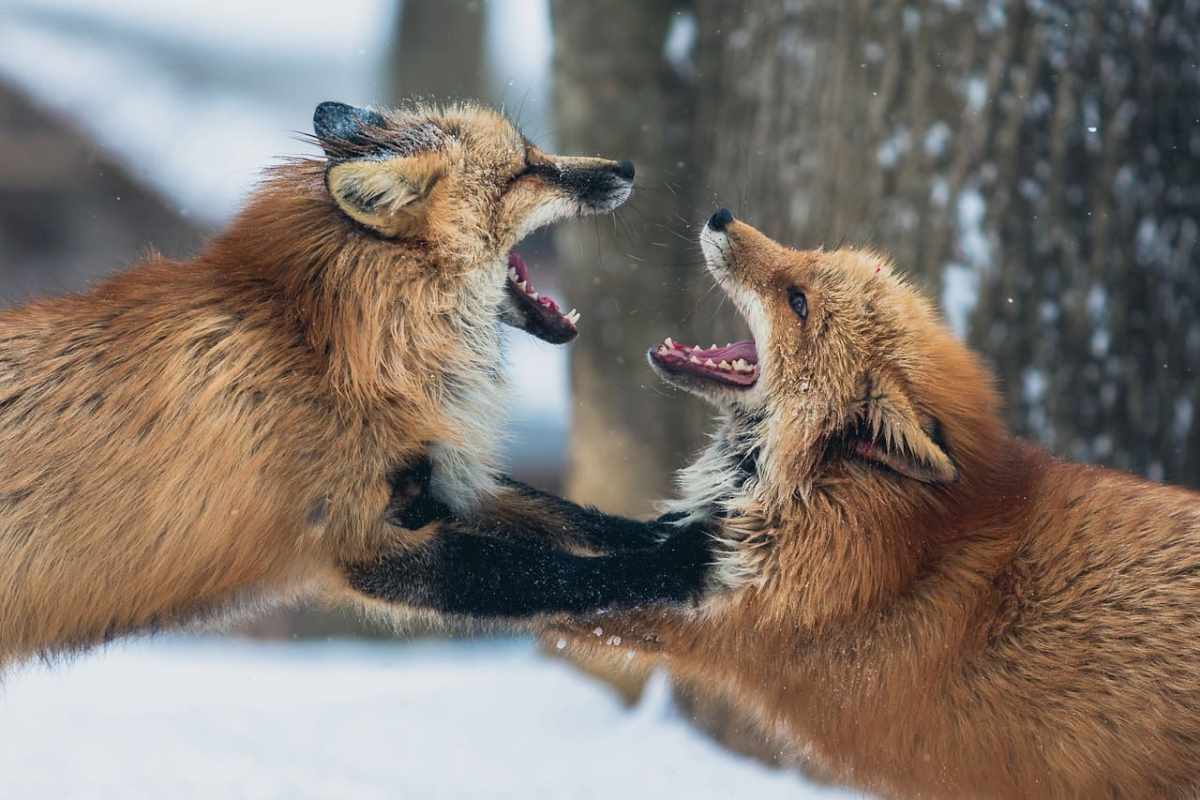
Thurgau is a territorial hunting canton: the municipalities lease their hunting grounds to private recreational hunting associations, and between 2020 and 2024 an average of 712 foxes per year were shot here, along with an average of 863 animals recorded as fallen game. In spring 2026, the GREEN cantonal councillors Mathis Müller and Isabelle Vonlanthen-Specker submitted a simple enquiry demanding that this practice finally be reviewed scientifically.
The cantonal government rejected this on 21 April 2026 (Reply No. 209). Its answer does not cite a single study, invokes costs and the 2025 to 2027 task and cutback planning, and denies that today's fox management is insufficiently evidence-based. One admission in the middle of the text is remarkable: the canton explicitly does not regard fox hunting «as an instrument of comprehensive population-biological control». In doing so, it concedes itself that the annual kills do not in fact steer the population.
What remains after that is a question the government does not answer: if the kills do not regulate the population, what documented purpose do they serve? Instead of an impact assessment, the reply points to the earth hunting ban of 2017 and to underground refuse containers in settlement areas. Both are sensible, yet neither explains why hundreds of healthy animals continue to be shot.
You can do something, no matter which region you live in. Contact a member of the Grand Council directly. This is legal, effective and takes only a little time.
Important: do not rely on email alone. We have received feedback from several cantons that messages about recreational hunting of foxes are sometimes returned as undeliverable. Whether this is due to incorrect addresses or to filters cannot be judged from the outside. So use several channels: a letter, a phone call or a face-to-face conversation. A message to a parliamentary group or party secretariat is often more effective than one to individual members, and a letter or phone call is harder to filter out than an email.
Template letter – copy this text into your email programme
Subject: Fox hunting in Thurgau – please support an evidence-based review
Dear Ms [Name] / Dear Mr [Name]
As a voter, I am writing to you directly because the practice of fox hunting in Thurgau concerns me.
In April 2026 the cantonal government rejected a Simple Enquiry calling for an evidence-based fox hunt (Reply No. 209), citing costs and a lack of added value, without referring to a single scientific study. At the same time it states that fox hunting is «not to be understood as an instrument of comprehensive population-biological management». This is an admission that the roughly 712 kills per year do not manage the population.
The research is unambiguous. The canton of Lucerne, the only one to systematically record the health status of foxes shot, shows that of 2,217 animals killed only 39 showed any sign of disease — over 98 per cent were healthy. Kills are moreover quickly offset by increased reproduction and immigration (Baker & Harris 2006; Rushton et al. 2006; Kämmerle et al. 2019). In the case of the fox tapeworm, hunting is even counterproductive: in the Nancy area prevalence rose from 44 to 55 per cent under intensive hunting (Comte et al. 2017), while in Luxembourg it fell from around 40 to under 10 per cent after the hunting ban of 2015.
Practical experience also speaks against it: Geneva has done without recreational hunting since 1974, the Swiss National Park has been hunting-free since 1914, and the canton of Zug has ceased actively promoting fox hunting following its own scientific study (SWILD, May 2026). Nowhere has this led to population explosions, increased damage or a worse disease situation.
I ask you to take up the issue again in the Grand Council and to advocate for a scientifically grounded fox management approach focused on non-lethal methods. The necessity of the regular fox hunt in Thurgau should be critically questioned on the basis of facts.
Kind regards
[Your name]
[Your place of residence]
What was decided in the canton of Thurgau
Simple Enquiry «Introduction or review of an evidence-based fox hunt», submitted in spring 2026 by the GREEN cantonal councillors Mathis Müller and Isabelle Vonlanthen-Specker. It called for scientifically sound population monitoring, an evaluation of the impact of fox hunting and measures against anthropogenic food sources in settlement areas.
Response No. 209 of 21 April 2026: Rejection. The Government Council rejects comprehensive monitoring, citing staffing and financial costs, sees no «proportionate added value» and does not share the premise that existing management is insufficiently evidence-based — without naming a source for this. At the same time, it does not describe fox hunting itself as population-biological management.
Thurgau is a territorial hunting canton: the hunting grounds are leased to private hunting societies, which hunt on their own account as a leisure pursuit. The canton has already demonstrated that hunting practices can be reviewed and restricted: in 2017 the Grand Council became the first in Switzerland to ban earth hunting with dogs for foxes and badgers. What was possible there is also possible for the rest of fox hunting.
What the science says
Population control: The red fox rapidly compensates for losses through increased reproduction, altered social behaviour and immigration. Even intensive hunting shows no lasting effect on the population (Baker et al. 2002; Rushton et al. 2006; Kämmerle et al. 2019).
Rabies: It was not defeated by hunting, but by the vaccine bait programmes introduced from 1978 onwards. Lethal interventions can even promote the spread of disease, because hunted animals become more mobile.
Fox tapeworm: Intensive hunting increases prevalence (Comte et al. 2017, Nancy region). Deworming baits, by contrast, reduced the risk of infection in the Starnberg district by 97 to 99 per cent. In Luxembourg, prevalence fell from around 40 to under 10 per cent after the hunting ban of 2015.
Lyme disease: Foxes regulate mice and rodents, which are regarded as a reservoir for ticks that transmit Lyme disease. Where predators are more active, noticeably fewer tick-carrying rodents occur (Hofmeester et al., Proceedings of the Royal Society B).
Geneva and the National Park: Geneva has managed without recreational hunting since 1974; only state game wardens may intervene, and in the last two reporting years they did so without a single regulatory kill of a fox. The Swiss National Park has been free of hunting since 1914, with no population explosion and no worse disease situation.
Full overview of studies: Studies: The impact of recreational hunting on wild animals
The Zug SWILD report
The canton of Zug is so far the only canton to have responded to the fox hunting petition with a genuine scientific study. The Department of the Interior commissioned the SWILD office, whose expert report appeared in its second version in May 2026 and was presented to the hunting commission on 16 June 2026.
The finding is unambiguous: the fox hunting currently practised does not regulate populations sustainably, does not improve disease control and is inferior to non-lethal methods when it comes to protecting livestock. The experience of Geneva (since 1974) and Luxembourg (since 2015) confirms it: wildlife management works without recreational hunting of the red fox.
The full study is publicly available: Scientific foundations of fox hunting
Where to find the contact details
The Grand Council of the canton of Thurgau comprises 130 cantonal parliamentarians. Names, parliamentary groups and contact details can be found in the parliament's official list of members at parlament.tg.ch – Members. A personally worded message to individual members from your region or your party is the most effective approach. Please do not write to everyone at once; a targeted individual contact or a message to a parliamentary group secretariat has more impact than a mass mailing.
What has happened in the canton of Thurgau so far
📌 Canton of Thurgau bans earth hunting for good
In 2017, the Grand Council became the first canton in Switzerland to ban earth hunting for foxes and badgers. Proof that the canton can restrict hunting practices.
📌 Official expert report pulls the rug from under fox hunting
The canton of Zug's SWILD report shows: fox hunting does not regulate populations and does not reduce disease risk.
📌 The fox in Switzerland: the most hunted predator without a lobby
Why around 19,000 foxes are shot every year without any kill quota planning and without scientific justification.
🧠 Self-regulation of wildlife populations
Fifty years in Geneva and 110 years in the National Park demonstrate that wild animals stabilise without recreational hunting.
📌 Recreational hunters as bogus wildlife experts
How petitions and parliamentary initiatives on fox hunting have been launched in more than twelve cantons.