Moose in Switzerland: Reality on Quiet Feet
A moose of unknown origin has been spotted in recent days in the Kinzig Valley in Baden-Württemberg, approximately 100 km from the Swiss border.

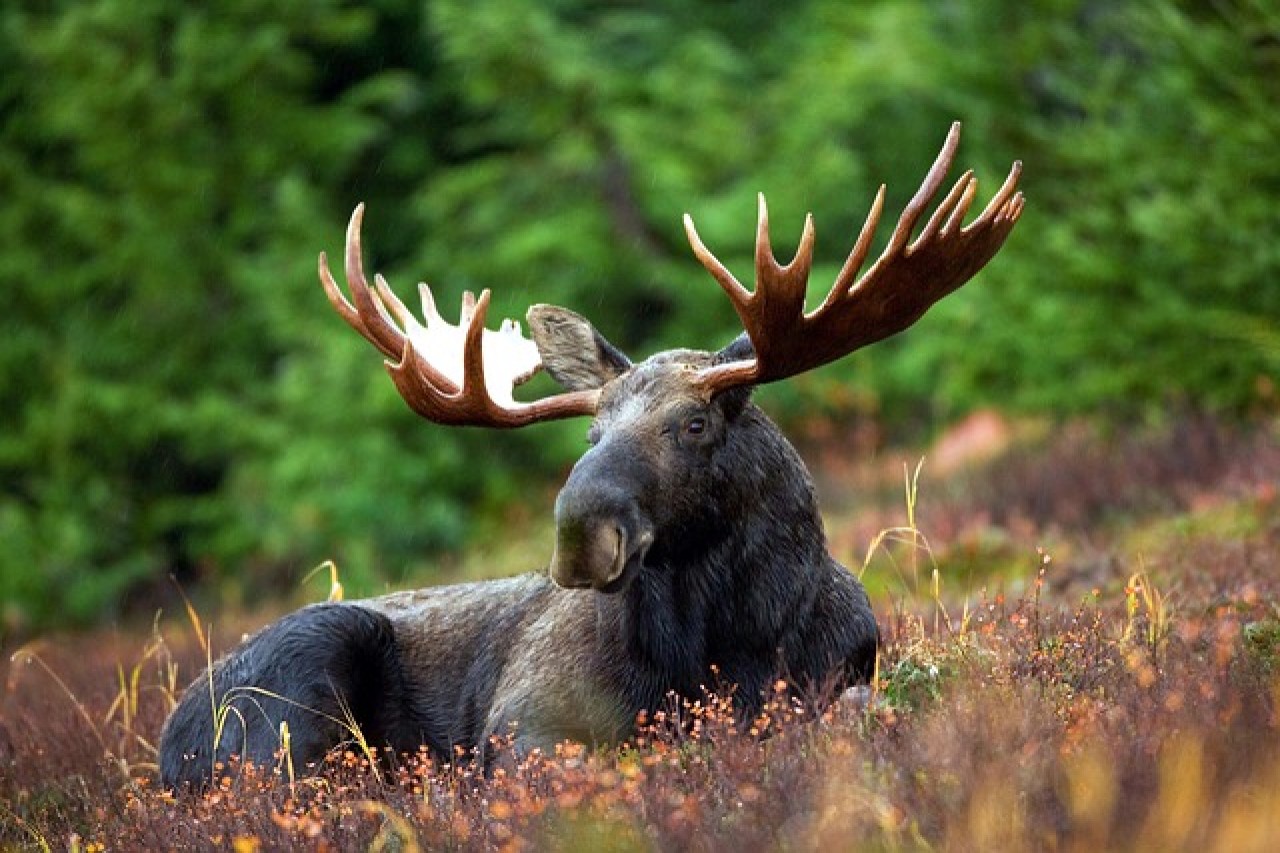
Recently, a moose had caused a stir in Austria.
The young bull named Emil was supposed to settle in the Bavarian-Czech border region, it had been announced at the beginning of the month. The moose had been sedated for its relocation. Prior to that, according to authorities, it had been partly roaming densely populated areas and had nearly crossed a motorway.
As the moose population in Europe is growing, sightings in Switzerland are also becoming increasingly likely.
While there is not yet an established wild-living moose population in Switzerland, individual animals occasionally appear nearby, prompting curiosity: Where do they come from? Where have they been spotted? And could the moose make a long-term return?
Historical and current sightings
- Moose were once part of Switzerland's natural fauna. They disappeared by the Middle Ages at the latest due to intensive hunting.
- In recent decades, there have been isolated reports of passing young bulls, primarily from neighbouring countries (e.g. Austria, Czech Republic). These animals occasionally cross the border.
- To date, no confirmed sightings of multiple animals or offspring are known, which indicates a lack of permanent settlement.
- Moose are protected in Switzerland and may not be hunted.
Moose require large, contiguous forested areas with sufficient wetlands and open spaces for grazing. They are demanding in terms of cover and tranquillity. Switzerland offers such conditions only in fragments, such as in the Alps or in parts of Vorarlberg and Liechtenstein.
A further factor is the existence of migration corridors across borders. Animals coming from the Czech Republic, Poland or Austria could pass through such corridors. However, transport routes, settlements and the lack of protected areas typically narrow these corridors.
Opportunities and Obstacles for a Return
Possible opportunities:
- Climatic changes could make Central and Eastern Europe more suitable in the future.
- Protected areas are increasing, and forest stocks are recovering in some regions.
- Awareness and monitoring are growing stronger, helping to identify early signs.
- Hunting bans such as the Geneva model.
Obstacles:
- Moose are large animals; contact with humans, roads and settlements carries risks: traffic, poaching, stress.
- The absence of populations in the immediate vicinity makes permanent settlement without introduction measures unlikely.
- Competition, differing landscape structures and limited resources can impede the return.
For now, the moose remains a wanderer in Switzerland, a rare visitor from the north or east. But with increasing pressure on wildlife migration corridors, growing connectivity between habitats and rising environmental awareness, this could change — if the conditions are right.
For wildlife observers, conservation organisations and authorities, it would be worthwhile to examine scenarios of reintroduction or at least transit more closely.
The moose is not a fixed part of Switzerland’s current wilderness, but it could be. Its appearances are rare, its traces mostly fragmentary. Nevertheless, it is worth remaining vigilant — for sometimes a single wanderer is enough to bring the idea of a return to life.
RECREATIONAL HUNTER RADAR
On the trail of concealed animal welfare offences, poaching and/or criminal activity? Report suspected cases to us! Help with the great recreational hunter radar.

More on the subject of recreational hunting: In our dossiers on recreational hunting gather fact-checks, analyses and background reports. What the research says about this is shown by Hunting fact-checked: the state of research.
The position of IG Wild beim Wild: IG Wild beim Wild rejects recreational hunting. Our model is the canton of Geneva, which has managed without recreational hunting since 1974: without hunting seasons, without hunting dogs, without driven hunts, without high seats, without the animal cruelty and crime that go hand in hand with hunting season elsewhere. What has worked there for over fifty years disproves every position paper by JagdSchweiz. An association that bases its policy on claims it refutes in its own documents is not a professional organisation, but a factory for misinformation.