DNA analysis documents 200 years of hunting the wolf
Researchers at the University of Lausanne have sequenced the DNA of 150 wolves from European museums. The aim was to find out what consequences the decline in the wolf population over the past two centuries has had at the genetic level.

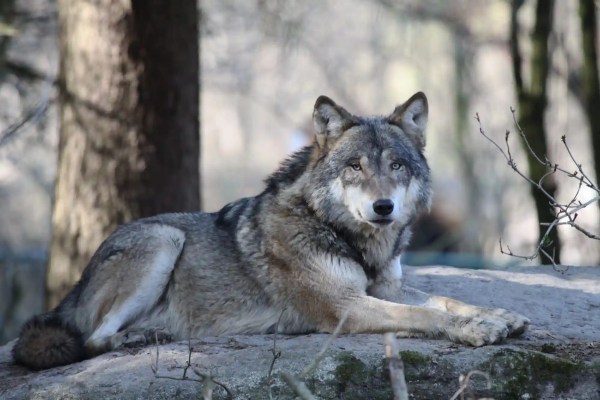
Wolf
Researchers at the University of Lausanne have sequenced the DNA of 150 wolves from European museums. The aim was to learn what consequences the decline in the wolf population over the past two centuries has had at the genetic level.
Once the most widespread mammal on Earth, the wolf was exterminated across many of its original territories. This was also the case in the Swiss Alps, where the last specimens were killed before the end of the 19th century. It was only around twenty years ago that the wolf, attracting much attention, migrated back into Switzerland from Italy.
To better understand the consequences of this extreme decline on the genetics of wolves, researchers at the University of Lausanne analysed the DNA of European animals from the past 200 years. They obtained the material, bones and pelts, from around a dozen museums ranging from Norway to Sicily and from Portugal to Russia.
Under the leadership of Luca Fumagalli, the research team examined the hundreds of samples using high-tech equipment. The challenge lay in extracting any DNA at all from the samples, some of which were severely decayed. The scientists sequenced the DNA of over 150 wolves that had been killed during the heyday of wolf persecution in the 19th and 20th centuries.
Less genetic diversity
It emerged that the genetic diversity of European wolves a century ago was still almost twice as great as it is today. At the same time, the populations were less genetically differentiated. According to the researchers, this points to a stronger historical connection and larger populations, as they reported in the journal «Proceedings of the Royal Society B».
According to the scientists, the findings illustrate the persecution of the wolf across the entire continent up to the 20th century. Just under a hundred years ago, the Italian subspecies of the wolf, which recently recolonised Switzerland, also existed elsewhere in Europe.
Western Europe: wolf almost completely exterminated
The researchers also found considerable genetic differences between eastern and western European wolves. In Western Europe, the wolf was almost completely exterminated. This reduced diversity at the turn of the 20th century. The recolonisation by a few remaining populations subsequently resulted in major changes in the genetic composition.
In Eastern Europe, where the wolf was far less close to extinction, the diversity and genetic composition are at a similar level today as they were back then. More on wild animals and on biodiversity.
More on the subject of recreational hunting: In our dossiers on recreational hunting gather fact-checks, analyses and background reports. The scientific evidence is presented in the overview Studies on the Effects of Recreational Hunting.
The position of IG Wild beim Wild: IG Wild beim Wild rejects recreational hunting. Our model is the canton of Geneva, which has managed without recreational hunting since 1974: without hunting seasons, without hunting dogs, without driven hunts, without high seats, without the animal cruelty and crime that go hand in hand with hunting season elsewhere. What has worked there for over fifty years disproves every position paper by JagdSchweiz. An association that bases its policy on claims it refutes in its own documents is not a professional organisation, but a factory for misinformation.