Dead crows must be removed from the field
A cruel deterrent measure: two dead crows were hung up in a field between Worms-Pfeddersheim and Worms-Leiselheim in Germany – presumably to deter their living counterparts.

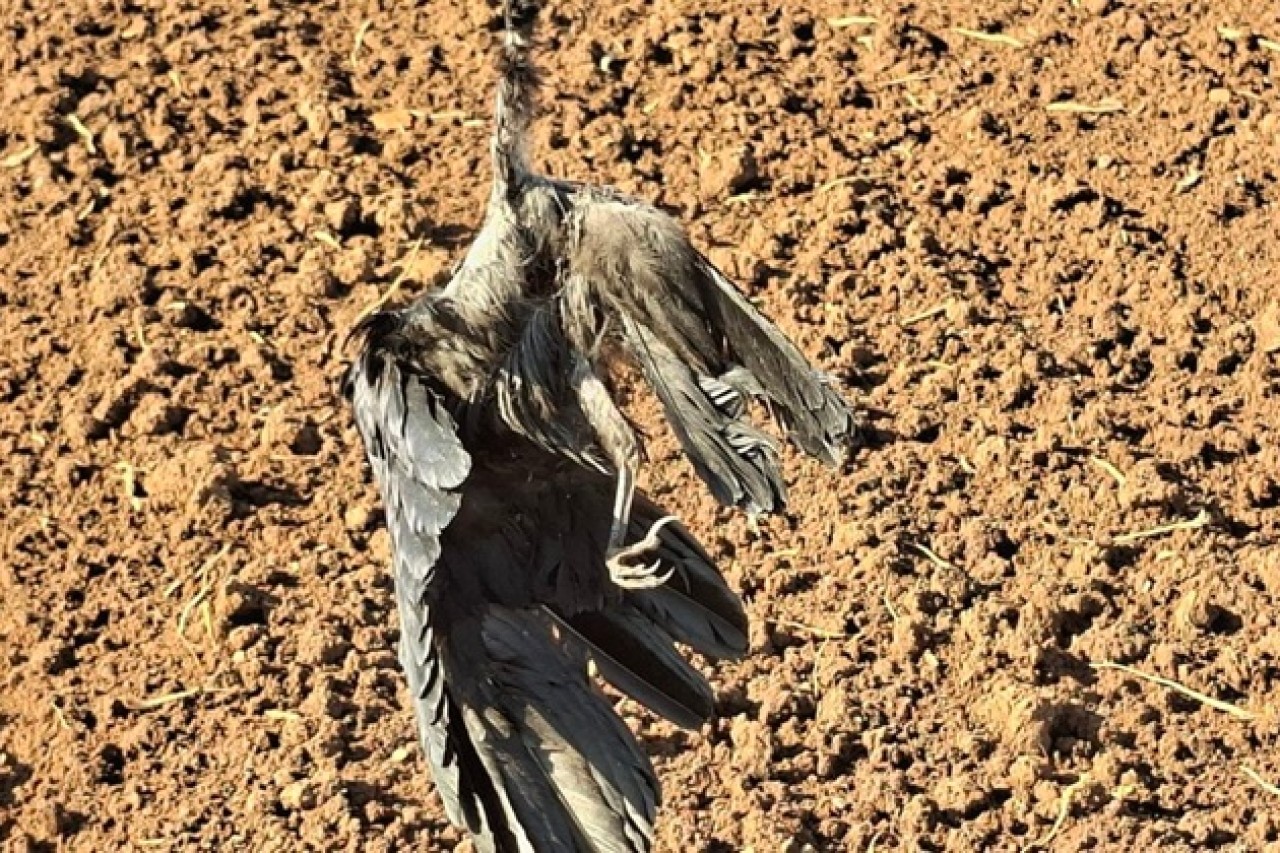
A person discovered the animals on 1 July and contacted PETA with photographs.
The person also contacted the Worms authorities, who responded promptly: they ordered the farmer to remove the bodies of the dead animals immediately in accordance with the Animal By-Products Disposal Act. Regarding a possible violation of the birds’ current closed season, the authority indicated that the animals had most likely died of natural causes, as dead crows are frequently found in the vicinity of breeding areas. The animal rights organisation commended the Worms authorities for their swift action.
The sight of these crows shocks every person who cares about animals – we thank the Worms authorities for their immediate intervention, said Peter Höffken, specialist adviser at PETA. Furthermore, the coronavirus crisis and the current avian influenza outbreak should have taught us by now that it is irresponsible to hang a bird’s carcass up to decompose slowly. Whether the birds truly died of natural causes is doubtful. We have asked the regulatory authority to examine the animals’ bodies for any violation of hunting law.
“Deterrent methods” using dead animals should, in PETA’s view, be prohibited by the authorities, particularly since such practices could also constitute a public nuisance under § 118 of the Regulatory Offences Act. Every year, more than 100’000 crows are killed in Germany. Significant crop damage has not been scientifically proven and typically serves as a pretext for recreational hunting of the birds.
The example of the Canton of Geneva illustrates: hunting is superfluous
Recognised wildlife biologists confirm that hunting is not necessary from an ecological perspective. According to renowned biologist Prof. Dr. Josef Reichholf, wild animal populations regulate themselves through environmental influences, such as weather conditions, food availability, or disease.
The Canton of Geneva — where recreational hunting has been banned for over 40 years — is just one example of this. Here, nature is allowed to regulate itself almost entirely. The result: high biodiversity and healthy, stable wildlife populations.
More on the subject of recreational hunting: In the dossier The Role and Criticism of Recreational Hunters we shed light on the training, power and self-image of recreational hunters. The scientific evidence is presented in the overview Studies on the Effects of Recreational Hunting.
The position of IG Wild beim Wild: IG Wild beim Wild rejects recreational hunting. Our model is the canton of Geneva, which has managed without recreational hunting since 1974: without hunting seasons, without hunting dogs, without driven hunts, without high seats, without the animal cruelty and crime that go hand in hand with hunting season elsewhere. What has worked there for over fifty years disproves every position paper by JagdSchweiz. An association that bases its policy on claims it refutes in its own documents is not a professional organisation, but a factory for misinformation.