Children Read to Cats in Animal Shelter
A program lets children read aloud to shy shelter cats. The initiative promotes literacy and animal welfare in equal measure.

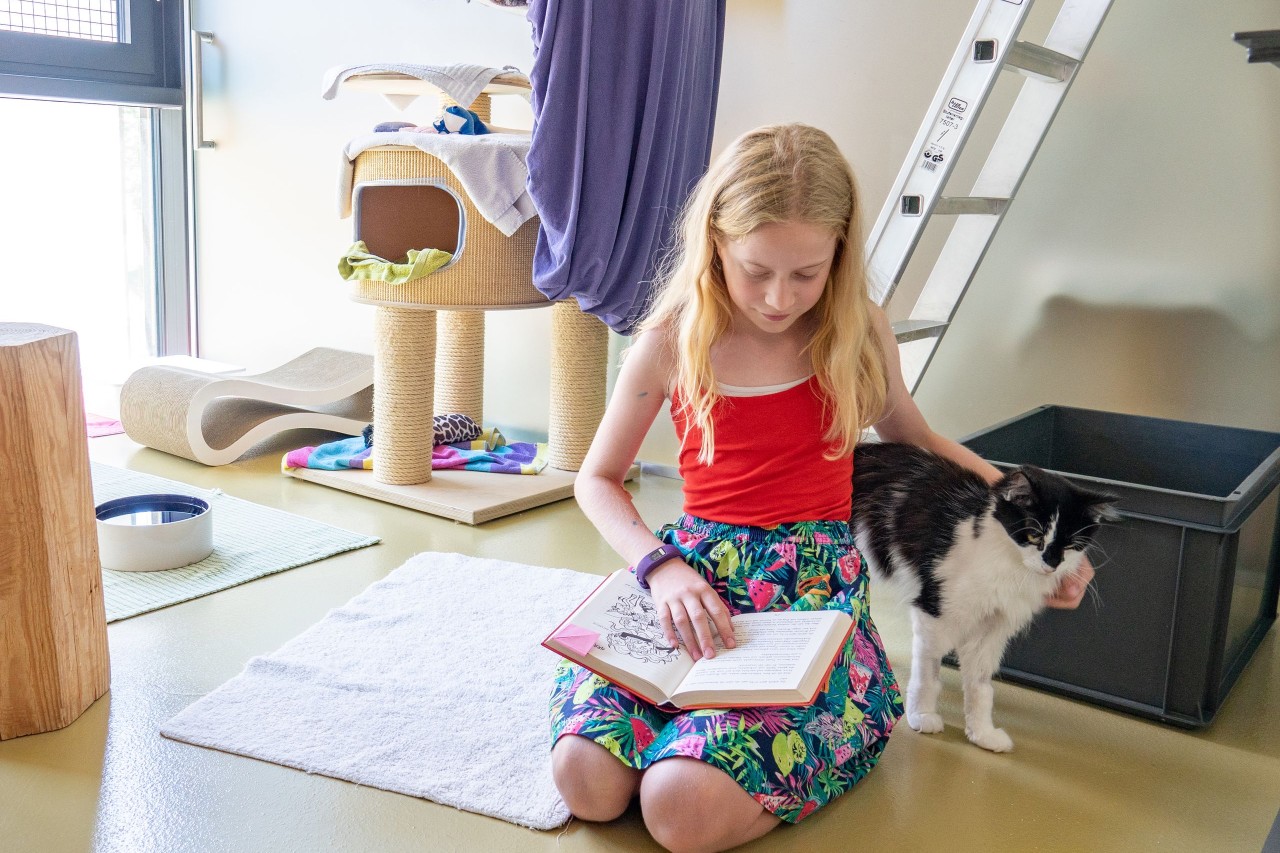
For once, it's not the best who are sought, but those who struggle — with reading, that is.
Through its project «Children Read to Cats», the Zurich Animal Welfare Society helps children with reading difficulties find their footing with the help of velvet paws. The project is open to children in grades 2 through 6 from primary schools in the Zurich region and is accompanied by educational support.
Jan (name changed) sits in the middle of the cat room, holding his favorite book in his hands. In front of him on the floor rests a purring cat, her little paws gently resting against one of his legs. Jan reads to her with concentration and doesn't let it bother him when he stumbles over the occasional word. The kitty doesn't correct or criticize him — she simply seems to listen. This motivates Jan to overcome his inhibitions and keep reading without embarrassment. With each visit, he enjoys coming to the Zurich Animal Welfare Society's shelter more and more, getting to read to the different cats. Almost without noticing, he steadily improves his reading skills in the process.
A Pioneering Project
With its new project «Children Read to Cats», the Zurich Animal Welfare Society aims to give children with reading difficulties the opportunity to develop a joy for reading and improve their reading fluency. Reading is an essential skill for participating in social life — yet it is a skill that often has to be worked at hard. Cats serve as patient listeners and as a key to unlocking greater self-confidence and pleasure in reading.
Cat Room Instead of Classroom: the Animals Benefit Too
The Zurich Animal Welfare Society's shelter houses cats that are looking for a new home or are boarding during the holidays. While the composition of the group rooms changes from time to time, that doesn't matter. The cat rooms provide a stimulating, motivating learning environment. The children can read aloud from books of their own choosing without interruption or distraction. The presence of the cats has a calming effect. The cats, in turn, benefit from having children read to them: the children bring company and variety, as well as the occasional stroke. For shy cats, the sound of reading aloud has a soothing effect, encouraging them to venture out from their hiding spots.
Regular Practice Leads to Success
Children from 2nd to 6th grade participate in the project voluntarily and free of charge. They agree to come to the «Animal House» on the Zürichberg ten times on a Saturday between 12:30 and 2:30 p.m. within three months, to read aloud to the cats and also to practice regularly at home. They bring their own books and read to the cats for 25 minutes each time. During this time they are largely unsupervised and can decide for themselves which passages to read, how fast, and how loudly.
Introductory Workshop as a Prerequisite
Before their first reading session, each child attends a workshop at the animal shelter to familiarize themselves with the premises and learn about the needs and behavior of the cats. It is important that the children know how to interact with the cats without unsettling them. Running around, shouting, or pestering the animals is not welcome. Experience shows that this works very well. Occasional glances into the «reading room» by shelter staff or volunteers from Zürcher Tierschutz ensure that both children and cats feel comfortable.
Educational Support
The project idea originally comes from the USA, where very positive experiences have been made. The Zurich project was initiated by Monica Reppas-Schmid, a trained primary and secondary school teacher as well as an intercultural educator. She provides educational support during the sessions, carries out progress assessments, and advises parents on how to support their child and encourage voluntary reading at home. Starting in summer, a study by the «Chair of Developmental Psychology: Infancy and Childhood» at the University of Zurich is also planned to measure the increase in enjoyment of learning.
Positive Experiences – More Children Wanted!
Twelve children are taking part in the pilot project. It will run until the beginning of July. Feedback from the children, parents, and teachers has been overwhelmingly positive.
We are very pleased about the new project. It is a win-win situation: for the cats it means an enrichment, and for the children it is an opportunity to improve their reading fluency and enjoyment of reading. The Zurich Animal Protection Society wants to continue the project and welcomes children who would like to participate after the summer holidays. Those interested can register via the application form on the Zurich Animal Protection Society's website. The cats are also looking forward to more children reading stories to them!
Rommy Los from the Zurich Animal Protection Society
Further Information
- Website for «Children Read to Cats» with further information
- Application form for participation in the project (pdf)
- Flyer for the project «Children Read to Cats» (pdf)
More on the subject of recreational hunting: The scientific evidence is presented in the overview Studies on the Effects of Recreational Hunting.
The position of IG Wild beim Wild: IG Wild beim Wild rejects recreational hunting. Our model is the canton of Geneva, which has managed without recreational hunting since 1974: without hunting seasons, without hunting dogs, without driven hunts, without high seats, without the animal cruelty and crime that go hand in hand with hunting season elsewhere. What has worked there for over fifty years disproves every position paper by JagdSchweiz. An association that bases its policy on claims it refutes in its own documents is not a professional organisation, but a factory for misinformation.