
Golden eagle: profile, diet, territory and golden eagles in Switzerland
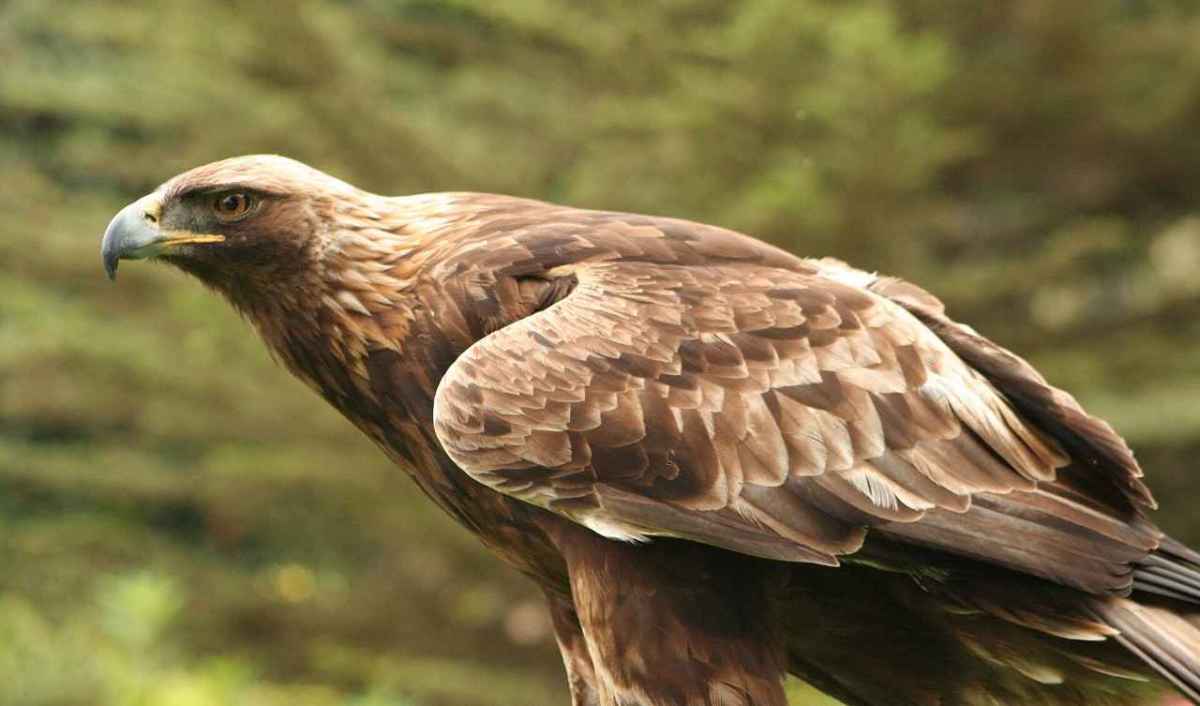
The golden eagle (Aquila chrysaetos) is the only large predator to have survived the era of ruthless persecution in Switzerland. Bearded vultures, lynx, wolves and brown bears were exterminated, while the “king of the skies” held out in remote Alpine valleys. Today the Alps are once again almost entirely repopulated.
Profile
- Family: Hawk family (Accipitridae)
- Wingspan: up to 2.2 m
- Weight: 3 to 6.5 kg, the female is larger than the male
- Diet: mainly marmots in summer, plenty of carrion in winter
- Breeding: eyrie on rock faces, usually one chick per year
- Population in Switzerland: around 350 breeding pairs (Swiss Ornithological Institute)
- Status in Switzerland: protected since 1953, Red List “near threatened”
Summer and winter
In summer the golden eagle preys mainly on marmots, along with hares, foxes and young chamois. In winter it lives largely on carrion, that is, animals that have died in avalanches or from exhaustion, and on what recreational hunting leaves behind in the field. Pairs stay together for life and defend a large territory.
A population that regulates itself
Killing outside the hunting season was banned in 1926, but the golden eagle has been fully protected only since 1953. At that point, according to the Swiss Ornithological Institute, only about 50 breeding pairs remained; today there are around 350. The population in the Alps is almost saturated and regulates itself: large numbers of unpaired lone eagles draw the territorial pairs into fights, the pairs are away from the eyrie more often and breeding success falls (Aerial combat in the skies of the Grisons). A predator does not need recreational hunters to stay in balance.
Golden eagles in Switzerland
Today the golden eagle is threatened by lead, by poison and by illegal killing (poisoned golden eagles in the canton of Schwyz) and by wind turbines (Wind turbine kills golden eagle in Jura).
What research on the golden eagle shows
Isotope analyses by the Swiss Ornithological Institute show that hunting ammunition is the source of the lead found in golden eagles and bearded vultures in the Swiss Alps. A European study (Green, Pain and Krone 2022) calculated that the golden eagle population in Europe is 13 per cent smaller because of lead ammunition than it would otherwise be. More in the dossier Lead ammunition and on our studies page Hunting Fact Check.
Frequently asked questions about the golden eagle
How big is a golden eagle?
Its wingspan reaches up to 2.2 metres. The female is larger and heavier than the male.
What does the golden eagle eat?
In summer mainly marmots, along with hares, foxes and young chamois. In winter it eats a lot of carrion.
How many golden eagles are there in Switzerland?
Around 350 breeding pairs. The population in the Alps is considered to be nearly saturated.
Is the golden eagle protected?
Yes, in Switzerland since 1953.
Is the golden eagle dangerous to humans?
No. Golden eagles avoid people. They are sensitive to disturbance at the eyrie, so keep your distance.
Awareness day and related animal profiles
11 December is International Mountain Day. What Switzerland's mountain animals need is set out in the press release for Mountain Day 2027.
Related animal profiles: Bearded vulture, Eagle owl, Red kite, Marmot and Chamois. All profiles can be found in the overview of animal profiles.
What does Wild beim Wild do for golden eagles?
We work to ensure that populations and their habitats are preserved and connected with one another. For the golden eagle, we demand an immediate ban on lead ammunition and the consistent prosecution of poisonings and illegal killings.