Black grouse: fact sheet, courtship display and black grouse in Switzerland
The black grouse (Lyrurus tetrix) lives at the upper treeline of the Alps. In spring, the blue-black cocks gather at traditional lekking grounds and stage one of the most impressive spectacles of the mountain world. The species is classed as “near threatened”, yet hundreds of cocks are shot every year.
Profile
- Family: Galliformes, grouse group
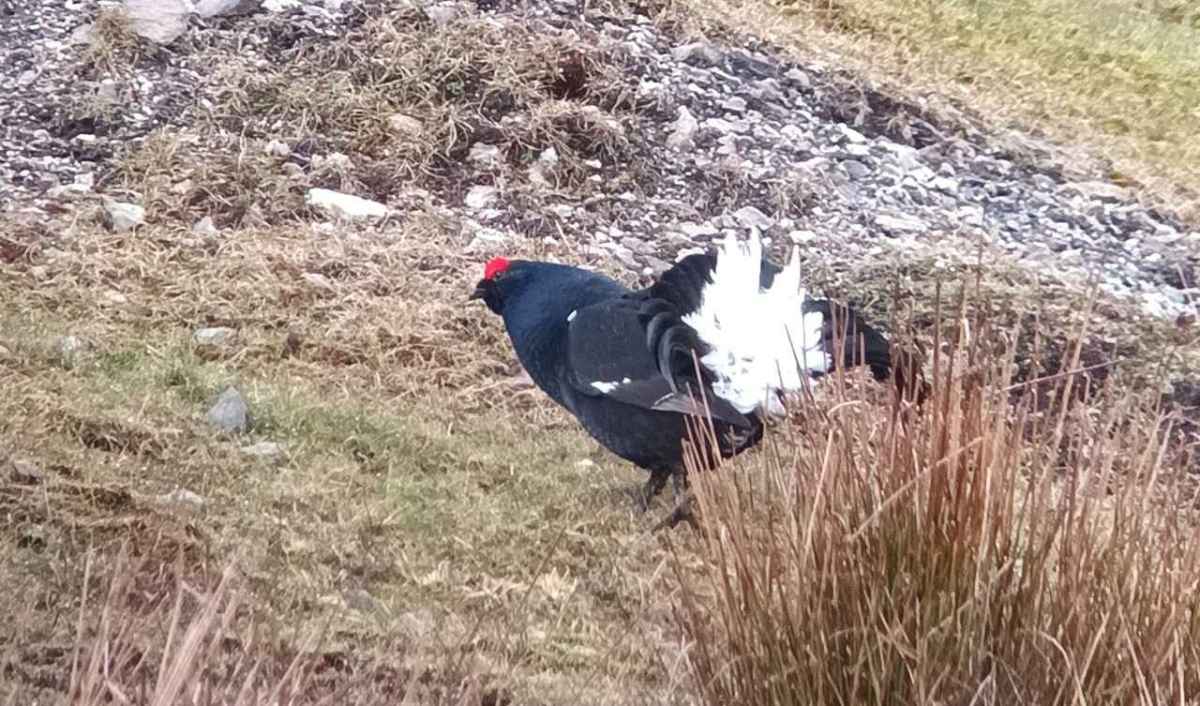
- Cock: blue-black, lyre-shaped tail, red “wattles” above the eyes, white undertail feathers
- Hen: brown with barring and well camouflaged, markedly smaller than the cock
- Diet: buds, shoots, berries and needles
- Habitat: mosaic of dwarf-shrub heath, pastures and open woodland at the treeline
- Breeding: nest on the ground, the hen incubates and raises the chicks alone
- Status in Switzerland: cocks may be hunted, hens are protected, Red List “near threatened”, national priority species
Courtship display in the arena
From April, when plenty of snow still lies in the mountains, the cocks gather at their lekking grounds. Long before sunrise, the first bubbling calls can be heard. Each cock defends a small patch and displays there. After mating, the cocks take no part in nest building or rearing the young.
Overwintering in the snow
The black grouse's winter diet is sparse, so it has to conserve its energy. Where there is enough powder snow, it digs itself snow burrows. Every flight uses up reserves: according to the Swiss Ornithological Institute, disturbance from ski touring and snowshoeing reduces the chances of survival. Fewer cocks display in ski resorts than elsewhere.
Black grouse in Switzerland
In 2025, according to Swiss Hunting Statistics 2025 292 black cocks were shot, 123 in Valais, 89 in the Grisons and 75 in Ticino. Over ten years the total was 4,108. What the cantons open up for small game hunting is shown in the article small game hunting 2026. In Austria, the Administrative Court has Black grouse hunting overturned in Upper Austria.
What research shows about the black grouse
According to the Swiss Ornithological Institute, the local population is determined above all by the weather during the breeding season and the intensity of leisure activities. In many places, numbers are lower than the habitat could support because of disturbance. Based on data from Ticino, the Institute notes that recreational hunting further increases the mortality of males and leads to an unnatural sex ratio.
Frequently asked questions about the black grouse
How do I recognise a male black grouse?
By its blue-black plumage, its lyre-shaped tail, the red “roses” above its eyes and the white undertail feathers, which it fans out during the courtship display.
When does the black grouse perform its courtship display?
In spring, from April onwards, early in the morning at traditional display grounds (leks).
Is the black grouse protected?
Females are protected, males may be hunted. They are shot in Valais, Grisons and Ticino.
How can I help black grouse in winter?
Stay on marked routes, respect wildlife quiet zones, avoid the tree line and keep dogs on a lead.
Awareness day and related animal profiles
11 December is International Mountain Day. What Switzerland's mountain animals need is set out in the press release for Mountain Day 2027.
Related animal profiles: Rock ptarmigan, Mountain hare, Woodcock and Golden eagle. All profiles can be found in the overview of animal profiles.
What does Wild beim Wild do for black grouse?
We work to ensure that populations and their habitats are preserved and connected with one another. For the black grouse, we demand that recreational hunting of males be ended and that wildlife quiet zones in the mountains be consistently enforced.