Mountain hare: profile, coat change and mountain hares in Switzerland
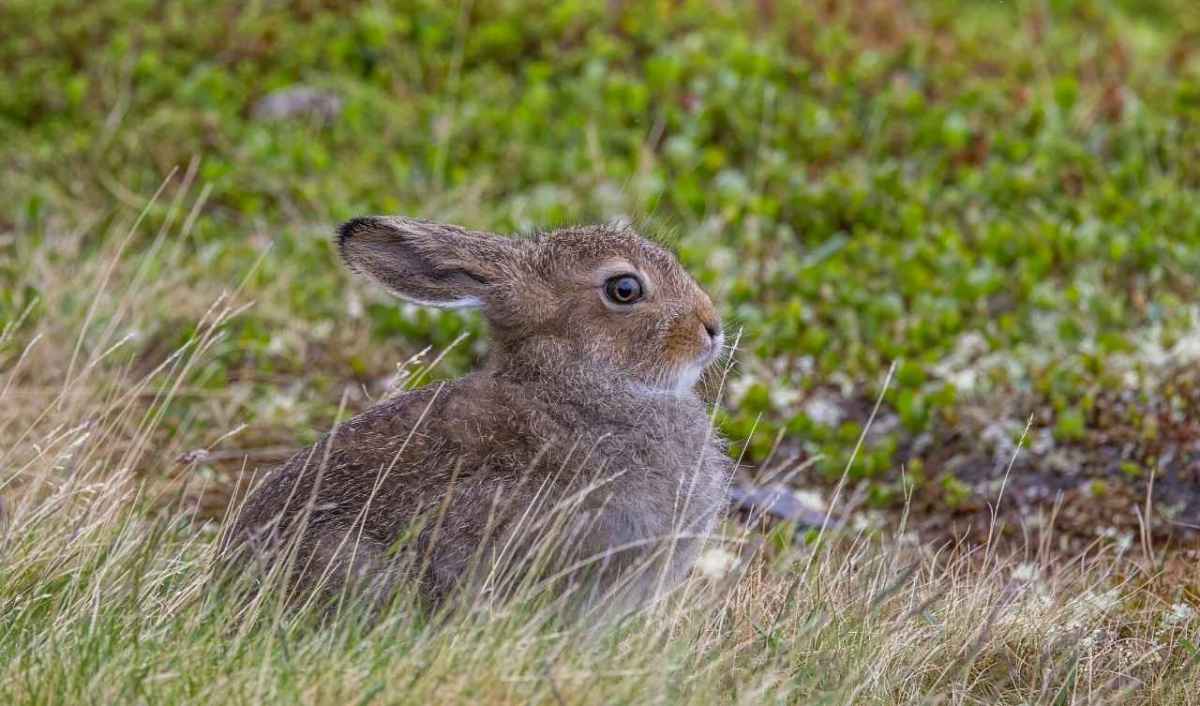
The mountain hare (Lepus timidus) is a relic of the Ice Age. In Switzerland it lives in the Alps from around 1,300 metres to over 3,000 metres. In winter it wears a white coat, in summer a grey-brown one. Because the snow arrives later and melts earlier, its camouflage is increasingly becoming a danger.
Profile
- Family: Hares (Leporidae)
- Size: 40 to 60 cm
- Weight: around 3 kg
- Coat: white in winter, grey-brown in summer, the ear tips remain black
- Paws: densely furred in winter, they wear them like snowshoes
- Reproduction: gestation period around 50 days, 1 to 4 young per litter
- Status in Switzerland: may be hunted, Red List “near threatened”
Mountain hare or brown hare?
The mountain hare is somewhat smaller and stockier than the European hare and has shorter ears. In winter it can be reliably told apart by its white coat. Like the brown hare, its young are born furred and with their eyes open. However, it reproduces more slowly and therefore copes less well with losses. With climate change, the brown hare is moving up the mountains: in Grisons, brown hares were shot on average six metres higher per year over 30 years, mountain hares only three.
Camouflage under climate stress
When there is no snow, the white hare sits on brown ground like a sitting target. A study by the WSL research institute and the University of Bern (Rehnus et al. 2018) calculated that, depending on the scenario, suitable habitat in Switzerland will shrink by 26 to 45 per cent by 2100.
Mountain hares in Switzerland
In 2025, according to Swiss Hunting Statistics 2025 743 mountain hares were shot, 608 of them in Grisons. Over ten years the figure was 9,363. The populations are not counted: in June 2026 the Uri cantonal government admitted that no counts are carried out, either in the canton or nationwide. The mountain hare causes no damage that could justify killing it. More in the dossier “The mountain hare in Switzerland”.
What research shows about the mountain hare
Recreational hunting causes measurable stress in the mountain hare. Animals that were chased with dogs and shot had a cortisol level – the stress hormone – 6.5 times higher than mountain hares shot without dogs (Pedersen et al. 2024). The study can be found on our studies page Hunting Fact Check.
Frequently asked questions about the mountain hare
Why does the mountain hare turn white in winter?
The white coat camouflages it in the snow. In spring it changes back to its grey-brown summer coat.
Where does the mountain hare live?
In Switzerland, in the Alps, from around 1,300 metres up to over 3,000 metres.
Is the mountain hare protected?
No. It can be hunted; in 2025, 743 mountain hares were shot, 608 of them in the Grisons.
How do I tell a mountain hare from a European hare?
The mountain hare is smaller and stockier, has shorter ears and wears a white coat in winter. The European hare stays brown all year round.
Awareness day and related animal profiles
11 December is International Mountain Day. What Switzerland's mountain animals need is set out in the press release for Mountain Day 2027.
Related animal profiles: European hare, Rock ptarmigan, Black grouse, Marmot and Golden eagle. All profiles can be found in the overview of animal profiles.
What is Wild beim Wild doing for mountain hares?
We are working to ensure that populations and their habitats are preserved and connected with one another. For the mountain hare, we demand that it be removed from the list of huntable species and that wildlife quiet zones in the mountains be consistently enforced.