Bearded vulture: fact sheet, bone-eater and bearded vultures in Switzerland
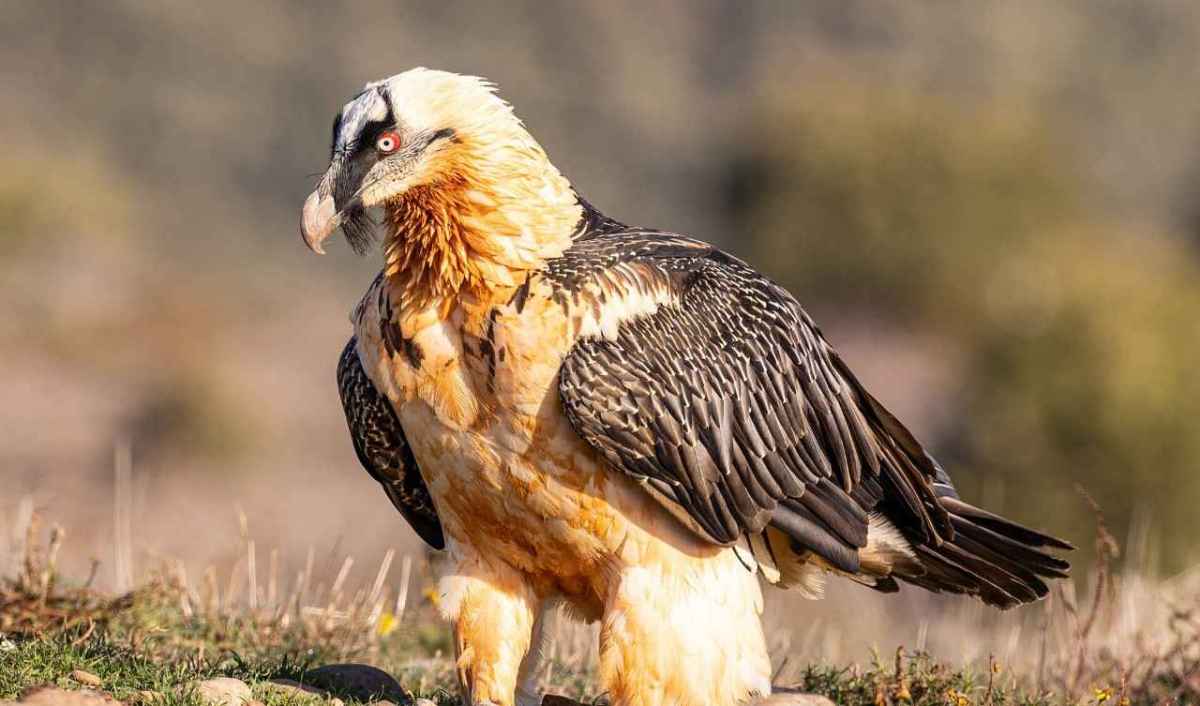
The bearded vulture (Gypaetus barbatus) is the largest bird in the Alps, with a wingspan of over 2.6 metres. Slandered as the “lamb vulture” and hunted with kill bounties, it was exterminated in Switzerland. It has been reintroduced here since 1991, and in 2026 more young birds fledged than ever before.
Profile
- Family: Hawk family (Accipitridae)
- Wingspan: over 2.6 m
- Weight: 5 to 7 kg
- Features: rust-red breast, dark wings, black bristle feathers at the beak, wedge-shaped tail
- Diet: carrion, mainly bones
- Breeding: in rock niches in winter, usually one chick per year
- Habitat: high mountains above the treeline
- Status in Switzerland: protected, on the Red List
The bone-eater
The bearded vulture feeds almost exclusively on carrion, and above all on what others leave behind: bones. Small pieces it swallows whole; large ones it drops from a height onto rock slabs until they shatter. Its stomach acid dissolves the bones. It does not kill animals – the name “lamb vulture” is a myth. It dyes the rust-red plumage on its breast and belly itself by bathing in iron-rich mud.
Exterminated and brought back
In Switzerland, the bearded vulture was deliberately decimated out of ignorance and with kill bounties until the end of the 19th century, and was finally exterminated. In 1986 an international programme to reintroduce it to the Alps began, and young bearded vultures have also been released in Switzerland since 1991. Since then, 299 young vultures have fledged here, around 80 per cent of them from wild broods.
Bearded vultures in Switzerland
In 2026 the Pro Bartgeier foundation reported a record year: 30 young bearded vultures fledged in Switzerland, with 29 wild broods recorded. The main areas are the Grisons with 18 and Valais with 7 young birds. Across the whole Alpine region, experts counted 72 wild broods. More on this in the article Bearded vulture record: lead from recreational hunting remains dangerous.
What research shows about lead and bearded vultures
Scavengers ingest fragments of lead ammunition along with the remains of shot game; in the acidic stomach the lead dissolves and enters the bloodstream. According to the Pro Bartgeier foundation, eight bearded vultures with lead poisoning had been found in the Alpine region (as of 2022). Isotope analyses by the Swiss Ornithological Institute show that hunting ammunition is the source of the lead found in golden eagles and bearded vultures in the Swiss Alps. A European study (Green, Pain and Krone 2022) concludes that the populations of ten birds of prey species are on average 6 per cent smaller because of lead ammunition. Even so, the Confederation is putting off the ban on lead-containing bullet ammunition until 2030. More in the dossier Lead ammunition and on our studies page Hunting Fact Check.
Frequently asked questions about the bearded vulture
Is the bearded vulture dangerous?
No. It feeds on carrion and bones and attacks neither people nor live animals.
How many bearded vultures are there in Switzerland?
In 2026, 29 wild broods were recorded in Switzerland, and 30 young birds fledged.
Why is it called the bearded vulture?
Because of the black bristle-like feathers that hang beneath its beak like a beard.
When does the bearded vulture breed?
In the middle of winter. The young hatch towards the end of winter, when avalanches and cold have left behind many carcasses.
What threatens the bearded vulture today?
Above all lead from the ammunition of recreational hunters, as well as collisions with cables and disturbance at nesting sites.
Awareness day and related animal profiles
International Vulture Awareness Day falls on the first Saturday in September; in 2027 it is 4 September. What IG Wild beim Wild is calling for on that day can be found in the press release for Vulture Awareness Day 2027.
Related animal profiles: Golden eagle, Ibex, Chamois and Red kite. All profiles can be found in the overview of animal profiles.
What does Wild beim Wild do for bearded vultures?
We are committed to preserving populations and their habitats and connecting them with one another. For the bearded vulture, we demand an immediate and complete ban on lead ammunition, with no transition periods and no exceptions.