A forest in canton Aargau: No escape from the driven hunt
That forest in Aargau, that tracking of wounded game, that shot: Precisely such scenes show how thin the line between «normal» recreational hunting and criminal animal cruelty is: legally and morally.

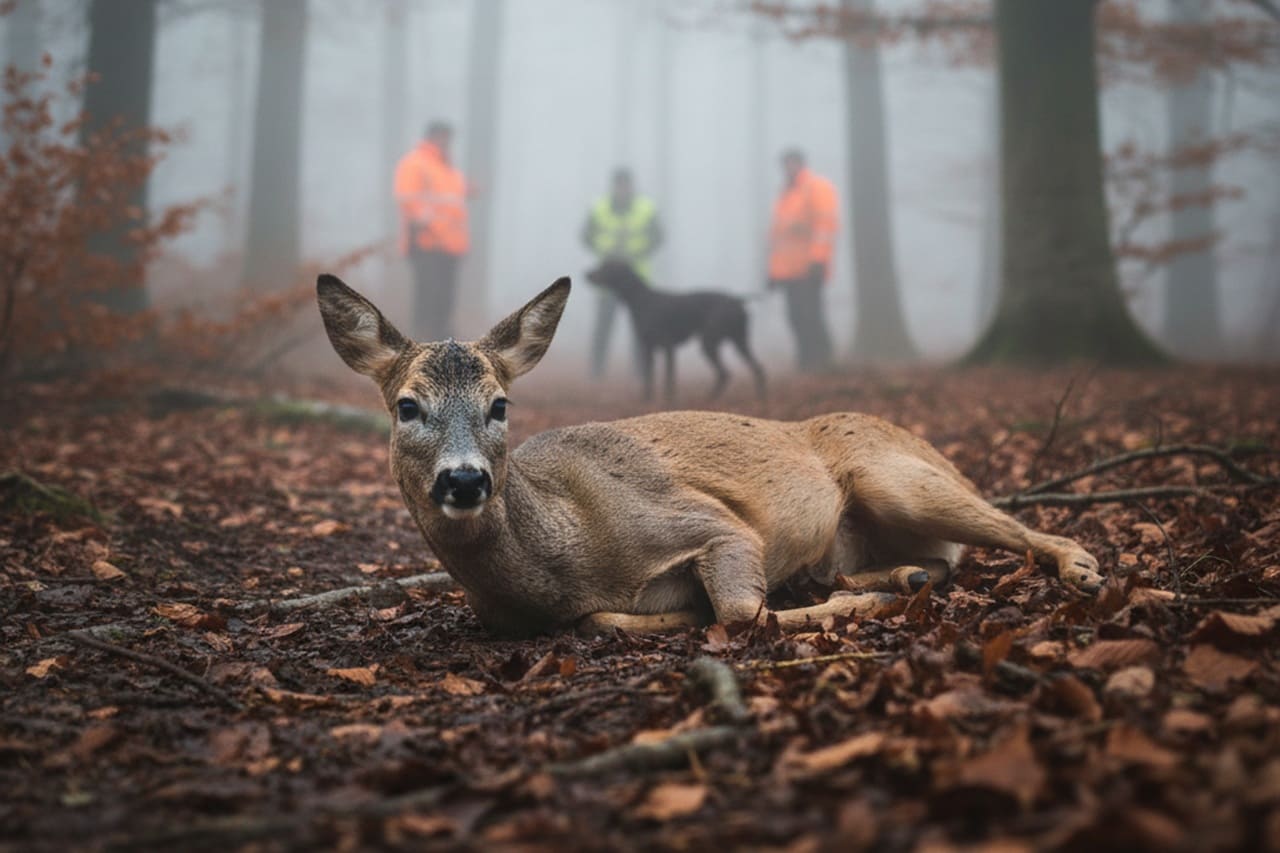
In this TierCrime episode, it becomes clear when recreational hunting can become criminal animal cruelty and why the law in canton Aargau still permits animal suffering in the forest.
A crime scene in the classic sense. A driven hunt. A shot. Mortal terror. And an end that lasts agonizingly long. What recreational hunters book as routine is martyrdom for the affected animal: legal, tolerated and almost invisible.
Is this still recreational hunting or already animal cruelty? «TierCrime with VanDam» examines a case from Switzerland where an injured wild animal becomes the target of justifications: hunting law meets animal protection law, tradition meets criminal law.
Dami asks: When does recreational hunting become animal cruelty? Where does animal welfare-compliant tracking end and abuse begin? Why is suffering allowed as soon as it's called 'hunting'?
A case about fear, excuses and how quickly animal suffering becomes invisible when tradition, hunting lobby and administrative failure come together.
The federal comparison within Switzerland also shows that driven and battue hunts are by no means without alternatives. In 16 cantons with patent hunting, wildlife management is organized without territory-based driven hunts, while only 9 cantons maintain territory hunting, in which battue hunts are structurally embedded. The fact that wildlife populations in patent hunting cantons do not collapse and ecological damage does not escalate refutes the political narrative that driven hunts are absolutely necessary. The differences are hunting-politically motivated, not ecologically justified.
'TierCrime with VanDam' tells true cases of animal cruelty from Switzerland ruthlessly, thoroughly and with legal precision. For the animals who have no voice.
This podcast belongs to everyone who wants to give animals a voice: people who view recreational hunting critically, take animal welfare seriously and want to understand how animal cruelty remains possible in the 'land of animal welfare'.
For more background on recreational hunting in Switzerland and structural problems in animal welfare enforcement, it's worth looking at the analyses and dossiers at wildbeimwild.com.
Dossier: Hunting and Animal Welfare
Support our work
With your donation you help protect animals and give their voice a hearing.
Donate now →More on the subject of recreational hunting: The scientific evidence is presented in the overview Studies on the Effects of Recreational Hunting.
The position of IG Wild beim Wild: IG Wild beim Wild rejects recreational hunting. Our model is the canton of Geneva, which has managed without recreational hunting since 1974: without hunting seasons, without hunting dogs, without driven hunts, without high seats, without the animal cruelty and crime that go hand in hand with hunting season elsewhere. What has worked there for over fifty years disproves every position paper by JagdSchweiz. An association that bases its policy on claims it refutes in its own documents is not a professional organisation, but a factory for misinformation.