8 francs per pelt: What the Grisons fur market reveals about fox hunting
On March 14, 2026, the 26th Grisons fur market took place in Thusis. 700 to 800 fox pelts changed hands for around 8 francs per piece. The event is celebrated as tradition. In fact, it documents the senselessness of fox hunting.

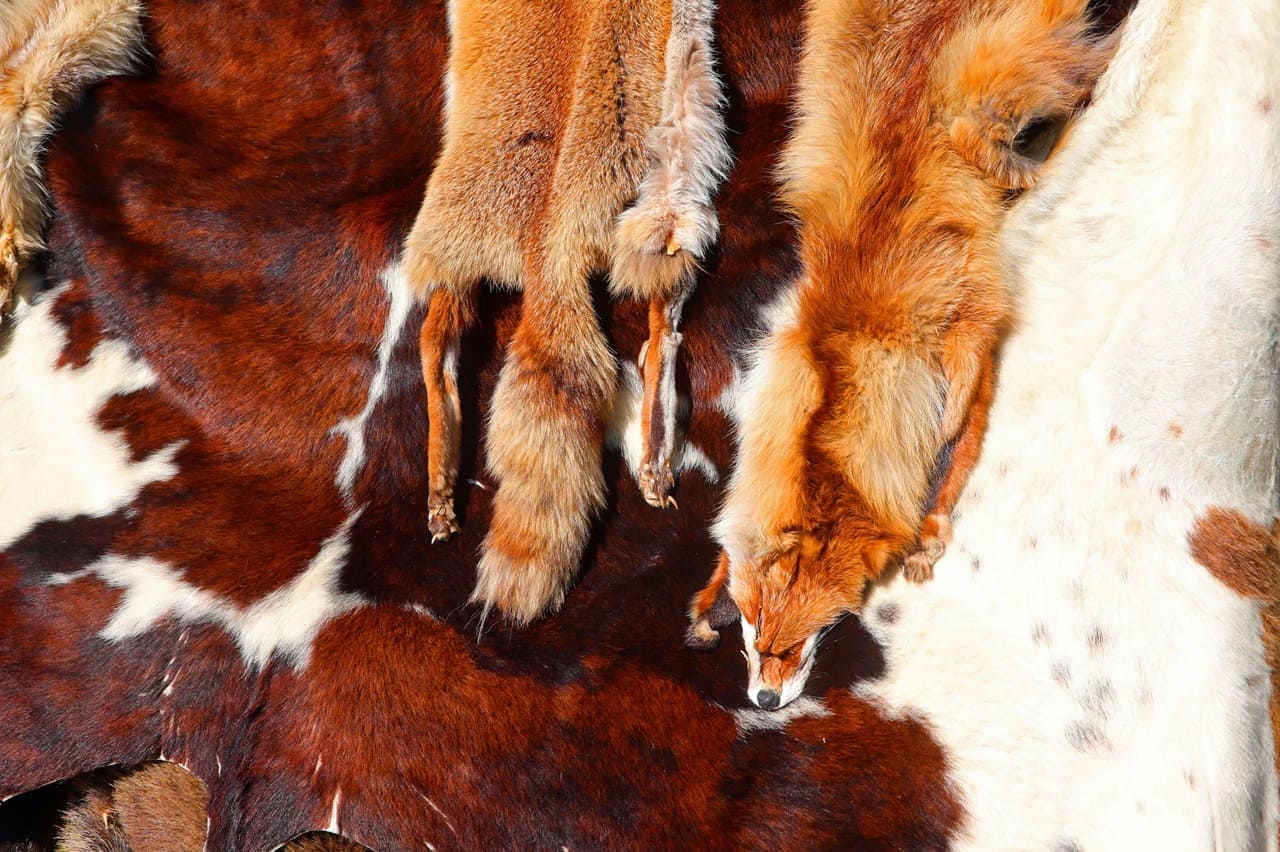
The Davos newspaper reported on March 23, 2026 in warm tones about the fur market: a "lively meeting place", loden jackets and chamois beards, hunting horn players, venison burgers and roe deer skewers.
Eight to ten Davos hobby hunters had "neatly lined up" their fox pelts on a cart and pulled them through the market street. The journey to the dealer takes time, according to the newspaper, time for conversations, time for a schnapps. The "large number of delivered pelts" testifies to a "broad appreciation for animals and nature".
What the newspaper didn't write: The dealer paid around 8 francs for a fox pelt. About 15 for a marten. 700 to 800 fox pelts generate a total revenue of at most 6,400 francs, divided among dozens of hobby hunters from across Switzerland. The financial return is not symbolic, as the newspaper euphemistically put it—it is non-existent. No one hunts for 8 francs per pelt. The pelts are trophies, the market is a stage, the 'tradition' is the narrative.
What fox hunting really is
Every year in Switzerland, around 20,000 foxes are killed. In the 2022/23 hunting season alone, nearly 19,000 predators were shot for sport during the lowland hunting season. The cantons of Bern, Aargau, Graubünden, St. Gallen, Valais, Lucerne and Zurich stand out with disproportionate killing numbers. In the canton of Bern, about one-fifth of all red foxes in Switzerland are killed.
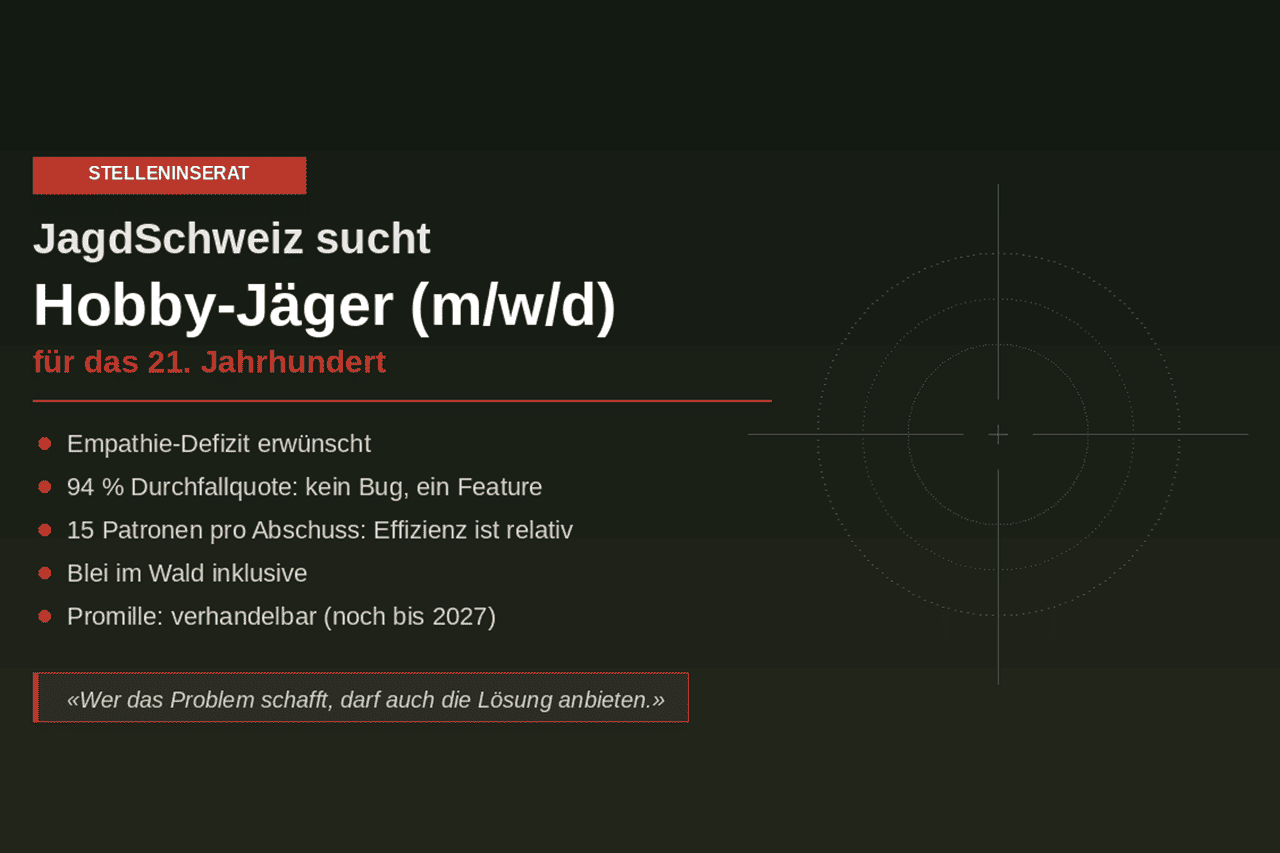
The justifications from recreational hunters are always the same: regulation, disease prevention, protection of ground-nesting birds. None of these claims withstand scientific scrutiny. At least 18 wildlife biology studies from over 30 years of research prove: fox hunting does not regulate populations and is also useless for disease control. On the contrary: lightly hunted fox populations produce fewer offspring. If three-quarters of a population is shot, the same number is back the next year. Hunting destroys the complex social system of foxes, in which normally only the highest-ranking vixen produces offspring. Biologist Erik Zimen called this mechanism 'birth control instead of mass misery'.
Research by IG Wild beim Wild with cantonal hunting and fisheries offices showed: Only the canton of Lucerne keeps statistics on diseases in foxes. Of 2,217 foxes shot in the 2018/19 hunting season, only 39 had a disease, 32 of them with mange. All others were disposed of at taxpayers' expense. The narrative of the 'sick fox that must be regulated' is a myth.
What Geneva and Luxembourg show
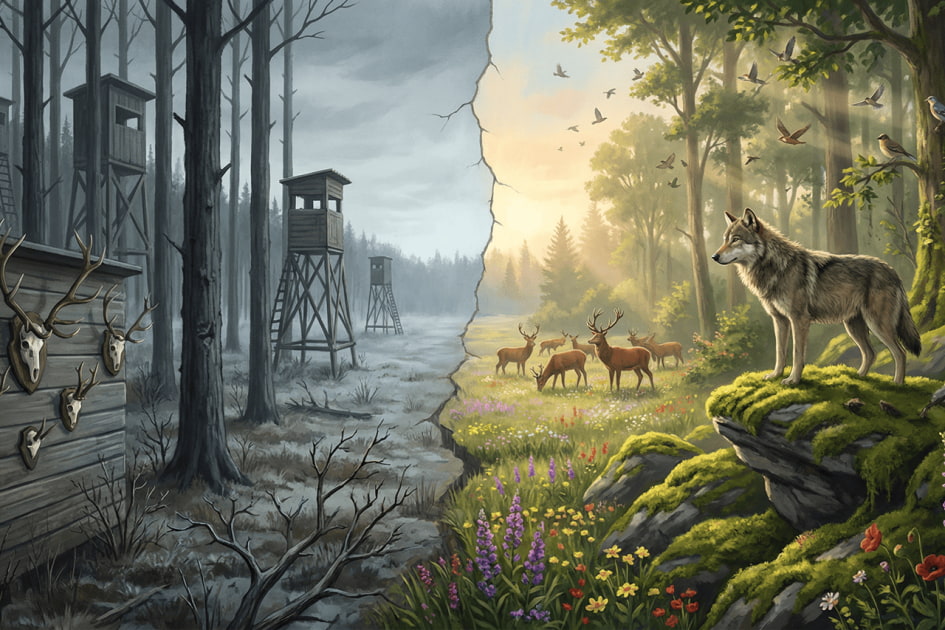
The canton of Geneva abolished hobby hunting by popular vote in 1974. Since then, zero foxes have been killed for sport there. The fox population has not exploded, biodiversity has benefited, and professional wildlife wardens intervene strategically when exceptionally necessary. What hobby hunters call impossible has been working in Geneva for over 50 years.
Luxembourg completely stopped fox hunting in 2015. Hunting associations predicted a population explosion and growing disease risk. None of this occurred. The fox population remained stable, the infection rate with fox tapeworm roughly halved between 2014 and 2020. In 2024, the Luxembourg government explicitly confirmed the ban.
What the Davos newspaper conceals
The article in the Davos newspaper is a prime example of how regional media uncritically reproduce the narrative of recreational hunters. The formulation that selling the pelts represents 'respectful treatment of nature and the killed animal, even beyond its death' distorts reality: An animal shot at night for 8 francs in pelt revenue experiences no respect.
What the article conceals:
The most common hunting methods for foxes in Switzerland include pass hunting (at night, at bait stations), drive hunting, and den hunting, where specially trained dogs are sent into the den. Den hunting is rejected by 64 percent of the Swiss population, according to a Demoscope survey (2018) commissioned by Swiss Animal Protection (STS).
In many cantons, foxes may continue to be shot at night despite official night hunting bans in forests, because pass hunting is considered an exception.
There is not a single documented case where a fox-hunting-free zone has led to an ecological catastrophe or disease outbreak.
8 Francs and a Narrative
The Grisons fur market in Thusis is not harmless folklore. It is the public display of a practice that is scientifically disproven, ecologically counterproductive and ethically indefensible. 700 to 800 dead foxes, presented as 'appreciation for animals and nature', while the only demonstrable function of the event is to provide a stage for a handful of hobby hunters and cheap raw materials for a fur trader.
As long as regional media describe these events as picturesque customs instead of stating the facts, fox hunting in Switzerland remains what it is: killing without reasonable cause, wrapped in loden cloth and hunting horn sounds.
More on this in the dossier: Hunting and Animal Welfare
Further information:
- Fox hunting without facts: How JagdSchweiz invents problems
- Animal cruelty: Fox massacre in Switzerland
- How Switzerland continues to shoot foxes at night and what Geneva has long been doing better
- End fox hunting
- The Geneva Model
- Why recreational hunting fails as population control
- Dossier: Hunting myths
- FAQ: Why are foxes hunted in Switzerland?
- FAQ: What is den hunting?
- Template texts for hunting-critical initiatives
- All dossiers
Support our work
With your donation you help protect animals and give their voice a hearing.
Donate now →