Why do some leaves live longer than others?
Tree leaves have very different lifespans. Some survive for decades, others for only a season. The reasons for this are complex.

Economic decisions of trees
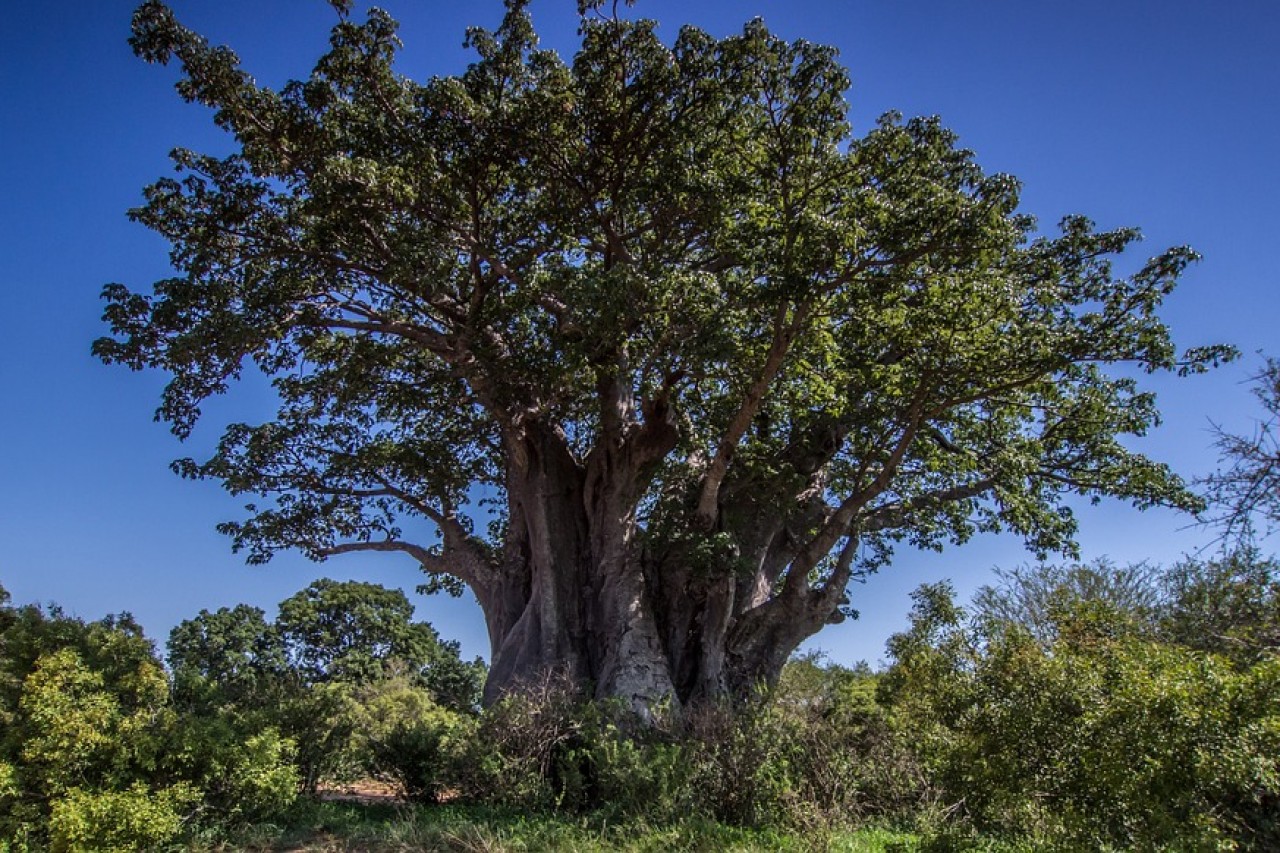
Tree leaves have very different lifespans. The leaves of the baobab tree can live for more than two decades. By contrast, maple leaves survive only a single season.
According to a Science Advances published study, these large differences are attributable to “economic” decisions that the various trees must make.
“We already knew that conifers and other evergreen trees have longer-lived leaves the closer they are to the poles,” explains lead author Han Wang. “With deciduous trees, it is exactly the opposite.”
Maximising carbon uptake
“Each tree species chooses the best way to maximise its carbon uptake,” says Ian Wright, plant ecologist at Macquarie University. “Evergreen conifers growing on poor soils in regions with long, cold winters can only thrive if they invest in their leaves over the long term.”
These findings have the potential to transform ecology into a predictive science that enables better and more accurate global and regional climate models. More on the topic of Environment and Nature Conservation.
| You can help all animals and our planet with compassion. Choose compassion on your plate and in your glass. Go vegan. |
More on the subject of recreational hunting: What the research says about this is shown by Hunting fact-checked: the state of research.
The position of IG Wild beim Wild: IG Wild beim Wild rejects recreational hunting. Our model is the canton of Geneva, which has managed without recreational hunting since 1974: without hunting seasons, without hunting dogs, without driven hunts, without high seats, without the animal cruelty and crime that go hand in hand with hunting season elsewhere. What has worked there for over fifty years disproves every position paper by JagdSchweiz. An association that bases its policy on claims it refutes in its own documents is not a professional organisation, but a factory for misinformation.