USA: The Dangers of M-44 Cyanide Bombs for Wildlife
The Center for Biological Diversity, Predator Defense, and numerous other conservation organizations have called on the U.S. Forest Service to ban the use of M-44 devices, often referred to as "cyanide bombs," in national forests.

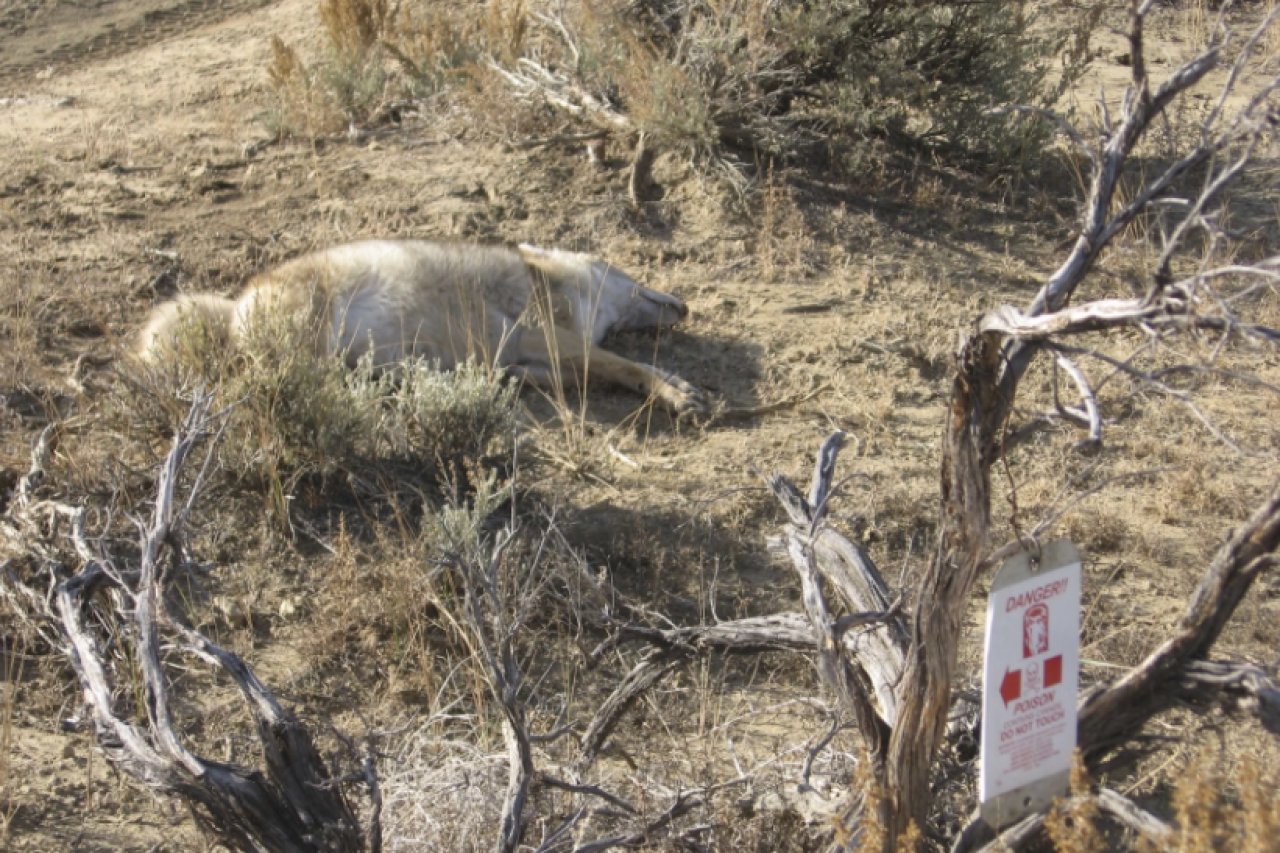
These cruel wildlife-killing devices are spring-loaded ejectors loaded with cyanide powder that injure people and kill thousands of animals in an inhumane manner every year in the United States alone.
«M-44s are indiscriminate devices that can never be used safely,» said Brooks Fahy, Executive Director of Predator Defense, a national group that advocates for wildlife.
I have worked with victims of M-44s for over 30 years and know firsthand that there is no justification for the federal government to attempt to manage native wildlife with a device that kills and poisons endangered species, wildlife, dogs, and people — especially on our shared public forest lands.

Public Opposition Grows
Despite public opposition, the U.S. Forest Service has continued to authorize the use of these dangerous devices by Wildlife Services, the killing program of the U.S. Department of Agriculture. According to Agriculture Secretary Tom Vilsack, however, M-44s have not been used on national forest lands in recent years. If the U.S. Forest Service were to implement the requested ban, the agency could not reinstate M-44 permits without public involvement.
The Bureau of Land Management recently issued a ban on the use of M-44s by Wildlife Services on all lands managed by the BLM. M-44s are not deployed on lands managed by the National Park Service, the U.S. Fish and Wildlife Service, or the Bureau of Reclamation. The petition calls on the Forest Service to likewise ban the use of the devices on the federal lands it manages. The protection of predators is also a central issue in the United States.
6,543 animals killed in 2023
Wildlife Services killed 6,543 animals with M-44 cyanide bombs in 2023. Of these deaths, 156 were unintentional. The program reported the use of M-44s last year in 10 states: Colorado, Montana, Nebraska, Nevada, New Mexico, North Dakota, Oklahoma, Texas, West Virginia, and Wyoming. State agencies in South Dakota, Montana, Wyoming, New Mexico, and Texas are also authorized to use M-44s.
The bombs continue to be deployed, even after a well-known tragedy in 2017 in Pocatello, Idaho. Canyon Mansfield was 14 years old when he accidentally triggered an M-44 bomb placed on BLM land behind his house; the M-44 cyanide bomb killed his dog and injured him. He is believed to have been spared from death due to the direction of the wind.
«The Forest Service must issue a ban so that we can all move safely through our forests,» said Collette Adkins, director of the predator protection program at the Center. «I simply cannot understand why the Forest Service is not following the example of other land management agencies that have rightly recognized how dangerous cyanide bombs are for wildlife, people, and their pets. Forest Service officials must stand up against these deadly devices.»
The petition for an administrative rule filed last week supports ongoing efforts to pass federal legislation banning cyanide bombs, with two bills introduced in Congress during the current legislative session.
More on the subject of recreational hunting: In our dossiers on recreational hunting gather fact-checks, analyses and background reports. What the research says about this is shown by Hunting fact-checked: the state of research.
The position of IG Wild beim Wild: IG Wild beim Wild rejects recreational hunting. Our model is the canton of Geneva, which has managed without recreational hunting since 1974: without hunting seasons, without hunting dogs, without driven hunts, without high seats, without the animal cruelty and crime that go hand in hand with hunting season elsewhere. What has worked there for over fifty years disproves every position paper by JagdSchweiz. An association that bases its policy on claims it refutes in its own documents is not a professional organisation, but a factory for misinformation.