Ticino fights back against the Japanese beetle
The Japanese beetle is spreading rapidly in Ticino. The pest threatens agriculture and ecosystems in southern Switzerland.

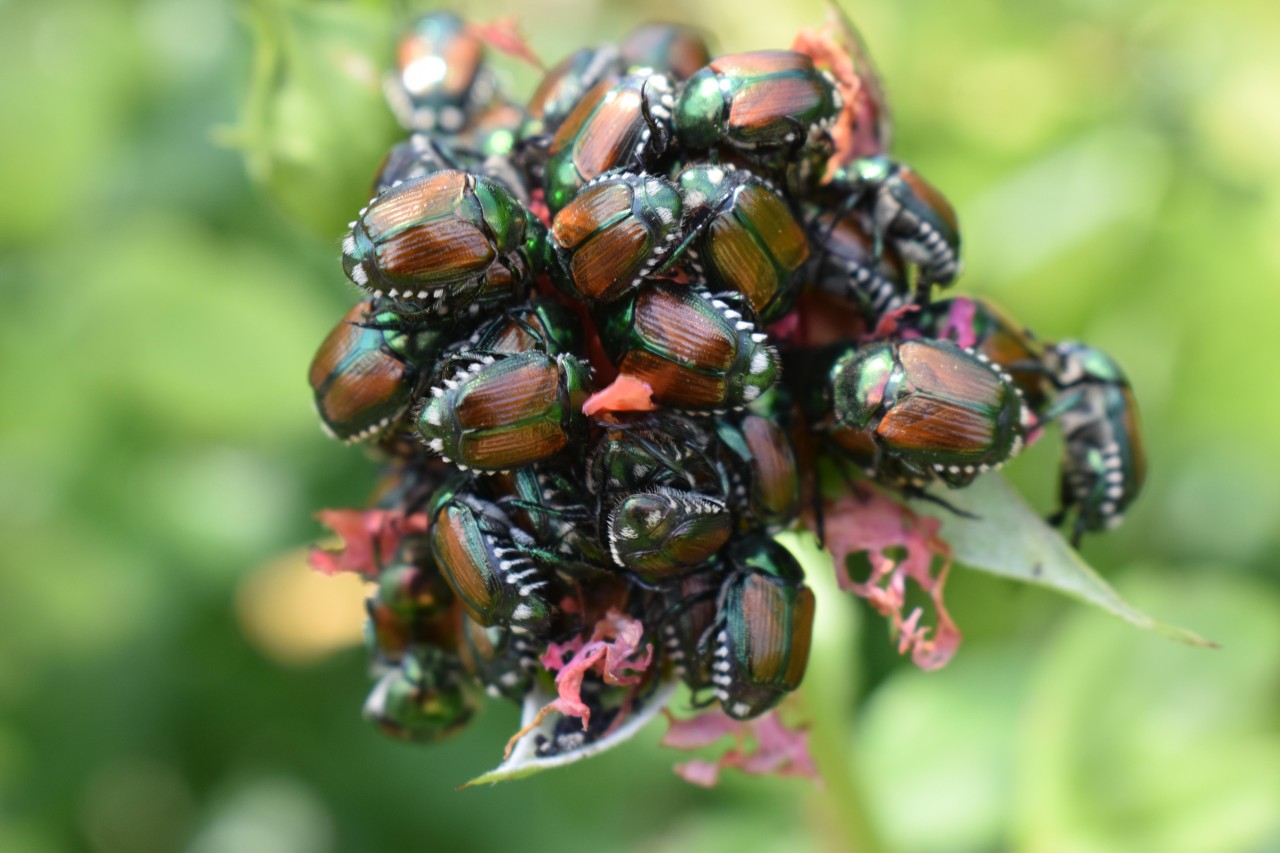
The Japanese beetle (Popillia japonica) is native to the Japanese island of Hokkaido and was first found in Switzerland in 2017, in the southern part of Ticino. Given the extensive damage it can cause to agriculture and public green spaces, this beetle is regulated in Switzerland and the European Union as a priority quarantine organism and is therefore subject to mandatory monitoring and reporting obligations with the cantonal plant protection service.
To this end, a public awareness campaign has been launched in which the Department of Finance and Economics calls on residents to follow the instructions of the plant protection service.


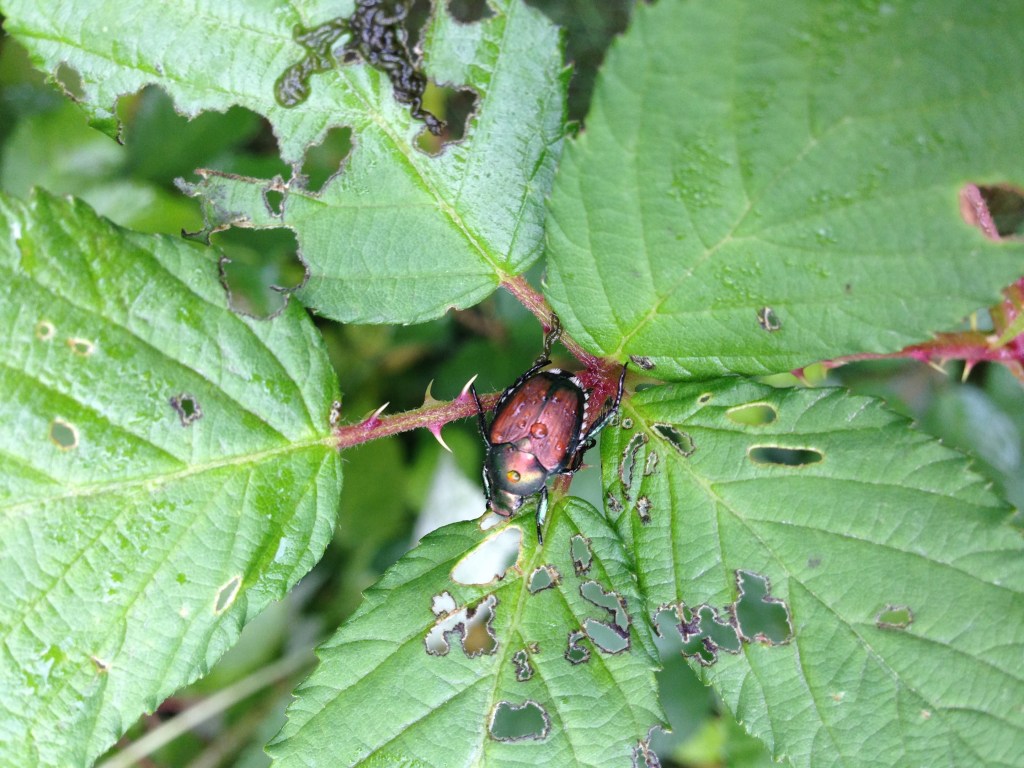
It is above all the white tufts of hair on the sides and the last abdominal segment that identify it, writes Switzerland's centre of excellence for agricultural research Agroscope. Adult specimens reach a length of around 1 centimetre and a width of 0.5 centimetres. The adult Japanese beetle resembles the common garden chafer. The head and the upper part of the thorax (pronotum) are green or metallic pink, while the wing covers (elytra) are copper-coloured.
If suspicious larvae or adult insects are found, the plant protection service (091 814 35 85 / beetle.jap(at)ti.ch) must be contacted immediately and the insects kept in a sealed container so that they can be identified and the best control strategy determined. You can also report their presence via the online form at this link.
The grubs of this species feed primarily on grass roots and meadow and lawn areas. The beetles themselves feed on hundreds of different plants, including grapevines, apple trees and roses.
At the start of an infestation, the most effective control method is to catch the adult insects by hand. This should be done in the early morning or in the evening. As temperatures rise, the insects increase their flight activity and become more difficult to catch.
Scent traps are currently being set up to monitor the situation. Insecticides against the pest are not approved in Switzerland — however, biological control methods appear promising.
First detected near Milan in 2014
According to Agroscope, the insect from the family of scarab beetles was first introduced to the United States at the beginning of the 20th century, where — unlike in Japan — it causes significant damage. In the 1970s, the beetle was first recorded in Europe, more precisely on the Azores. In 2014, it was found near Milan, and three years later it appeared for the first time at the Swiss border.
Then, in the summer of 2020, according to Agroscope, an infestation was detected for the first time in the Mendrisiotto region. The beetle has also already been confirmed across large parts of the Sottoceneri. So far, “despite intensive efforts,” it has not been possible “to eradicate the beetle,” Agroscope reports.
For further information and to report the occurrence of the Japanese beetle:www.ti.ch/coleottero-giapponese.
More on the subject of recreational hunting: What the research says about this is shown by Hunting fact-checked: the state of research.
The position of IG Wild beim Wild: IG Wild beim Wild rejects recreational hunting. Our model is the canton of Geneva, which has managed without recreational hunting since 1974: without hunting seasons, without hunting dogs, without driven hunts, without high seats, without the animal cruelty and crime that go hand in hand with hunting season elsewhere. What has worked there for over fifty years disproves every position paper by JagdSchweiz. An association that bases its policy on claims it refutes in its own documents is not a professional organisation, but a factory for misinformation.