The old hunting myths in new clothes
Nau.ch tells a familiar story: More deer and stags, more damage, more hunting. It sounds familiar because it has been repeated for decades.

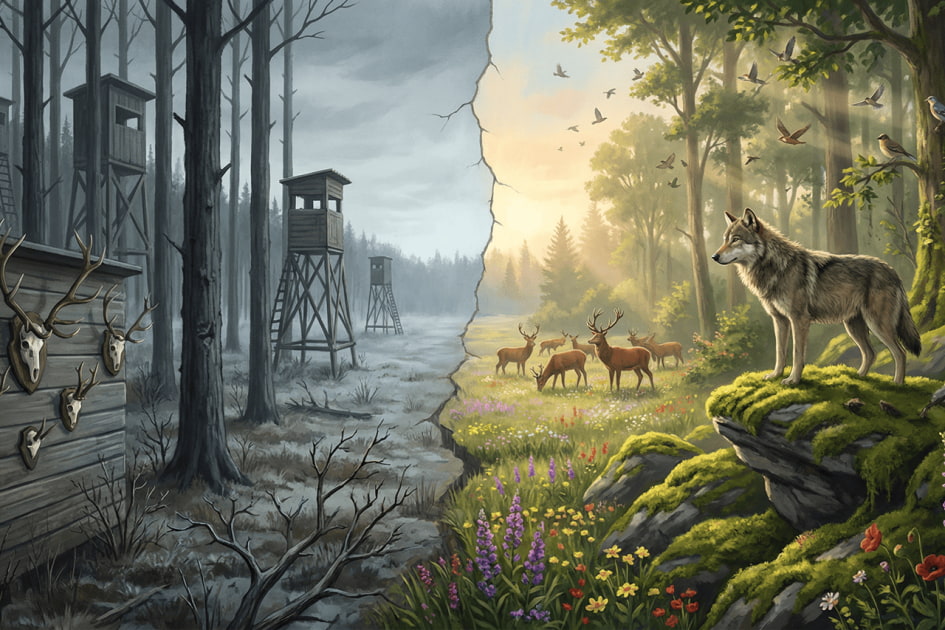
But it remains incomplete as long as predators are excluded from success figures and causes created by recreational hunters have too few consequences.
The recreational hunting community remains too often on the sidelines, although precisely this perspective is necessary for an honest debate.
Myth 1: "More animals" automatically becomes "problem"
Nau.ch sets the tone early: "magical encounters", but then "trouble in the forest". Then follows the familiar script: population increase equals damage equals hunting pressure. What's missing: The difference between population (estimate), density (local) and damage (very local). The article itself says populations can "only be estimated" and cantons count differently, but still builds the story on the big numbers.
Myth 2: "They're nibbling our forests to pieces"
The phrasing «nibbling their way through our forests» is emotional, but not analytical. This suggests: Wild animals are ruining «elaborate forestry work» and climate adaptation. The fairy tale behind it: Wild animals are the disruptive factor, forestry and utilization are neutral. Yet forests in Switzerland are cultural landscapes, shaped by tree species selection, management, protective forest objectives, disturbances, access development and hunting regimes. Precisely this shared responsibility remains in the background.
Fairy Tale 3: «Nature is the cause, not us»
Nau cites as reasons for increases the «abundant food supply from intensive agriculture» and more natural forests. This is the central point, but it's not thought through to its logical conclusion: If agriculture and utilization support population levels, then the standard response cannot be that one must simply regulate harder. Then recreational hunting, agriculture, forestry, spatial planning, visitor management and traffic must be held accountable.
Fairy Tale 4: «Special hunts solve it»
The article steers toward the «solution»: special hunts in Bern and Graubünden. Then comes the sentence: In Graubünden, the population has been «reduced by 17 percent» since 2020. Here the typical fairy tale occurs: One celebrates reduction without asking the crucial question: How?
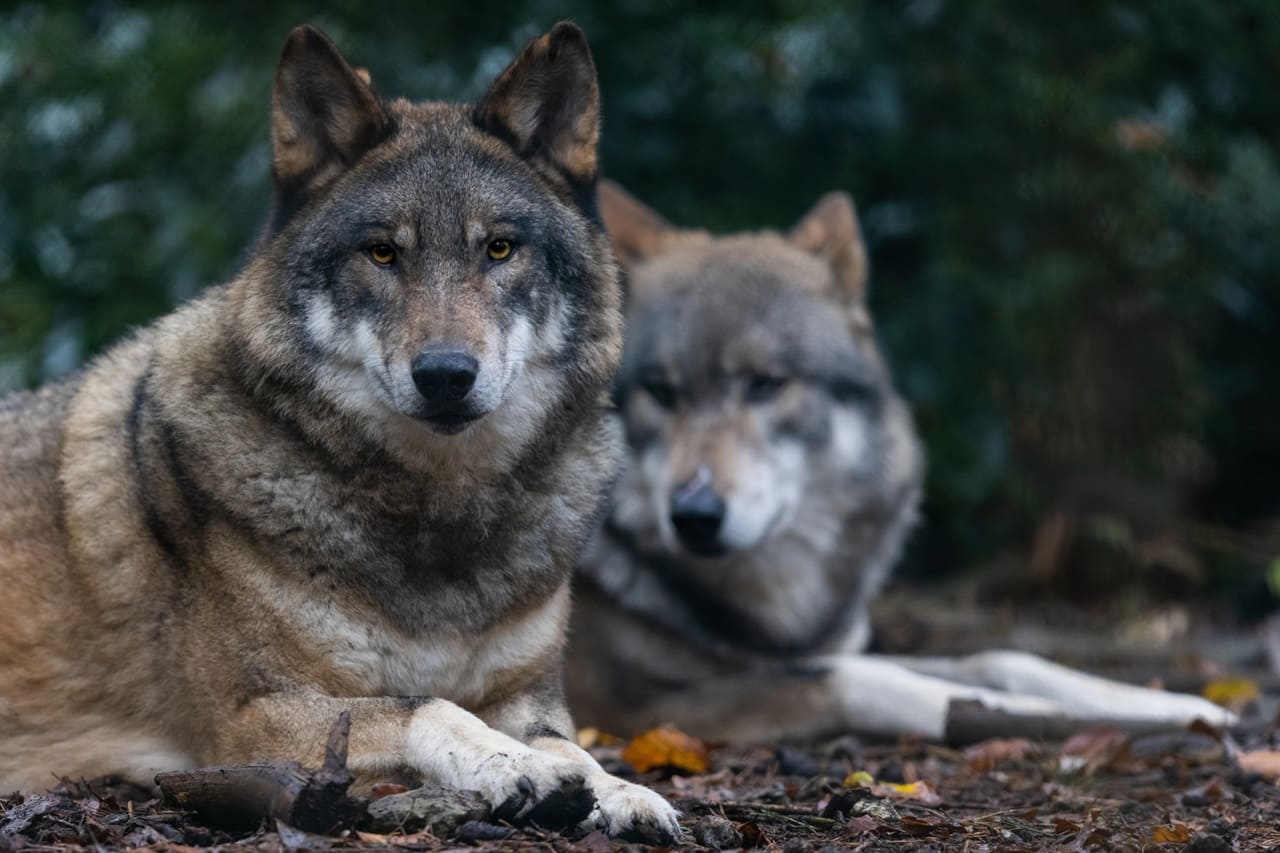
Because Nau mentions predators only later as a «bright spot» and says wolves could contain damage, and this is already the case in some regions. But: With the «17 percent» success, the influence of predators is not factored in. Likewise, predators are written out of the equation, even though they participate in the system.
Fairy Tale 5: «Record kills, but not enough, so even more»
Nau writes: In St. Gallen, as many deer were shot in 2024 as never before, yet still not enough to reduce the population. This is a warning signal against the hunting fairy tale of a simple control knob. Instead, it's used in the article as justification for why «the problem» is difficult, including the note that more natural forests make recreational hunting more difficult. Translated: A goal conflict is narrated so that in the end recreational hunting should get more scope for action again.
Fairy Tale 6: «The pleasure society is to blame»
Then the scapegoat is delivered: «24-hour pleasure society». People would disturb, deer retreat to hard-to-reach areas. Disturbance can be relevant, yes. But as a buzzword it replaces differentiated measures. And it deflects: from food supply, forestry, hunting pressure, winter rest zones and traffic, which often have much stronger effects than moral outrage about leisure.
Fairy Tale 7: «Dialogue from all stakeholders», but hunting-critical voices remain marginal
Nau quotes: One needs «dialogue from all stakeholders». In practice, however, precisely in this article the view of hunting authorities, hunting-affiliated «experts» and the recreational hunters and farmers' association dominates, while hunting-critical perspectives structurally get hardly any space. The Swiss Animal Protection STS is also mentioned, but rather as a secondary voice, although it makes a central point: Predators contribute to natural regulation and question the necessity of intensive hunting.
What's really missing from the story
- Chain of responsibility instead of wildlife scapegoat
Agricultural food supply, forestry, visitor management, traffic and hunting regimes belong together in the analysis. - Predators in the balance sheet, not just as «bright spot»
When citing reductions, one must consider predators like wolves and lynx as a factor, otherwise it remains framing. - Honesty about hunting effectiveness
If record kills don't bring clear reductions, this is not an argument for even more pressure, but an argument for better goal definitions, better indicators and fewer fairy tales.
Another point remains almost always invisible: Recreational hunting can itself trigger compensation. When a population is heavily hunted, this can partially balance out in some situations, for example through higher survival rates of the remaining animals or better reproduction rates, because there is less competition for food, alongside more immigration. This is not an exotic idea, but basic knowledge from population ecology.
When it comes to forest damage, measurable criteria are needed, not just population numbers. A serious assessment should include, for example, forest regeneration and browsing indicators, the condition of protective forest areas, locally designated damage perimeters, traffic accident numbers, winter mortality, as well as spatial data on usage, quiet zones and hunting pressure.
Those who justify damage should show where it occurs, how it was measured and which measures demonstrably work.
Nevertheless, for decades, recreational hunting has been treated as if it were a simple control knob: shoot more equals fewer animals equals less damage. In reality, it is often a feedback system that cannot be controlled so conveniently. And when no clear decline occurs despite high kill rates, the strategy is not questioned, but rather the demand for even more interventions is repeated.
For decades, it has always been the same hunting fairy tales from the recreational hunters with their half-truths.
Dossier St. Gallen Hunting Administration:
- Dominik Thiel: Wolf hunter at state expense – a department head as a security risk for wildlife protection
- Psychology of hunting in Canton St. Gallen
- Hunting season until New Year's Eve: Kill pressure instead of wildlife management
- Patent hunting as a solution against red deer conflicts?
- St. Gallen hunting administration: Wolf management without science and without credibility
- The permit to shoot a wolf in Canton St. Gallen was illegal
- Public dumbing-down in Canton St. Gallen
- Office for Hunting and Nonsense in St. Gallen modernizes hunting education
- St. Gallen wants to regulate wolf pack at Gamserrugg
- Controversy over Swissofficials at wolf hunting in Russia
- "Experts" in St. Gallen end wolf regulation for this winter
- The rotten apple in the St. Gallen hunting administration
- Lying hunter became department head in Canton St. Gallen
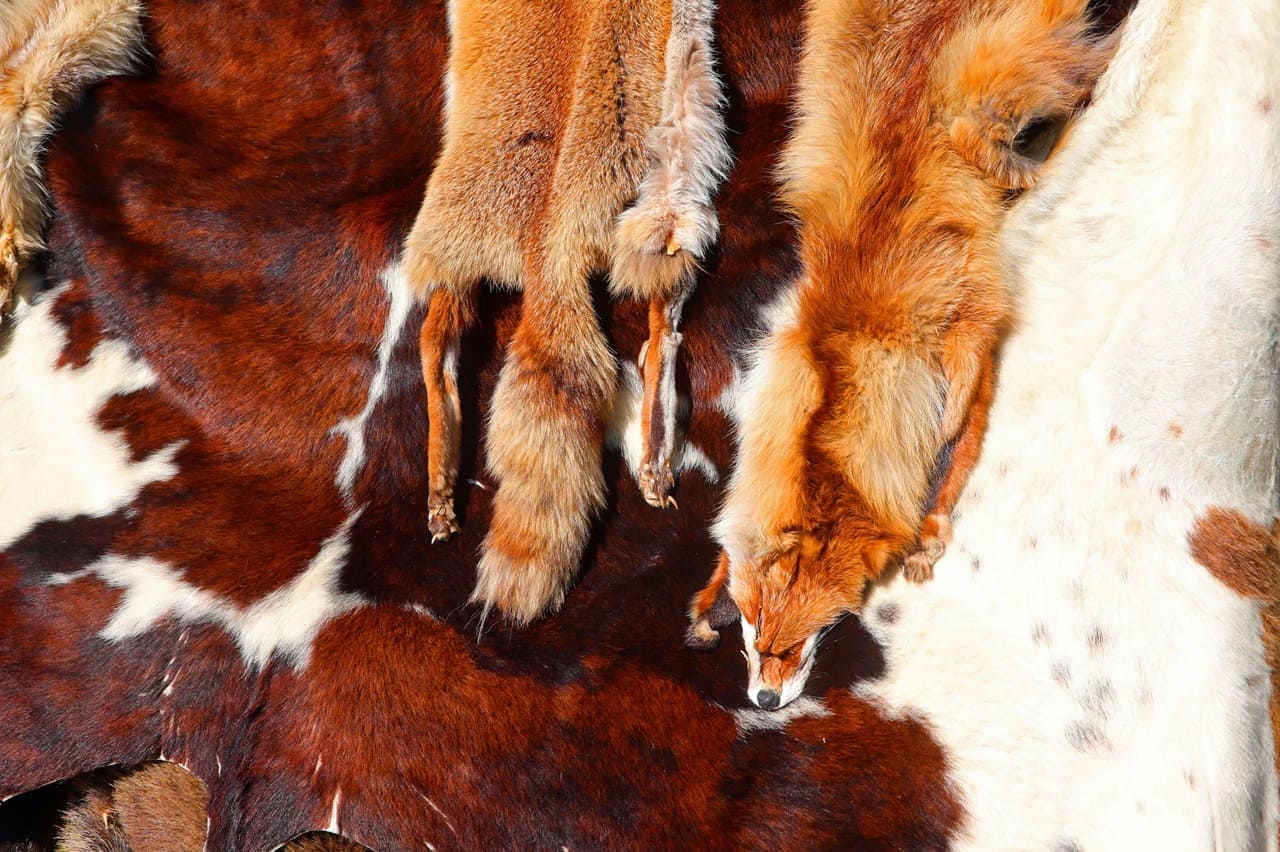
- St. Gallen: Stop the fox and badger massacre
- Are the FOEN and the hunting administrations still working seriously?
- How recreational hunter Simon Meier leads onto the wrong trail
More on the subject of recreational hunting: In the dossier The Role and Criticism of Recreational Hunters we shed light on the training, power and self-image of recreational hunters. The scientific evidence is presented in the overview Studies on the Effects of Recreational Hunting.
The position of IG Wild beim Wild: IG Wild beim Wild rejects recreational hunting. Our model is the canton of Geneva, which has managed without recreational hunting since 1974: without hunting seasons, without hunting dogs, without driven hunts, without high seats, without the animal cruelty and crime that go hand in hand with hunting season elsewhere. What has worked there for over fifty years disproves every position paper by JagdSchweiz. An association that bases its policy on claims it refutes in its own documents is not a professional organisation, but a factory for misinformation.
Support our work
With your donation you help protect animals and give voice to their concerns.
Donate now →