The Business Model Is Still Animal Cruelty
For decades, ungulate populations in Graubünden have not been genuinely regulated through the region's culture of violence, but rather decimated while birth rates are artificially stimulated. Hunting does not mean fewer animals — it means more births.

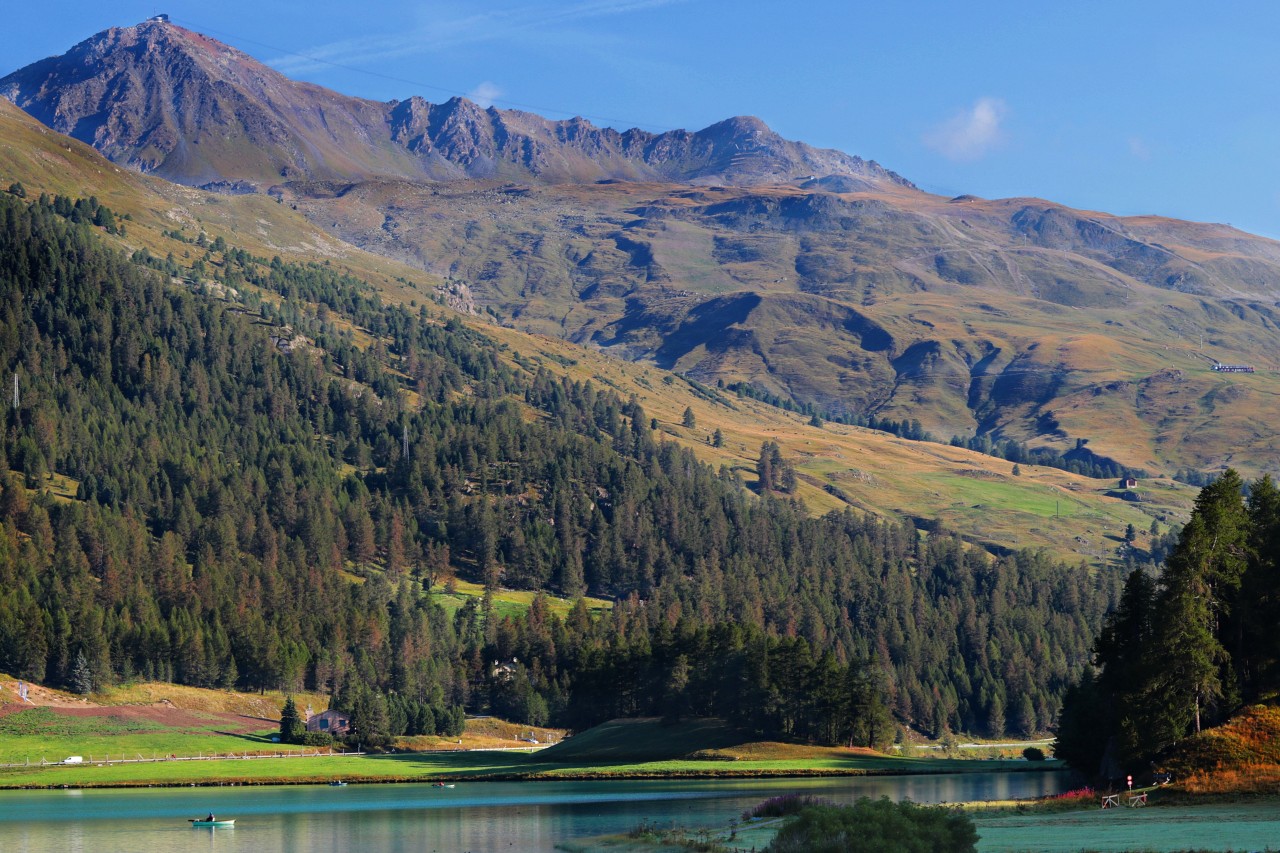
Due to high ungulate populations, hunting pressure on red deer and roe deer in Graubünden is once again being significantly increased.
Since roe deer in particular play a decisive role in forest-wildlife conflicts, the roe deer population in Graubünden must be subject to greater hunting activity.The hunting objectives are to be achieved by Graubünden's hunters through an attractive hunting programme,, writes the Office for Hunting and Nonsense on 6 July 2021.
The total cull of red deer in 2020 slightly exceeded the planned quota. In addition, an above-average number of deer were lost to natural mortality last winter. As a result, the deer population was further reduced to 16,000 animals (2020: 16,300).In the Surselva region, it is evident that the roe deer population has declined sharply due to snow-heavy winters and the presence of lynx and wolf.The same applies to chamois in this area. Reliable figures on the current population of ibex and chamois will only be available once the ongoing summer and autumn counts are completed, according to the Office.
It is now well known that in Graubünden, as elsewhere, the primary concern is essentially that of a travel agency — organising attractive hunts planned by the Office for Hunting and Fisheries. The Office is increasingly reducing humans to the role of predator and treating wildlife as livestock and breeding animals.If there were sufficient predators such as foxes or wolves, if one had not bred such excessively high populations of roe deer and red deer that, to use the abnormal language of recreational hunters, are «flourishing».
Although the hunting authorities of Graubünden have been steadily increasing the culling quota for years, the red deer population continues to grow.
The Graubünden hunting system has not been functioning satisfactorily in its current form for decades — otherwise red deer populations would hardly have increased by 5,000 in recent years.Given the serious problems caused by wildlife populations that have been excessive for decades — making natural regeneration impossible in, for example, 60% of Prättigau's forests — the return of the wolf is very much to be welcomed and is necessary.
Continued consistent regulation of ungulate populations
The assessment of the impact of ungulates on forest regeneration by forestry authorities shows that the problems remain very significant, particularly in the areas of Prättigau/Herrschaft, Churer Rheintal, Schanfigg, Domleschg/Heinzenberg, and partly also in the Mesolcina/Calancatal and in Central Graubünden (Situation report www.awn.gr.ch) and require a reduction in wildlife populations. It is the responsibility of hunting to reduce ungulate populations in these areas. Other measures such as wildlife fences and individual tree guards can only serve as supplementary tools.During this year's hunting season, a total of 5,565 red deer are to be culled across the entire cantonal territory (2020: 5,560 red deer). Regulation is carried out with a goal-oriented focus on individual forest regions, particularly through the culling of female animals.The plan is considered fulfilled when at least 3,177 female animals have been culled (2020: 3,154). In addition, the authority states that roe deer and chamois populations in certain forest regions are also to be hunted more intensively.
Intensified hunting of wild boar in the Mesolcina
Wild boar populations in the lower Mesolcina are increasing sharply and causing major conflicts in agricultural land. Various measures are therefore being introduced to stabilise the population and prevent further growth. The radioactivity measurements of culled wild boar introduced last year will be continued.
Thanks to intensive monitoring, it has been confirmed that populations of small game — particularly hares and black grouse — are healthy in Graubünden, and that the species continue to thrive very well.
Hannes Jenny, Deputy Head of the Office for Hunting and Fisheries of Graubünden
If there were fewer problem hunters who harbour a resource-exploitation mentality, more ordinary people could once again dedicate themselves to the idea of nature conservation — people who treat species with respect, decency, and fairness, and who do not slaughter wildlife for fun. Hunting is always a form of war against living beings, one that brings out the worst in human nature.
One in ten deer in Graubünden is merely wounded rather than killed. Graubünden's recreational hunters have killed a total of 56,403 deer, roe deer, chamois, and wild boar within five years. In 3,836 cases, however, these animals were only wounded by the shooters, according to the SRF's Rundschau programme. Of these, 1,600 wounded animals were never found — they escaped with their gunshot wounds, survived, or perished. Missed shots resulting in injury to the animal are most common in Graubünden during deer hunting.
It is indeed the case that Graubünden's glorification-of-violence style of hunting has, for decades, earned a disreputable standing among honourable hunters and experts far beyond the cantonal and national borders, and has been the subject of ongoing criticism.
More on the subject of recreational hunting: In our dossiers on the criticism of recreational hunting gather fact-checks, analyses and background reports. What the research says about this is shown by Hunting fact-checked: the state of research.
The position of IG Wild beim Wild: IG Wild beim Wild rejects recreational hunting. Our model is the canton of Geneva, which has managed without recreational hunting since 1974: without hunting seasons, without hunting dogs, without driven hunts, without high seats, without the animal cruelty and crime that go hand in hand with hunting season elsewhere. What has worked there for over fifty years disproves every position paper by JagdSchweiz. An association that bases its policy on claims it refutes in its own documents is not a professional organisation, but a factory for misinformation.