Setback in the Rescue of the Northern White Rhinoceros
One of the last two females of the subspecies will no longer be used for egg cell donations.

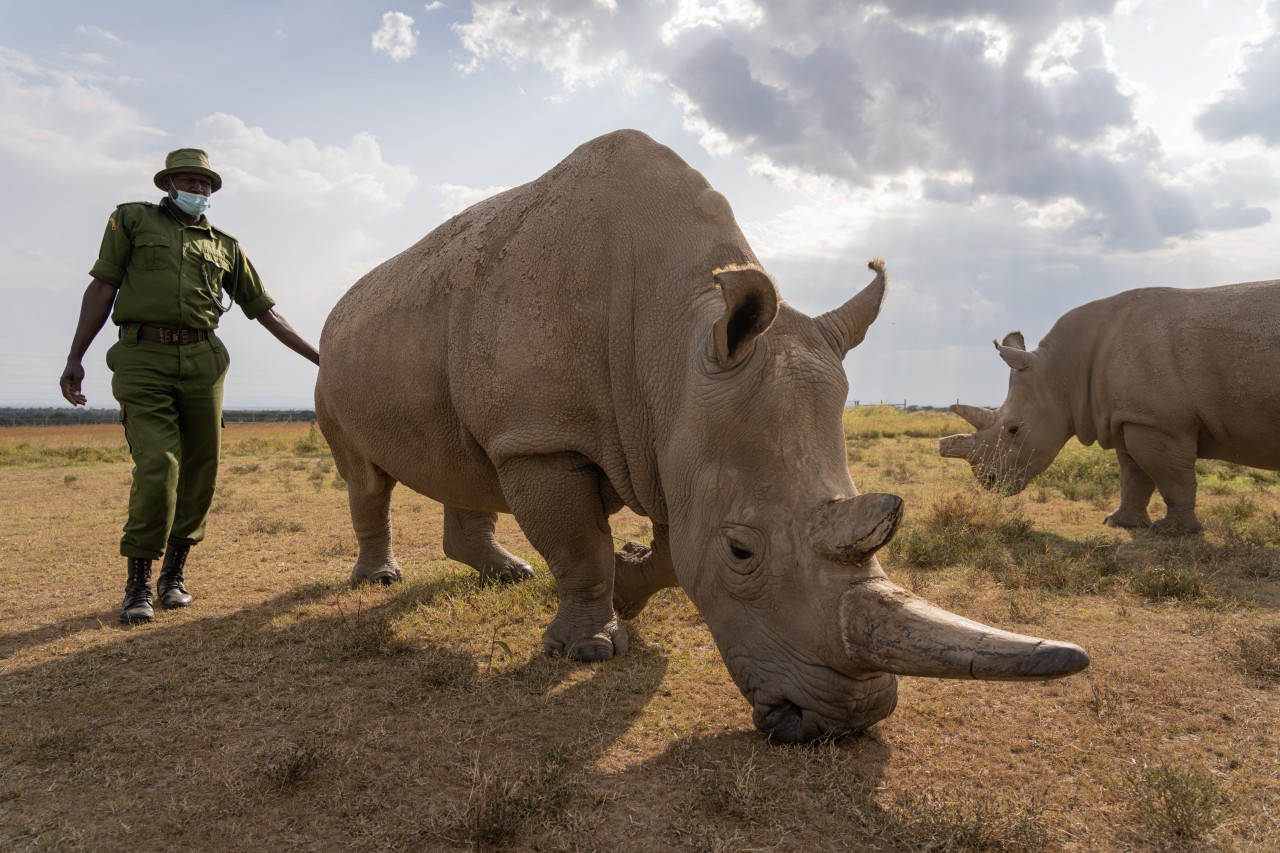
In the mission to save the Northern White Rhinoceros from extinction through advanced assisted reproduction technologies, the scientists and conservationists of the BioRescue Consortium place the highest value on respecting the lives and well-being of the individual wild animals involved.
Najin Retires
Following a special, comprehensive ethical risk assessment, the team has now decided to retire the older of the two remaining females — 32-year-old Najin — as a donor of egg cells (oocytes).
All hopes now rest on Najin’s daughter Fatu, the only other Northern White Rhinoceros on Earth. The last surviving male, Sudan, died in 2018 at a nature reserve in Kenya; Najin and Fatu are his descendants. They live under constant supervision in the Kenyan conservation park.
Twelve Embryos Produced
Since 2019, the multinational consortium has been retrieving egg cells from Najin and Fatu, which are then fertilised in an Italian laboratory using sperm from two deceased males. Twelve embryos have been produced in this way to date.
However, all viable embryos came solely from the younger Fatu, and despite all precautions the programme is not without risks, said Jan Stejskal, Head of International Projects at the Czech safari park Dvur Kralove, where Najin was born in 1989.
Since neither Fatu nor Najin is able to carry a calf to term, female Southern White Rhinoceroses are to be used as surrogate mothers. The multinational reproduction programme is the last chance of survival for these majestic animals.
The Northern and Southern White Rhinoceros are subspecies of the white rhinoceros. Unlike the Northern White Rhinoceros, the population of the Southern White Rhinoceros is currently no longer endangered.
More on the subject of recreational hunting: In our dossiers on recreational hunting gather fact-checks, analyses and background reports. The scientific evidence is presented in the overview Studies on the Effects of Recreational Hunting.
The position of IG Wild beim Wild: IG Wild beim Wild rejects recreational hunting. Our model is the canton of Geneva, which has managed without recreational hunting since 1974: without hunting seasons, without hunting dogs, without driven hunts, without high seats, without the animal cruelty and crime that go hand in hand with hunting season elsewhere. What has worked there for over fifty years disproves every position paper by JagdSchweiz. An association that bases its policy on claims it refutes in its own documents is not a professional organisation, but a factory for misinformation.