Moratorium on lynx kills in a genetically threatened population
Instead of kill applications, genetic replenishment, consistent efforts to combat poaching and scientific groundwork should take priority.
1. Motion
The Cabinet is instructed to submit to the cantonal parliament a bill amending the Act on Hunting and Wildlife Protection (………) as well as the Hunting Ordinance (…………), which will newly regulate the handling of the lynx in the canton of (………). The revision of the law must in particular ensure that
- no application for the regulation or kill of lynx is submitted or approved as long as the cantonal or regional sub-population is genetically impoverished according to the specialist bodies KORA and FIWI, or is dependent on external genetic reinforcement
- before every regulation application, an independent, published population analysis must be available that documents the genetic diversity, inbreeding indicators as well as the influence of poaching and traffic accidents on the local population
- scientific evidence must be provided that a decline in cloven-hoofed game populations is actually attributable to the presence of the lynx before regulation may be applied for, taking into account hunting kills as an alternative explanation
- the canton of (………) takes active measures with sufficient resources against the poaching of lynx, namely through systematic monitoring of known migration corridors, consistent criminal prosecution and the analysis of camera-trap monitoring for indications of illegal interventions
- office holders as well as members of cantonal hunting and wildlife commissions must disclose their personal activity as a recreational hunter before participating in decisions on lynx regulations, and must recuse themselves in cases of conflicts of interest
- the canton of (………) advocates at the federal level that applications for lynx regulation be approved by the Federal Office for the Environment (FOEN) only upon complete scientific proof of a serious impairment of the hunting regalia, and taking into account the genetic condition of the population
- the Cabinet sets out in the dispatch
- how high the share of illegal deaths (poaching) was in the total mortality of the lynx in the canton of (………) over the past ten years
- which measures for the genetic reinforcement of the cantonal or regional lynx population have already been examined or implemented
- which additional financial and personnel resources would be required for an effective fight against poaching
In its proposal, the Regierungsrat takes into account the responsibilities of the Confederation under the hunting act (JSG) as well as the classification of the lynx as a species of national priority on the Red List.
2. Brief rationale
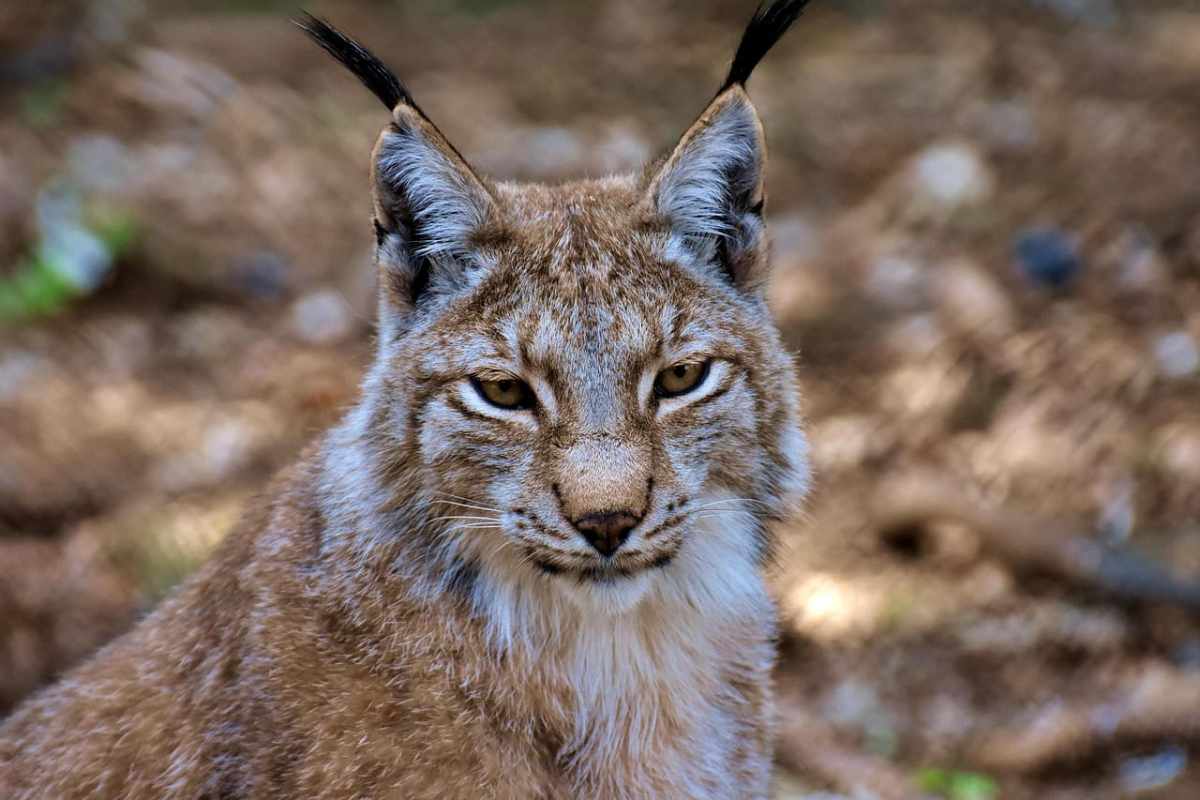
The Eurasian lynx is regarded in Switzerland as a nationally prioritised, strictly protected species. Today's population traces back to a small number of founder animals from the Slovak Carpathians, which were reintroduced in the 1970s. According to the specialist agency for predator ecology KORA, the Alpine lynxes have lost 46 percent of the genetic diversity of their ancestors, and the Jura lynxes 30 percent. Consequences of inbreeding, such as a proliferation of heart murmurs, are already documented. KORA and the Institute for Fish and Wildlife Health (FIWI) state that the population must, in the medium term, be genetically refreshed, not reduced.
Requests for regulation are regularly justified by declining ungulate populations, without any scientific proof of causality. At the same time, studies—such as a peer-reviewed investigation published in 2021 in «Frontiers in Conservation Science» by an international research team led by Prof. Raphaël Arlettaz (University of Bern)—show that low lynx populations in individual regions can be attributable to systematic poaching, and not to a lack of prey or unfavourable habitat conditions. A request to regulate a population whose low numbers were demonstrably caused by illegal interventions turns the technical logic on its head.
Added to this is the question of vested interests: if an official who is themselves a member of the recreational hunting community decides on or participates in a request for regulation, a structural conflict of interest arises towards a population to whom wild animals belong as a common good. Transparency and recusal obligations create trust here in the objectivity of cantonal wildlife policy.
Under federal law, no canton in Switzerland is required to provide for recreational hunting. It is the right of the cantons to decide whether and how the hunting of protected species is regulated. The canton of Geneva has demonstrated for over 50 years how professional, state-run wildlife management can function without a conflict of interest and without pressure to regulate genetically impoverished species.
A moratorium on lynx regulations in cases of demonstrably endangered genetic condition buys time for a scientifically sound basis, prioritises combating poaching over kills, and positions the canton (………) as a pioneer of a factual, evidence-based approach to predators.