Grisons licence hunters: Tarzisius Caviezel leaves, wolf course remains
With Tarzisius Caviezel, the most prominent hobby hunter in Grisons took his leave from the top of the cantonal licence hunters’ association at the delegates’ meeting on 23 May 2026 in Disentis/Mustér, yet the change is unlikely to do much to alter its kill-friendly stance on the wolf.
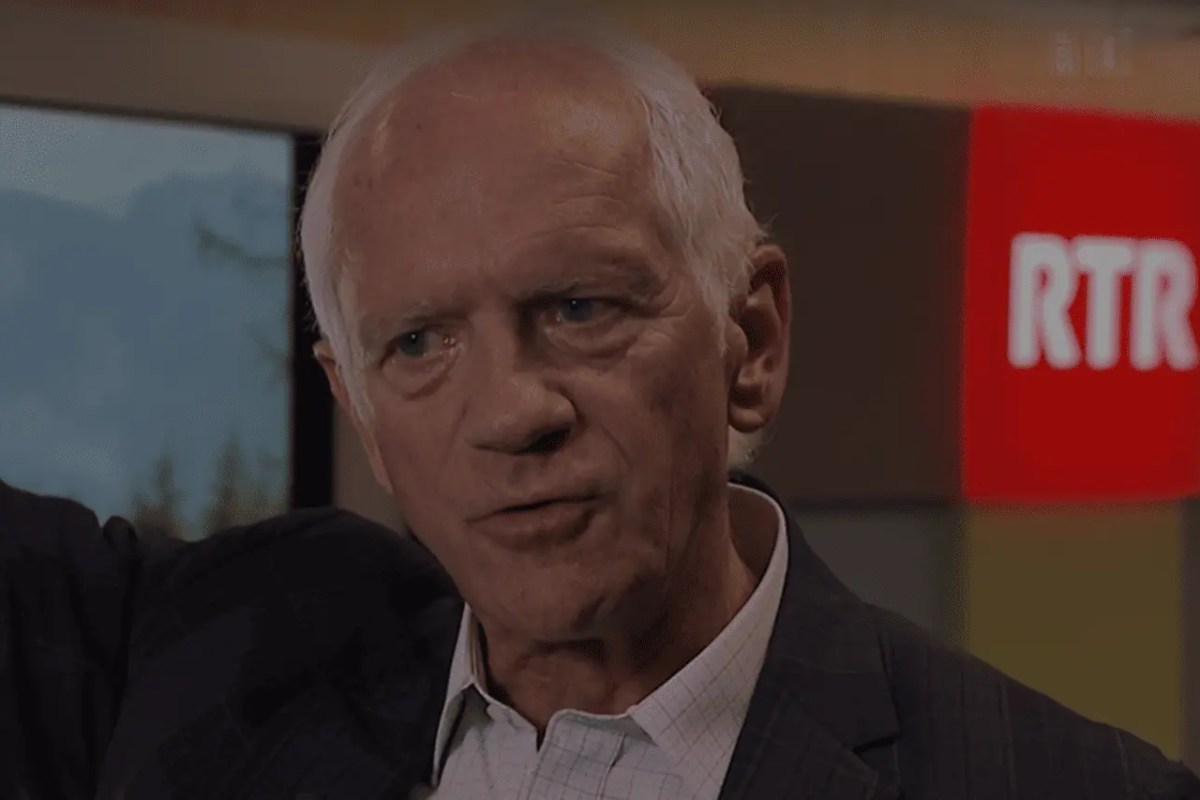
Caviezel sat on the board of the Grisons Cantonal Licensed Hunters' Association (BKPJV) for nine years, initially three years as vice-president and, since 2020, as central president.
The term limit now forces him to step down. At the 111th delegates' assembly in Disentis/Mustér, the delegates were to elect a successor. The outgoing president bid farewell with diplomatic words: he had taken “great pleasure” in the task and was closing this chapter “with one eye crying and one eye laughing”.
Important context: Grisons organises hobby hunting as licence hunting. Private individuals obtain a cantonal licence and may then hunt throughout the entire canton without bearing any fixed territorial responsibility. The association is therefore not a nature conservation organisation, but the interest representation of an armed leisure lobby operating in a mode of self-supervision. Whoever presides here shapes the cantonal voice of organised hobby hunters.
A representative with a backstory
Anyone who has represented the Grisons hobby hunters for nine years leaves behind more than diplomatic parting words. Caviezel has also sat on the board of the national umbrella organisation JagdSchweiz since 2010, where he heads the communications portfolio. He describes hunting itself as “a feverish illness from which he cannot be cured”, and likes to quote Bismarck's bon mot that nowhere is there so much lying as before an election, during a war and after the hunt. For an association president, that is a remarkably open admission of what drives the motivation behind hobby hunting. Indeed, hobby hunting is always also something sick, where lying is part of the programme and wild animals are the ones who suffer. Violence and lies are two sides of the same coin.
This communication role is particularly piquant, because the same umbrella association has repeatedly tried to silence voices critical of hunting through criminal complaints. In 2020, JagdSchweiz failed before the criminal court of the Canton of Ticino in its attempt to stop the reporting of IG Wild beim Wild. The court acquitted the platform and held with legal force that hard, fact-based criticism of hobby hunting is not defamation, but is covered by freedom of expression. Documented in the proceedings is the language of the milieu, in which inconvenient critics are to be “silenced” and “made to disappear from the scene” — the culture, in other words, of that very association which Caviezel represents to the outside world.
Beyond the cantonal borders, Caviezel became known through an incident in February 2019. In Davos-Clavadel, his unleashed bloodhound chased a roe deer through the streets and killed it. Eyewitnesses accused the hobby hunter of subsequently kicking and beating the dog several times, which Caviezel denied. The Grisons Office for Hunting and Fisheries opened proceedings on the question of whether allowing the dog to poach violated the hunting act. IG Wild beim Wild filed a complaint. Also in his statement on the Grisons hunting initiative of 2021, the president appeared as a defender of a system that results in over 1,000 complaints and fines against hobby hunters annually in the same canton. It is this mixture of public office, lobbying function and documented animal welfare issues that makes the outgoing president a controversial figure.
The wolf, between “coexistence” and support for kills
One of the two recurring topics of his term in office was the wolf. Caviezel strikes a conciliatory tone: “The wolf migrated naturally to Grisons and was not released. We must learn to coexist.” In the same breath, however, he emphasises that the population must “not become too large”, which is why the association supports the cantonal Office for Hunting and Fisheries in regulation.
This is precisely where the contradiction lies. “Regulation”, since the revision of the hunting act preventive culling, meaning the killing of wolves before any damage has even occurred. Grisons is among the cantons that use this practice most aggressively. During the 2025 high hunt, authorised hobby hunters were permitted to kill juveniles from eight packs as well as a lone wolf in the Upper Engadine. The association's "support" is therefore no symbolic gesture; it supplies the marksmen for proactive culling.
The scale: at the end of 2025, the canton counted around 12 packs. Nationwide, the Federal Office for the Environment authorised the killing of around 115 wolves for the 2025/2026 regulation period; 77 were shot. Scientifically, the benefit of this policy remains contested: experts describe proactive regulation as an expensive experiment without a sound ecological basis, one that tends to exacerbate the very conflicts it is meant to defuse. The conciliatory talk of "coexistence" and active involvement in pre-emptive culling are hard to reconcile.
Calibre dispute: tradition trumps the majority
The second perennial issue was the dispute over hunting calibres. Grisons is the only canton that mandates hunting with large-calibre weapons from 10.3 millimetres upwards. A year ago, the delegates rejected an easing of the rule, decided by Caviezel's casting vote, even though he personally would have favoured a change: "The executive board was against changing the calibre. As president, I cannot then decide otherwise."
The episode illustrates a fundamental problem of hobby hunting. Decisions on equipment standards with direct consequences for animal welfare are not made by an independent specialist authority, but by an interest group that supervises itself. Tradition prevails over the personal assessment of its own president.
Alcohol, oversight and the gaps in the system
Behind the diplomatic tone lies a system with substantial loopholes for which the association bears co-responsibility. There is no uniform blood-alcohol limit for hobby hunting across Switzerland: while a 0.5 per mille limit applies to motorists, hunting law remains silent in most cantons. This is precisely where the Grisons popular initiative "For nature-friendly and ethical hunting" came in, demanding blood-alcohol limits analogous to road traffic as well as periodic aptitude and marksmanship tests. The organised Grisons hobby hunters, whose leadership included Caviezel, fought this initiative and portrayed it as an attack on tradition. Only Zurich and Neuchatel have since regulated that those who repeatedly go stalking while intoxicated lose their hunting entitlement. In Grisons, the canton with the highest hunting intensity, a handful of game wardens oversee more than 7,000 square kilometres, alcohol tests are not provided for, and the cantonal Office for Hunting and Fishing records over 1,000 complaints and fines each year against hobby hunters. This has little to do with the image of a well-trained, responsible hunting community that the association cultivates.
When children are accustomed to killing
The stance becomes most apparent on the question of new recruits. The same initiative already demanded in 2014 that children under twelve should not be taken hunting and should not be encouraged to take up hunting at school. The hobby hunters fought this point too. Article 19 of the UN Convention on the Rights of the Child obliges states to protect minors from all forms of violence and to safeguard their physical and mental integrity. Anyone who fights an initiative that seeks to write precisely this protection into hunting law is placing tradition above child protection. Passing on a leisure pursuit whose climax is the killing of an animal to children, and promoting it in schools, is not a harmless tradition but early conditioning to firearms, killing and senseless violence.
What remains, and what Geneva shows
The leadership changes in personnel, but the substantive course remains the same. The association continues to see itself as an enforcement partner of a kill-based policy not only towards the wolf. That it can be done differently is shown by the canton of Geneva, which abolished hobby hunting in 1974 and has since entrusted wildlife management to trained game wardens. This Geneva model, without wildlife populations collapsing. A cantonal hunting ban is possible at any time under federal law; no legislative change in Bern is required.
For Grisons, where organised hobby hunters regulate predators that would largely regulate themselves in intact ecosystems, the decisive question remains open, regardless of who will preside over the association in future: who actually controls the controllers?