Hare plague spreading rapidly
The hare plague is spreading. Cases are increasing particularly in the cantons of Zurich and Aargau, primarily through tick bites. The hare plague has been on the rise in Switzerland since 2015. From 31 reported cases in the years 2010 to 2016, the number jumped more than fourfold in 2017 with 129 reports. There are regional


The hare plague is spreading. Cases are increasing particularly in the cantons of Zurich and Aargau, primarily through tick bites.
The hare plague has been on the rise in Switzerland since 2015. From 31 reported cases in the years 2010 to 2016, the number jumped more than fourfold in 2017 with 129 reports. There are regional differences.

The cantons of Zurich and Aargau are above the Swiss average, as the Federal Office of Public Health (FOPH) writes in its bulletin published on Monday. The majority of those infected contracted the disease through a tick bite.
Recreational hunting makes the problem worse
Anyone concerned about diseases such as Lyme disease, hare plague, or the so-called fox tapeworm should speak out clearly against recreational hunting.
In Europe, the main distribution of the fox tapeworm is also concentrated in Central Europe, particularly in Switzerland (with a focus on eastern Switzerland).
Fewer foxes, fewer diseases, and therefore less risk of infection for humans. At first glance a plausible conclusion, but on closer analysis it is nothing more than hunters’ tales, as several international studies demonstrate. Recreational hunting as a means of population control fails demonstrably.
Different clinical presentations
The bacterium affects animals such as rodents, hares, and rabbits, and less commonly sheep, cattle, horses, dogs, cats, birds, and amphibians. Hare plague, or tularemia, is transmitted through tick bites or other bites from blood-sucking insects. Infection is also possible through direct contact with infected animals or carcasses, as well as through inhalation or contact with soil, dust, or water contaminated by feces or carcasses.

Different clinical presentations develop depending on the route of infection. The most common transmission route — through ticks, horseflies, or mosquitoes — causes a lesion at the site of the bite. The eye can also serve as an entry point, leading to conjunctivitis and inflammation of the draining lymph nodes.
Bacterium usable as a biological weapon
Inhalation causes lung inflammation. Infection of the digestive tract or the throat and oral cavity results from ingesting contaminated material such as undercooked hare meat or unfiltered surface water.
Hare plague is notifiable in both humans and animals, as even a minute quantity of the bacterium can trigger illness. Since the disease can sometimes take a severe course, the bacterium could potentially be used as a biological weapon.
The FOPH recorded the highest increase in cases in 2017, with 29 cases among those over 65. Men were almost twice as affected as women, with a total of 84 cases that year. 58 of those infected required hospitalization. 60 percent of reported cases involved transmission through a bite or sting.
When diagnosed in time, tularemia is well treatable with antibiotics. Because the infection is rare, the FOPH considers it important to raise awareness among medical professionals. More on wildlife.
More on the subject of recreational hunting: In the dossier The Role and Criticism of Recreational Hunters we shed light on the training, power and self-image of recreational hunters. The scientific evidence is presented in the overview Studies on the Effects of Recreational Hunting.
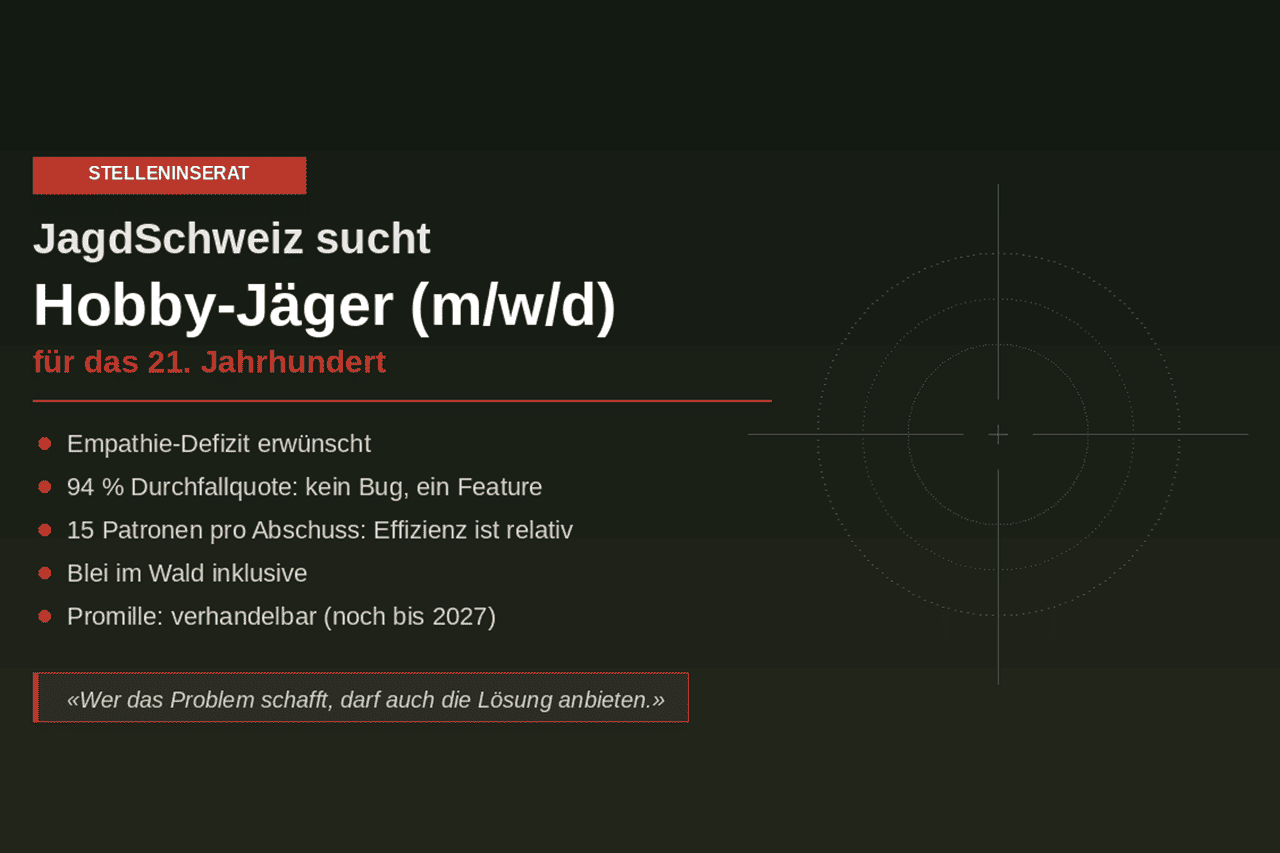
The position of IG Wild beim Wild: IG Wild beim Wild rejects recreational hunting. Our model is the canton of Geneva, which has managed without recreational hunting since 1974: without hunting seasons, without hunting dogs, without driven hunts, without high seats, without the animal cruelty and crime that go hand in hand with hunting season elsewhere. What has worked there for over fifty years disproves every position paper by JagdSchweiz. An association that bases its policy on claims it refutes in its own documents is not a professional organisation, but a factory for misinformation.