Psychology of recreational hunting in the canton of Appenzell Inner Rhodes
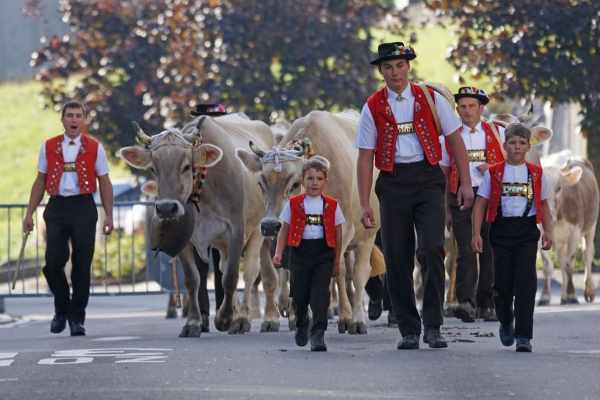
Appenzell Inner Rhodes is the smallest full canton in Switzerland and at the same time the most conservative. Voting here takes place at the Landsgemeinde by a show of hands, Catholic tradition dominates, and recreational hunting is not a fringe phenomenon but a component of cantonal identity. The Patentjägerverein Appenzell Innerrhoden (the canton's licence hunters' association) expresses its self-image with telling clarity: “Loud hunting is an important part of our free licence hunting, and we are grateful and proud of it.”

«Heirloom»
In the canton of Appenzell Inner Rhodes, the Licence hunting.
The Hunting and Fisheries Unit within the Department of Construction and Environment (BUD) is responsible for the “appropriate use of native wild mammals and birds” and for biodiversity, the protection of endangered species and the limitation of wildlife damage. Hunting licences are issued directly by the department.
“Free licence hunting”: freedom as a defensive term
The phrase “free licence hunting” (“freie Patentjagd”) is psychologically revealing. The adjective “free” suggests independence, autonomy and resistance to paternalism. It implies that somewhere there is an “unfree” form of hunting that must be fended off. In fact, the term refers to a distinction from territorial hunting, in which hunting syndicates lease areas and enjoy exclusive rights. Under licence hunting, in theory any authorised person can hunt across the entire canton.
Yet the emphasis on “freedom” serves a deeper psychological function: it links recreational hunting with Appenzell Inner Rhodes' self-image as an autonomous, self-determined community. The Landsgemeinde (open-air assembly), direct democracy, a conservative value system: all of this feeds into the framing of hunting as a “freedom right”. In this narrative, anyone who wants to restrict hunting is attacking not just a practice but Inner Rhodes freedom itself. This equation turns criticism of hunting in Inner Rhodes into a politically charged act.
“Loud hunting”: pride in the chase
“Loud hunting” (“laute Jagd”; link: jagd-ai.ch homepage, accessed March 2026) is in Inner Rhodes not merely a practice but a marker of identity. In this form of hunting, dogs are used to drive game out of its cover. The animals flee in panic, the dogs bark, and the recreational hunters wait at the game trails. That the licence hunters' association describes this practice as a source of “gratitude and pride” reveals the psychological dimension: loud hunting is not perceived as a method that is problematic under animal welfare law, but as a cultural heritage to be defended.
The Swiss Animal Protection (STS) and the Foundation for Animals in Law (TIR) have for years criticised driven and drive hunts as methods that “expose wild animals to extreme stress and entail considerable risks of injury as well as the danger of missed shots”. That the same method is associated with pride in Inner Rhodes shows how far the normalisation of animal suffering can go in closed hunting cultures.
Intercantonal red deer management: coordination without the fundamental question
Since 2014, the hunting administrations of the cantons of Appenzell Inner Rhodes, Appenzell Outer Rhodes and St. Gallen have been coordinating population surveys and hunting planning for red deer in their shared wildlife area. The red deer population is described as "undiminished high". This coordination appears professional and data-driven. Psychologically, however, it obscures the fundamental question: why does the population remain "undiminished high" despite years of intensive hunting?
The answer lies in population dynamics: intensive hunting raises the reproduction rate, alters age structures and leads to compensatory growth. Recreational hunting produces the populations it then cites as justification for its own existence. Intercantonal coordination makes this cycle more efficient, but no more sensible.
Landsgemeinde democracy and criticism of hunting
Appenzell Inner Rhodes is one of the last cantons to hold a Landsgemeinde. This form of direct democracy, in which votes are cast by a show of hands, creates strong pressure to conform: anyone who deviates is visible. This also applies to questions of hunting policy. In a canton where recreational hunting is framed as a right of freedom and the licence hunters' association expresses "gratitude and pride", public criticism of hunting is tantamount to an attack on the community.
Psychologically, this explains why Inner Rhodes is virtually invisible in Switzerland's hunting-critical landscape. There is no public debate, no motions in the Grand Council, no civil-society initiatives against recreational hunting. Not because the issue is irrelevant, but because the social price of dissent is too high. In a community where everyone knows everyone else and votes publicly, conformity is not an option but a survival strategy.
Geneva model is not an issue in Inner Rhodes. In a canton where hunting is understood as a right of freedom, the idea of abolishing hunting is unthinkable not only politically but culturally. This makes Inner Rhodes the most conservative hunting canton in Switzerland and at the same time the most psychologically stable: a system that is never questioned needs no defence mechanisms.
Find out more in the dossier: The psychology of hunting
Cantonal psychology analyses:
- Psychology of recreational hunting in the canton of Glarus
- Psychology of recreational hunting in the canton of Zug
- Psychology of recreational hunting in the canton of Basel
- Psychology of recreational hunting in the canton of Schaffhausen
- Psychology of recreational hunting in the canton of Appenzell Outer Rhodes
- Psychology of recreational hunting in the canton of Appenzell Inner Rhodes
- Psychology of recreational hunting in the canton of Neuchatel
- Psychology of recreational hunting in the canton of Thurgau
- Psychology of recreational hunting in the canton of Nidwalden
- The Psychology of Recreational Hunting in the Canton of Uri
- Psychology of recreational hunting in the canton of Obwalden
- The psychology of recreational hunting in the canton of Schwyz
- Psychology of recreational hunting in the canton of Jura
- The Psychology of Recreational Hunting in the Canton of Basel-Landschaft
- Psychology of recreational hunting in the canton of Zurich
- Psychology of recreational hunting in the canton of Geneva
- The Psychology of Recreational Hunting in the Canton of Bern
- The psychology of recreational hunting in the canton of Solothurn
- Psychology of recreational hunting in the canton of Aargau
- The psychology of recreational hunting in the canton of Ticino
- The Psychology Of Recreational Hunting In The Canton Of Valais
- Psychology of recreational hunting in the canton of Grisons
- Psychology of recreational hunting in the canton of St. Gallen
- Psychology of recreational hunting in the canton of Fribourg
- Psychology of recreational hunting in the canton of Vaud
- The Psychology of Recreational Hunting in the Canton of Lucerne
Do you have a tip, a source or a correction for this article? Write to us.
More on the subject of recreational hunting: In the dossier Psychology of recreational hunting we put research, motives and social consequences into perspective. The scientific evidence is presented in the overview Studies on the Effects of Recreational Hunting.
The position of IG Wild beim Wild: IG Wild beim Wild rejects recreational hunting. Our model is the canton of Geneva, which has managed without recreational hunting since 1974: without hunting seasons, without hunting dogs, without driven hunts, without high seats, without the animal cruelty and crime that go hand in hand with hunting season elsewhere. What has worked there for over fifty years disproves every position paper by JagdSchweiz. An association that bases its policy on claims it refutes in its own documents is not a professional organisation, but a factory for misinformation.
Support our work
With your donation you help protect animals and give their voice a hearing.
Donate now →