Psychology of recreational hunting in the Canton of Bern
The Canton of Bern stands as an example of the classic militia system of hunting in Switzerland. Private hobby hunters take on tasks that are often justified by wildlife management, tradition and regulation. Psychologically, Bern is therefore particularly revealing: How is armed recreational hunting socially legitimized, how does tradition affect acceptance, and how do perceptions of violence and responsibility change in a canton where hunting is considered normal?

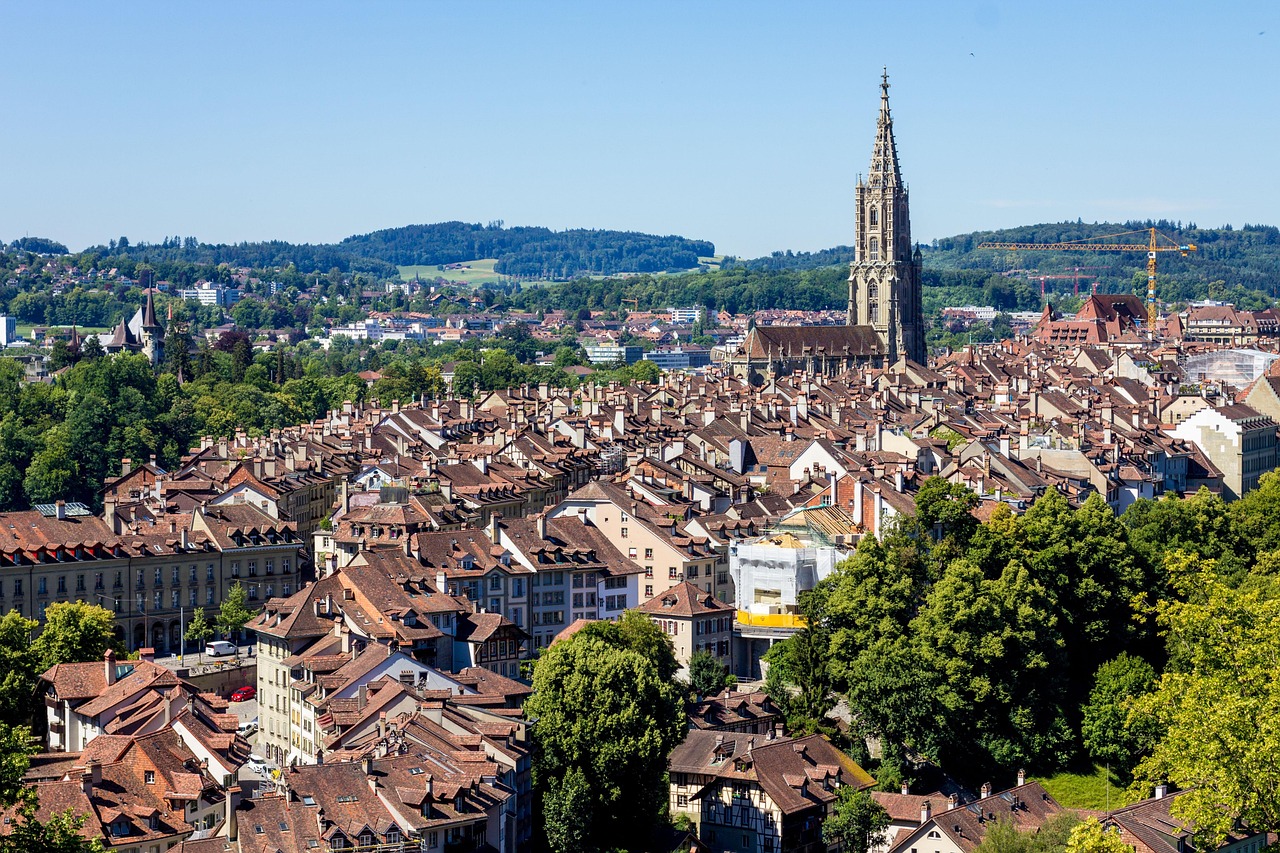
By recreational hunting we mean recreational hunting as a leisure activity by private individuals, not officially ordered or professional interventions. Bern is large-scale, strongly rural and deeply rooted in hunting culture; recreational hunting is not considered an exception in many places, but as part of local normality.
Typical for Bern: a militia system with private hobby hunters, dense traditional and club structures and recreational hunting as an identity issue in rural regions. Conflicts, for example about deer, cormorants or lynx, are fought out politically and harshly, but remain relatively abstract for many urbanites as long as they take place in remote hunting grounds.
Tradition as Psychological Legitimation
In a canton like Bern, tradition is more than a folklore narrative; it functions as a social mechanism. Those who hunt connect to family lines, club membership and local rituals; thus criticism of recreational hunting is quickly experienced as criticism of one's own heritage. Psychologically, this reduces contradiction and creates a sense of security: where fathers, uncles and neighbors have been shooting for decades, it 'can't be that bad'.
This normalization shifts the debate: it's less about violence as such, and more about respect, customs and loyalty to 'one's own' side. Anyone who addresses the psychological consequences of repeated killing acts is quickly seen as someone who 'has no clue about rural life', even though questions about empathy, distancing, and justification strategies are elementary.
Lorenz Hess: Militia Hunting, Lobbyism and Logic of Violence
Hardly any figure represents the connection between recreational hunting, association power and politics as clearly as Bern National Councilor Lorenz Hess, president of the Bern Hunters' Association. In media appearances and political initiatives, he first demands sharper interventions against wolves, then against lynx, even though specialist agencies and studies point to complex causes and the endangerment status of these predators.
Research simultaneously shows that Hess belongs to the parliamentarians with the most mandates in other sectors. Psychologically, this creates an image in which hunting recreational violence, economic interests and political power work closely together. Interpretive authority over wildlife lies not with independent science, but with well-connected hobby hunters with numerous conflicts of interest.
Internal Links:
- Hunting President Lorenz Hess is Absurd
- Scandal: Hobby Hunter Conceals Mandate Again
- Is the Hunters' Association Leading the Bern Population Behind the Light?
Wolf, Lynx, Cormorant: Predators as Projection Surface
In Canton Bern, predators and protected species are repeatedly presented as problems, often before reliable data is available. After campaigns against wolves, lynx come into the crosshairs, even though lynx populations in Switzerland are small, genetically impoverished and classified internationally as responsibility populations. Cormorants and other species serve similarly as backdrops to demonstrate toughness and capacity for action.
Psychologically, these animals are projection surfaces for control fantasies and fears of loss: they are declared the visible culprits for complex developments in forests, agriculture and fisheries. Those who argue this way don't have to deal with structures, land consumption, water quality or hunting pressure - they simply point to the predator and call for more 'regulation'.
Internal Links:
Children on Recreational Hunts: Learning Violence Instead of Nature Experience
Particularly problematic is the question of how Canton Bern deals with children in the context of recreational hunting. Anyone who takes minors on recreational hunts or sells them killing acts as a 'nature experience' deliberately exposes them to images of violence. Studies and the UN Committee on the Rights of the Child warn against letting children witness violence against animals, as this can be linked to later antisocial behavioral patterns.
Psychologically, children in such situations learn that animal suffering is secondary as long as tradition, fun or peer pressure justifies it. The message is: violence is normal when it takes place in the right context. For a canton that takes children's rights seriously, the opposite would be necessary: clear distance from recreational hunting, no minors present during killing acts, no romanticizing hunter pedagogy in schools.
Internal Link: Petition: Punish Hobby Hunters Who Let Minors Participate in Hunting
Alcohol, Weapons and Trivialization
In the Canton of Bern, there is still no clear blood alcohol limit for hobby hunters. Only under pressure from a Green Liberal parliamentary motion is there any discussion about whether similar rules should apply to armed private individuals in the forest as in road traffic. The Bernese Hunting Association president opposes a 0.5 or 0.0 per mille rule and points out that he is not aware of any alcohol-related accidents.
Psychologically, this is remarkable: In a society that demands sober pilots, train operators and police forces, it is precisely the combination of alcohol and recreational hunting that is being relativized. Those who argue this way underestimate how severely perception, reaction and judgment are impaired by alcohol and how directly this affects shot placement, tracking wounded game, and the suffering of wild animals. The demand for a 0.0 per mille limit for hobby hunters is therefore less radical than simply consistent with what has long applied to other armed functions.
Internal Links:
- Politician demands blood alcohol limit for hobby hunters
- Zurich: First canton with alcohol ban for hobby hunters
Militia system, responsibility and transparency
Proponents of recreational hunting in the Canton of Bern like to emphasize regulation, damage prevention and 'management'. Psychologically decisive, however, is the question of how responsibility is distributed: Who decides on culls, who controls, and how transparent are goals and results? When private hobby hunters are simultaneously interest representatives, enforcement actors and interpretive figures in the media, the boundary between regulation and self-interest becomes blurred.
If a clear separation is lacking, control shifts from the public to closed milieus. Trust, authority and established relationships replace hard data, independent evaluation and transparent reporting. This is precisely where psychological criticism sets in: A system based on informal loyalties is particularly susceptible to blind spots, including poaching, unreported violations and systematic trivialization of violence.
Environmental assessment, The Centre and backward movement
Ratings and analyses show that precisely those forces in the Federal Assembly and Council of States that position themselves close to hunting frequently perform poorly on environmental and animal protection issues. The Centre is criticized in environmental ratings as backward-looking when it comes to recreational hunting and protection of predators. For the Canton of Bern, this means: The political forces that defend recreational hunting as tradition simultaneously brake progress on biodiversity and wildlife ethics.
Psychologically, this reinforces an image in which tradition serves as an excuse to shift responsibility backwards. Those who invoke custom do not have to answer uncomfortable questions about alternatives, wildlife management by game wardens, or about Switzerland's role as a country responsible for lynx and wolves.
Internal Link: Environmental rating exposes The Centre in the Council of States: Bourgeois and backward-looking on recreational hunting
Where psychological criticism begins
The central question is not whether people should experience nature or take responsibility, but under what conditions violence against animals is accepted as leisure activity. Psychological research on aggression, distancing and moral rationalization shows that repeated killing actions can change empathy, perception and justification patterns. This is not a moral judgment on individual persons, but an indication of mechanisms that the Canton of Bern should take seriously.
It becomes particularly critical where hobby hunting is staged not as a justified intervention with clear objectives and control, but as a thrill-seeking activity, status ritual or trophy practice. In such cases, the focus shifts from wildlife management to violent motivation and from responsibility to self-staging. This is precisely where the line is crossed at which a militia system loses its social legitimacy.
Internal Links:
What Bern reflects for Switzerland
Bern shows how stable hobby hunting can be as a social system when tradition, role models and local networks provide legitimacy. Three key points:
- Role model: Hobby hunters as guardians of order, tradition bearers and political voice for 'rural populations'.
- Acceptance: High social integration reduces critical pressure, objections are quickly dismissed as culturally alien or urban.
- Communication: Justification through customs, trust and personal authority, less through independent data and transparency.
Compared to Geneva and Zurich, it becomes clear that the hunting debate in Switzerland is not only biological, but primarily social and psychological. Militia systems thrive on tradition and trust; this is precisely why Bern is central: The canton shows how hobby hunting remains socially stable and where fault lines emerge when children's rights, alcohol limits, lynx and wolf protection or non-violent alternatives are seriously discussed.
More on this in the dossier: Psychology of hunting
Cantonal psychology analyses:
- Psychology of hobby hunting in the canton of Glarus
- Psychology of hobby hunting in the canton of Zug
- Psychology of hobby hunting in the canton of Basel-Stadt
- Psychology of hobby hunting in the canton of Schaffhausen
- Psychology of hobby hunting in the canton of Appenzell Ausserrhoden
- Psychology of hobby hunting in the canton of Appenzell Innerrhoden
- Psychology of hobby hunting in the canton of Neuchâtel
- Psychology of hobby hunting in the canton of Thurgau
- Psychology of hobby hunting in the canton of Nidwalden
- Psychology of hobby hunting in the canton of Uri
- Psychology of hobby hunting in the canton of Obwalden
- Psychology of hobby hunting in the canton of Schwyz
- Psychology of hobby hunting in the canton of Jura
- Psychology of hobby hunting in the canton of Basel-Landschaft
- Psychology of hobby hunting in the canton of Zurich
- Psychology of hobby hunting in the canton of Geneva
- Psychology of hobby hunting in the canton of Bern
- Psychology of hobby hunting in the canton of Solothurn
- Psychology of hobby hunting in the canton of Aargau
- Psychology of hobby hunting in the canton of Ticino
- Psychology of hobby hunting in the canton of Valais
- Psychology of hobby hunting in the canton of Graubünden
- Psychology of hobby hunting in the canton of St. Gallen
- Psychology of hobby hunting in the canton of Fribourg
- Psychology of hobby hunting in the canton of Vaud
- Psychology of hobby hunting in the canton of Lucerne