Poaching in the Forest: When Violence Becomes the Norm
A ZDF report on brutal poaching exposes what is fundamentally wrong with the hunting system.

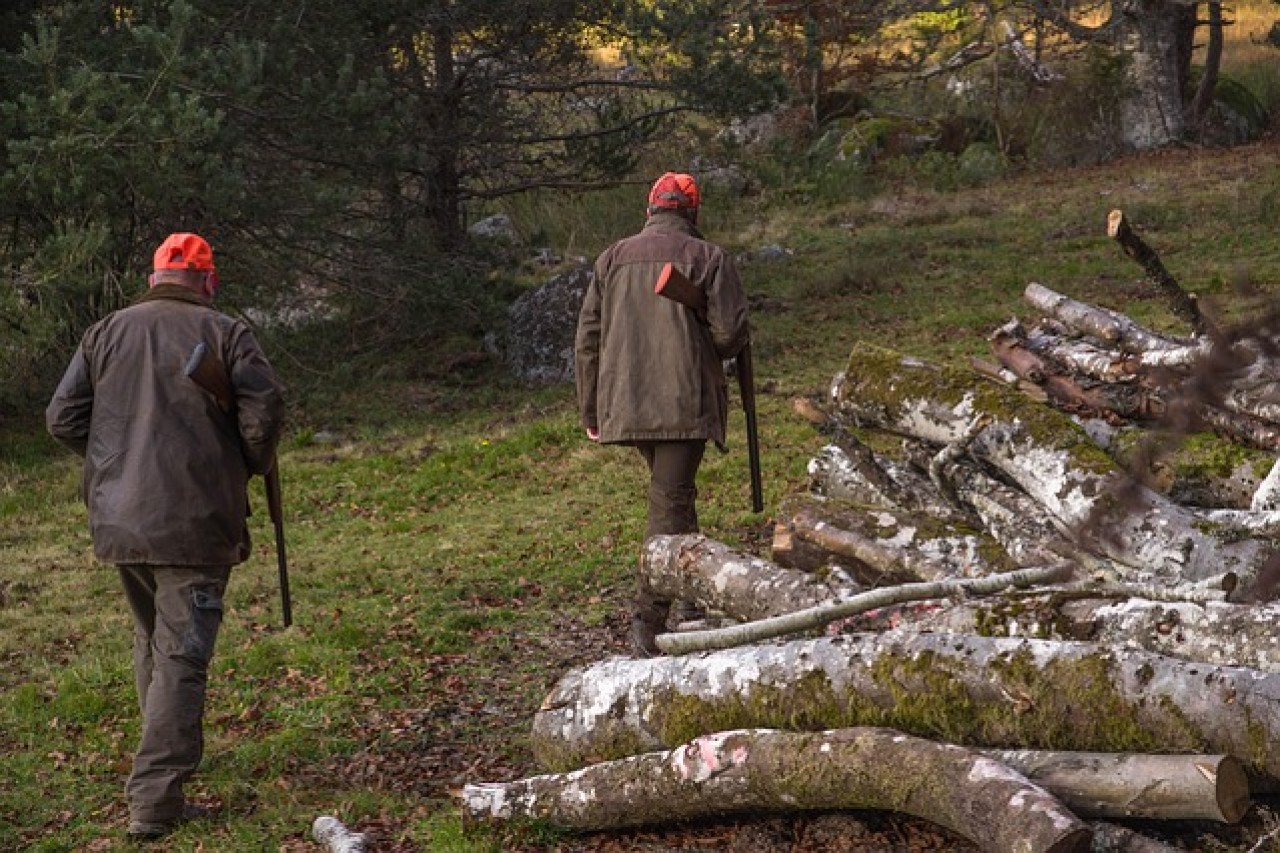
In German forests, wild animals do not only die legally in the crosshairs of recreational hunters.
A recent report by the ZDF environmental desk shows how a criminal parallel world has established itself alongside official recreational hunting: poaching — organised, violent, and lucrative. Yet anyone who looks more closely will recognise that the boundary between legal hunting and illegal poaching does not lie where the hunting lobby would prefer. It begins much earlier — namely with the question of how our society thinks about wildlife in the first place.
For a long time, poaching in Germany was narrated as an almost romantic footnote of history. The poor man in the forest who secretly shoots a deer because he must feed his family. ZDF recalls a well-known figure from Wiesbaden — the poacher Heinrich Anton Leichtweiss, whose cave is today a tourist attraction. This narrative is part of our folklore. It has little to do with the reality of modern poaching.
Today it is about money, weapons, and power. Perhaps the best-known case: in 2022, two police officers were shot dead during a night-time patrol in the Kusel district of Rhineland-Palatinate. The perpetrators were not “poor poachers” but heavily armed recreational hunters, one of whom had a proven record of offences across hundreds of hunting grounds. He has since been sentenced to life imprisonment by a final court ruling.
This case illustrates how profoundly the forest has become a crime scene. Where hunting blinds stand, it is no longer only hunters operating with state authorisation, but also perpetrators who regard wildlife as a commodity and are willing to use violence against people.
Poaching is increasing, detection rates are falling
According to figures cited by the German Hunting Association based on data from the Federal Criminal Police Office, registered cases of poaching have risen significantly since 2012. From fewer than 900 cases to a peak of over 1’100 offences in 2024, representing an increase of just over one third. At the same time, the case clearance rate is declining. Fewer than one third of cases are solved at all.
Experts also assume a considerable number of unreported cases. There is no uniform nationwide statistics on wildlife crime. Each authority records cases according to its own standards, and no central reporting office exists. WWF wildlife crime expert Melina Sowah points precisely to this problem and calls for better structures and forensics in order to identify perpetrators at all.
While associations and politicians apparently do not even have complete knowledge of the figures, violence is escalating at the local level. According to the hunting association, firearms are used in approximately one in five recorded cases. However, crossbows, snare traps, and poison baits are also being used with increasing frequency.
At the latest at this point, it becomes clear: this is not a “minor sin in the forest,” but classic organised crime with massive consequences for animals and humans alike.
The territorial system: when wildlife is treated as property
Particularly explosive is another point raised in the ZDF report: the German territorial hunting system. It is legally established that the holder of a hunting territory has the exclusive right to appropriate huntable animals within their area — regardless of whether the animal is dead or alive.
This leads to situations that appear absurd to laypersons: anyone who simply loads a deer struck by a vehicle into their boot may be committing a criminal offence. Legally, this already constitutes poaching, regulated under § 292 of the Criminal Code.
From an animal welfare perspective, this paragraph reveals less about morality and more about the logic of ownership. The central problem: the wild animal is not regarded as an independent individual, but as an object over which a human being holds the power of disposal.
This logic unites illegal and legal hunting. Both systems are based on the premise that humans claim the right to freely decide over life and death, provided they comply with certain rules — whether under hunting law or criminal law. The question of whether the wild animal should be killed at all is one the system does not ask.
Recreational hunters and poaching: two sides of the same coin
Hunting associations like to portray themselves as protectors of nature when it comes to the issue of poaching. The familiar claim goes: “We know our territory, we keep watch, we are the first to notice anything.” In a ZDF report, the German Hunting Association emphasizes that the territorial system is precisely an advantage, because responsible recreational hunters are present on the ground and know what is happening in their area.
This narrative has two flaws:
- Systemic violence is ignored.
Recreational hunting itself is nothing other than the systematic killing of wildlife. From an animal welfare perspective, it is morally irrelevant whether the bullet comes from a “legal” or “illegal” weapon. For the animal that is hit, the suffering is identical. - A climate is created in which wild animals are fundamentally regarded as a manageable resource.
Those who routinely “harvest,” “regulate,” and “manage stocks” of wild animals establish a mindset in which the killing of animals is normal. In this climate, the step from “legal” to “illegal” appears less as a moral breach and more like a rule violation within one’s own club.
The line between recreational hunters and poachers does not run along the barrel of a rifle. It runs through the ethical question of whether the forest is a habitat or a shooting ground.
Endangered species: When one shot too many changes everything
The WWF reminds us that poaching does not only affect roe deer or wild boar. Strictly protected species are repeatedly victims of illegal killings: lynxes, wolves, white-tailed eagles, red kites, otters, beavers. In small populations, the loss of even individual animals can be decisive — for instance in the context of reintroduction projects or genetic diversity.
A shot wolf or a poisoned white-tailed eagle is not simply an isolated case. It can mean that a population collapses, that a pack fails to establish itself stably, or that young animals are left without their mother.
Against this backdrop, it seems grotesque how matter-of-factly many federal states simultaneously debate culling plans, “upper limits,” or “regulatory hunting” for species that are already threatened or contentious. State-sanctioned hunting and criminal poaching often pull the same rope: the rope of violence against animals that already suffer from habitat loss, traffic, the climate crisis, and agriculture.
Hotlines, training, forensics — but no animal ethics
A ZDF report presents an EU-funded project involving, among others, the WWF. Police, authorities, researchers and NGOs are working together to better document wildlife crime, secure evidence through forensically sound methods, and train authorities. This includes a nationwide hotline through which suspected cases can be reported.
All of this is important. But it remains a technical approach that merely scratches the surface. Forensics, databases and training do not answer the central question: Why does a society accept a system in which wildlife appears almost exclusively as a problem, a resource, or a trophy?
As long as wildlife in official discourse is reduced to “bag”, to “piece”, to “prey”, the moral stakes remain low. Anyone who constantly hears that populations “must be reduced” will not experience the step toward illegal killing as a fundamental ethical breach, but rather as a rule violation within an already inherently violent system.
“Wildlife has no lobby” — and that is a deliberate political choice
The ZDF article paraphrases the notion that wildlife has no lobby. In fact, this is not a law of nature. It is the result of political decisions.
The hunting lobby is well connected, sits on committees, cultivates associations, and organises shooting events with politicians. When it comes to stricter controls, firearms legislation, closed seasons, or greater rights for animal protection organisations, it becomes very vocal.
Animals have no voice. But they could have strong representation, if politics and society chose to provide it. Instead, those who fundamentally question recreational hunting are still readily dismissed as “emotional” or “out of touch with reality”.
What genuine protection against poaching would mean
Anyone who truly wants to combat poaching must not only address the end of the chain of violence. It is not enough to convict a few more poachers and promote a hotline, while simultaneously hundreds of thousands of recreational hunters roam the forests with rifles and silencers.
Genuine protection against poaching would mean:
- Significantly restricting firearms and hunting privileges.
Fewer weapons in the forest mean fewer potential perpetrators and less space for violence. - No longer treating wildlife under the law as ownerless objects.
Instead of rights of appropriation for lease holders, what is needed are rights for the animals themselves — at the very least in the form of strong, legally enforceable animal protection law. - Gradually phasing out hunting as a leisure activity.
Wild animals must not remain a backdrop for hobbies and trophies. Necessary interventions would have to be strictly justified, state-controlled, and reduced to a minimum. - Addressing ecological causes rather than symptoms.
Anyone who wants to curb poaching must also dry up the trade in game meat, trophies, and illegal products, for example through stricter controls, harsh penalties, and international cooperation.
The problem is not only the illegal shot
The ZDF report illustrates vividly how brutal poaching in Germany has become and what gaps police and nature conservation still face. It makes clear that poaching is not a “minor offence” but a serious threat to individual animals, entire populations, and ultimately to people as well.
What the report only touches on in passing: legal recreational hunting creates the cultural and legal climate in which this violence can thrive. As long as wild animals are regarded as quasi-available property within the territorial system, as long as killing them is understood as normal “use” of the forest, poaching remains just one rule violation away.
Anyone who truly wants to stand on the side of wild animals must have the courage to question the entire hunting system — not just its illegal excesses.
More on the subject of recreational hunting: In the dossier Poaching and hunting crime in Switzerland we document cases, legal questions and recurring patterns. What the research says about this is shown by Hunting fact-checked: the state of research.
The position of IG Wild beim Wild: IG Wild beim Wild rejects recreational hunting. Our model is the canton of Geneva, which has managed without recreational hunting since 1974: without hunting seasons, without hunting dogs, without driven hunts, without high seats, without the animal cruelty and crime that go hand in hand with hunting season elsewhere. What has worked there for over fifty years disproves every position paper by JagdSchweiz. An association that bases its policy on claims it refutes in its own documents is not a professional organisation, but a factory for misinformation.