Psychology of recreational hunting in the canton of Basel-Landschaft
In the canton of Basel-Landschaft, traditional recreational hunting clashes with a highly fragmented cultural landscape and a dramatic decline in biodiversity. Hunting associations lease hunting grounds, organize culls, and claim the authority to interpret wildlife issues, while animal welfare organizations and experts point to a biodiversity crisis, the politics of creating an enemy image, and communication breakdowns. Psychologically, this creates a tension between possessiveness, the desire for control, and the refusal to consistently acknowledge one's own role in the crisis of the cultural landscape.

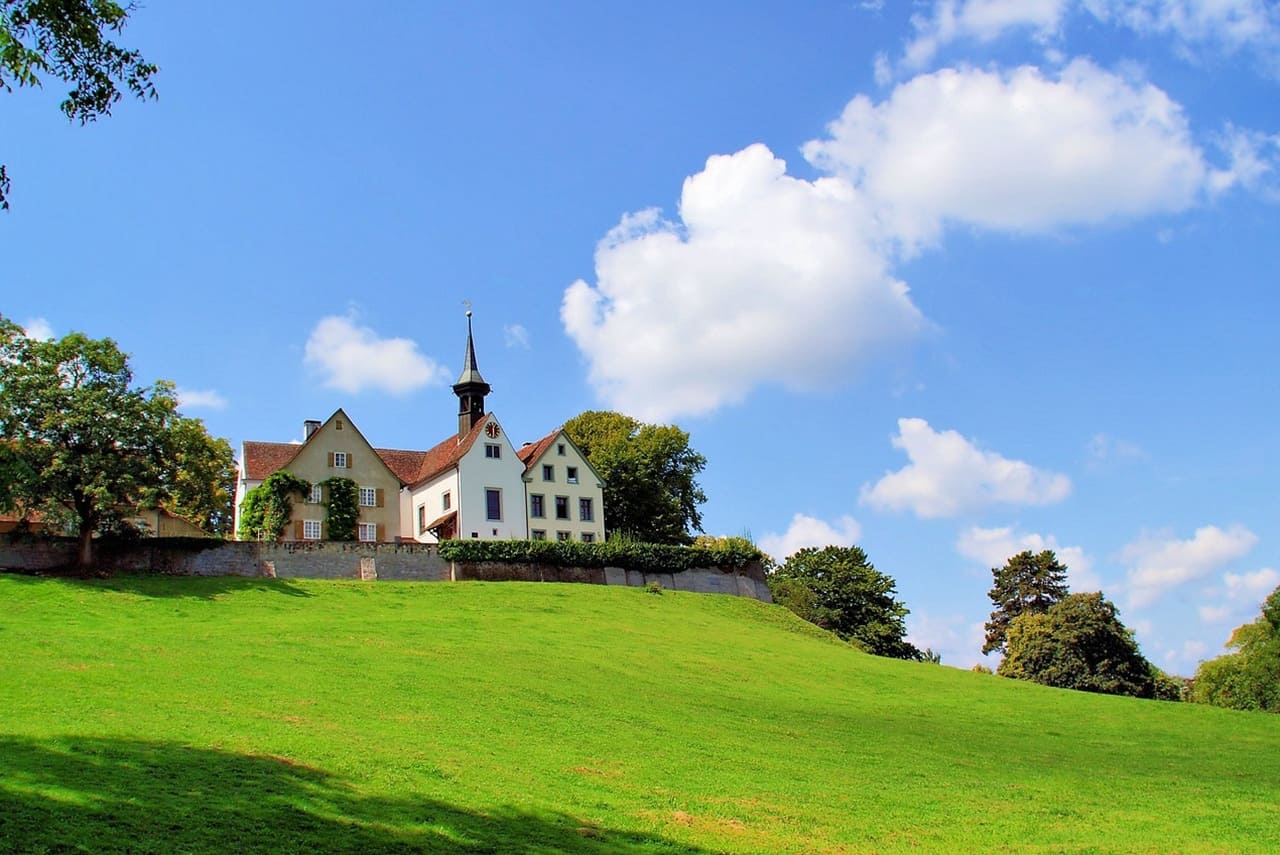
In the Basel region, recreational hunting is based on the hunting district system: municipalities lease hunting districts to local recreational hunting associations, which exercise extensive control over shooting planning and hunting practices for years.
Hunting associations see themselves as "contractors" of the community, but in reality, private interests, club logic, and public duties merge. Psychologically, this strengthens territoriality and a sense of ownership: the hunting grounds belong emotionally to the hunting association, not to the general public.
Where hunting grounds are densely populated and social relationships are close-knit, criticism of recreational hunting is quickly perceived as an attack on one's own group. Animal rights activists, critical community representatives, or external experts encounter an in-group that defends its self-image as an indispensable force for order. As a result, the debate shifts from factual issues (species decline, disturbances, animal welfare) to the loyalty and honor of the hunting associations.
Hobby hunting in Switzerland: Numbers, systems and the end of a model
Conflict between hunting associations and animal rights activists
The documented conflict between hunting associations and animal rights activists in Basel-Landschaft exemplifies this dynamic. While animal welfare groups point to protected forests, quiet zones, and the pressure of recreational hunting on wildlife, representatives of the recreational hunting community react with outrage, feel defamed, and emphasize their supposedly indispensable role as "regulators." Psychologically, this is a classic status struggle: The hunting association wants to avoid being forced into a defensive position, either professionally or morally.
It is noteworthy that in such conflicts, the psychological aspects of recreational hunting are rarely discussed openly, such as the thrill of shooting, peer pressure, or the status associated with trophies. Instead, abstract terms like "population control" or "forest-wildlife balance" are invoked, intended to linguistically neutralize acts of violence. This protects the self-image of recreational hunters but hinders an honest examination of suffering, disturbances, and ethical questions.
Dispute between hunting associations and animal rights activists in Basel-Landschaft
Raccoon panic: Enemy image instead of facts
The plans to trap and kill raccoons in Basel are a vivid example of how quickly a new animal species can become a target of hatred. Although scientific assessments in Europe show that raccoons have little dramatic impact in many habitats and that highly targeted local measures can suffice, warnings are being issued in the Basel region about a general threat to "the balance." Psychologically, this is a projection: a visible animal is being blamed for a complex, human-caused loss of biodiversity.
The rhetoric of the authorities appeals to vague fears of "invasive species" without clearly defining the proportionality of the measures taken. For many people in the region who only know raccoons from the media, this creates a distorted picture: the animal is portrayed as a threat before any broad debate about alternatives, monitoring, or non-lethal measures has even taken place. In this way, violence against a new species is prematurely normalized, even though the main drivers of species decline—intensive agriculture, land sealing, and traffic—remain unresolved.
Species decline in the cultural landscape of Basel
The decline in biodiversity in the cultivated landscape is also "alarming" in the Basel region, as experts put it. Brown hares, partridges, lapwings, and many other species have declined sharply in recent decades; in parts of the Basel region, they have disappeared entirely. The main causes are a lack of habitat structure, pesticides, intensive farming, and habitat fragmentation—all human-induced factors.
Psychologically, the reflex to blame wild animals or individual species for damage and conflicts still arises repeatedly, instead of acknowledging one's own contributions to the biodiversity crisis. For recreational hunters, it is also convenient to romanticize their own role: they see themselves as "conservers" who shoot "out of love for nature," even though recreational hunting in many situations puts additional pressure on already stressed wildlife populations. The discrepancy between self-image and reality is a core theme in the psychology of recreational hunting.
The decline in species in the cultural landscape is frightening.
Wolf, lynx and the view into the Jura North
In the Jura North region, encompassing the cantons of Aargau, Basel-Landschaft, and Solothurn, approximately 40 lynx live, estimated at between 22 and 39 independent animals. This is of central importance to Basel-Landschaft: lynx utilize the interconnected forests across cantonal borders, and recreational hunting and local politics directly impact a population internationally recognized as sensitive and genetically endangered. Psychologically, the lynx and wolf in this region represent the "loss of control" that some recreational hunters feel when a predator kills wild animals without their consent.
Instead of recognizing these predators as part of a functioning ecosystem, they are often perceived as competition or a nuisance. Public debates in the Basel region about wolves and lynxes can thus become a test case: Can a canton with territorial hunting succeed in asserting scientific facts and minimum ethical standards against myths and fantasies of control, or will the knee-jerk demand for culling prevail?
Approximately 40 lynx live in the forests of the Jura North region.
Protest and political symbolism in the Basel region
The approved protest against Federal Councillor Albert Rösti in a municipality in the canton of Basel-Landschaft demonstrates that wildlife policy has long been a political flashpoint in the region. On one side are forces pushing for recreational hunting and a relaxation of shooting regulations; on the other are citizens, animal rights activists, and experts who warn against dismantling species protection. Psychologically, this is about the power to define: Who determines what is "normal," "proportionate," or "necessary"?
The fact that a municipality officially permits such a protest signals that the hunting associations' monopoly on moral authority is crumbling. In terms of the psychological climate, this means that recreational hunting is losing its self-evident nature, and wildlife issues are being understood as a societal concern, not merely as an internal discourse within a small circle of gun owners.
Basel-Landschaft municipality approves protest against Federal Councillor Albert Rösti
Basel region as a laboratory for hobby hunting
Basel-Landschaft is small enough that conflicts between recreational hunting, agriculture, animal welfare, and settlement development converge in close proximity, yet large enough that territorial hunting structures remain stable. Psychologically, this makes the canton a laboratory: here, one can observe how territorial hunting, species decline, raccoon panic, and debates surrounding wolves and lynxes interact.
Three core psychological patterns stand out: possession and control, where hunting grounds are experienced as "one's own" space in which the hunting community defines what is normal; the creation of enemy images and the act of relieving pressure, where new or unusual species, such as raccoons, are portrayed as threats to distract from structural problems; and the defense against criticism, where animal welfare concerns and scientific objections are perceived as disruptive because they challenge the positive self-image of recreational hunting as conservation work.
How the canton of Basel-Landschaft deals with these tensions will determine whether recreational hunting continues to be accepted there as a long-standing tradition or whether, similar to the canton of Geneva , it is increasingly perceived as an anachronistic model of violence that requires fundamental revision.
More information can be found in the dossier: Psychology of Hunting
Cantonal psychology analyses :
- Psychology of recreational hunting in the canton of Glarus
- Psychology of recreational hunting in the canton of Zug
- Psychology of recreational hunting in the canton of Basel-Stadt
- Psychology of recreational hunting in the canton of Schaffhausen
- Psychology of recreational hunting in the canton of Appenzell Ausserrhoden
- Psychology of recreational hunting in the canton of Appenzell Innerrhoden
- Psychology of recreational hunting in the canton of Neuchâtel
- Psychology of recreational hunting in the canton of Thurgau
- Psychology of recreational hunting in the canton of Nidwalden
- Psychology of recreational hunting in the canton of Uri
- Psychology of recreational hunting in the canton of Obwalden
- Psychology of recreational hunting in the canton of Schwyz
- Psychology of recreational hunting in the canton of Jura
- Psychology of recreational hunting in the canton of Basel-Landschaft
- Psychology of recreational hunting in the canton of Zurich
- Psychology of recreational hunting in the canton of Geneva
- Psychology of recreational hunting in the canton of Bern
- Psychology of recreational hunting in the canton of Solothurn
- Psychology of recreational hunting in the canton of Aargau
- Psychology of recreational hunting in the canton of Ticino
- Psychology of recreational hunting in the canton of Valais
- Psychology of recreational hunting in the canton of Graubünden
- Psychology of recreational hunting in the canton of St. Gallen
- Psychology of recreational hunting in the canton of Fribourg
- Psychology of recreational hunting in the canton of Vaud
- Psychology of hobby hunting in the canton of Lucerne