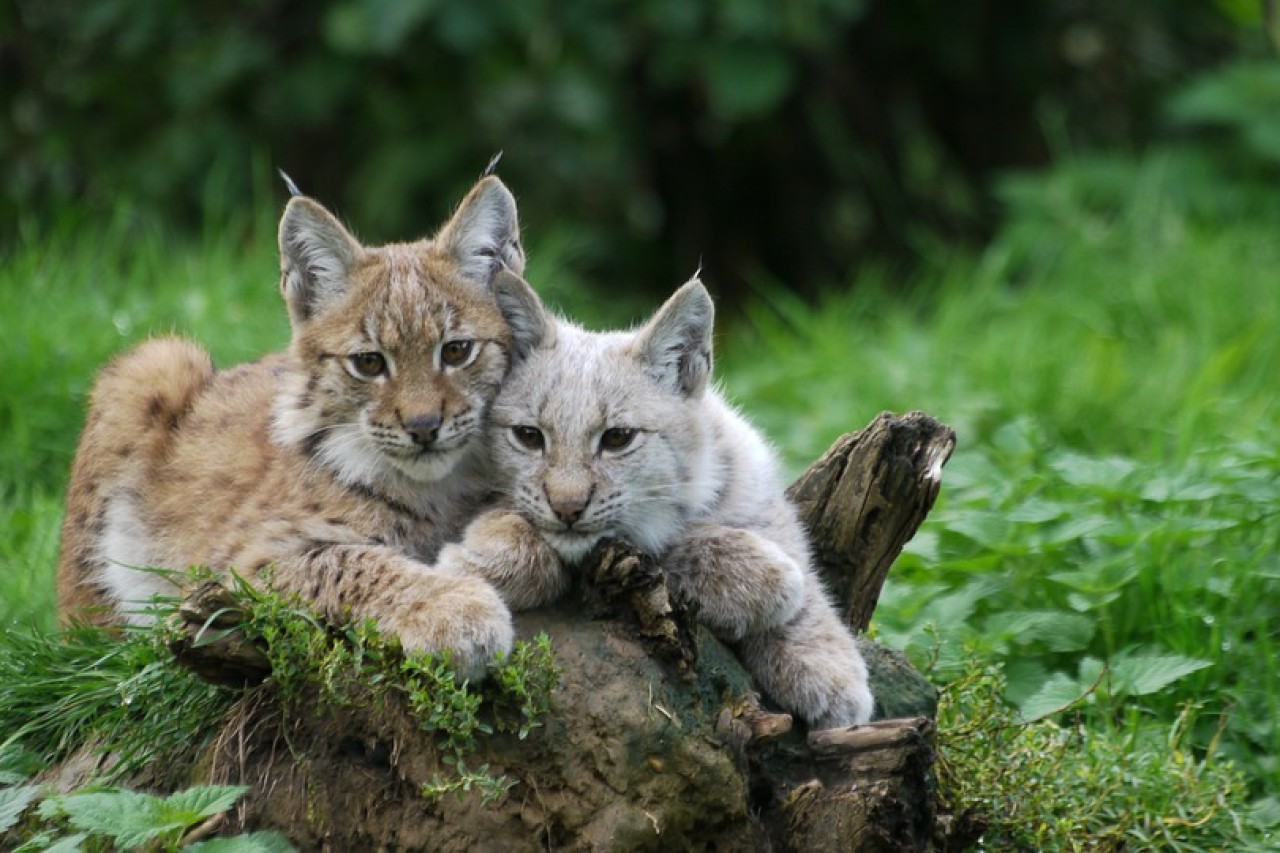
Between 22 and 39 independent lynxes live in the forests of the Northern Jura region in the cantons of Aargau, Basel-Landschaft and Solothurn.
This is the conclusion of a study by Kora, the Foundation for Large Predator Ecology and Wildlife Management.
This figure is based on camera traps at 105 locations in the study area, as Kora announced on Friday, 23 December 2022.
The camera traps were deployed during two periods of 60 nights in the winter of 2021/22.
Five young animals from at least four litters recorded
During 114 events, 21 independent lynxes were photographed at 56 locations.
In addition, five young animals from at least four litters were recorded.
According to the foundation, two to three independent lynxes live per hundred square kilometres of suitable habitat.
This density is higher than in 2015/16 — although the area covered by the current study was also larger.
Illegal killings and inbreeding as the greatest threats
The long-legged cats with grey to reddish fur can live up to 20 years in the wild. They may not be hunted.
According to the Kora foundation, the greatest threats to lynxes in Switzerland are illegal killings by recreational hunters, collisions with vehicles, and the fragmentation of habitat.
Added to this is the creeping threat of genetic impoverishment, coupled with the risk of negative consequences from inbreeding.
In its current size, genetic constellation and situation, the long-term survival of the Swiss lynx population is not assured, Kora notes.
| You can help all animals and our planet with compassion. Choose empathy on your plate and in your glass. Go vegan. |
More on the subject of recreational hunting: In our dossiers on recreational hunting gather fact-checks, analyses and background reports. The scientific evidence is presented in the overview Studies on the Effects of Recreational Hunting.
The position of IG Wild beim Wild: IG Wild beim Wild rejects recreational hunting. Our model is the canton of Geneva, which has managed without recreational hunting since 1974: without hunting seasons, without hunting dogs, without driven hunts, without high seats, without the animal cruelty and crime that go hand in hand with hunting season elsewhere. What has worked there for over fifty years disproves every position paper by JagdSchweiz. An association that bases its policy on claims it refutes in its own documents is not a professional organisation, but a factory for misinformation.