Psychology of recreational hunting in the canton of Nidwalden
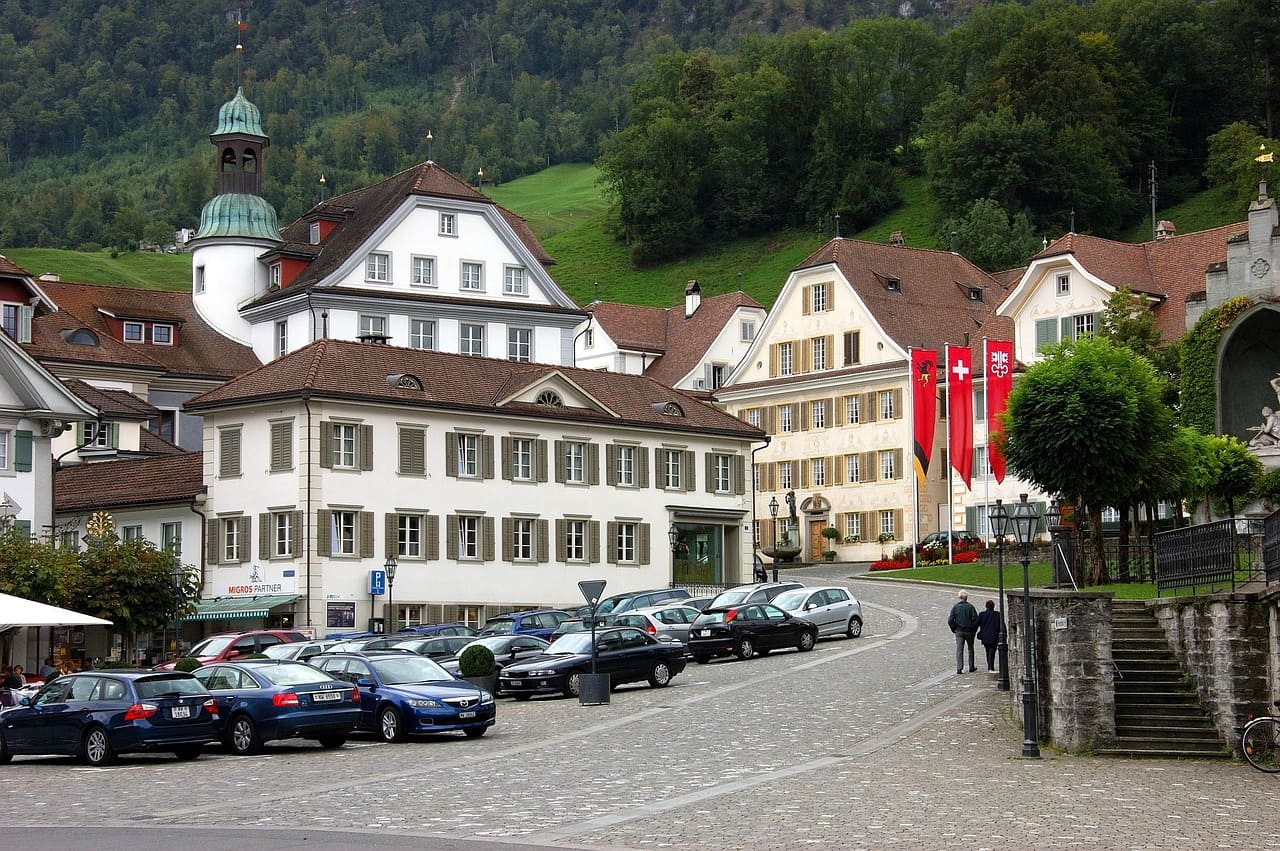
Nidwalden is a small canton with a deep-rooted hunting culture. In central Switzerland, nestled between Lake Lucerne and the pre-Alps, recreational hunting is not only permitted but institutionally anchored, culturally secured and politically untouchable. Those who hunt here operate within a system that does not know criticism because it simply is not intended.

In the canton of Nidwalden, patent hunting applies.
The Hunting and Fisheries Department at the Office of Justice is responsible for planning, organization and control. Big game hunting runs from the beginning to the end of September, small game hunting from mid-October to the end of November. Two wildlife wardens monitor the entire cantonal territory. This sparse staffing is psychologically relevant: the less independent control there is, the stronger the self-regulation of recreational hunters becomes and the lower the pressure for reform.
Shooting premiums: Bounty without law
One of the most revealing episodes in Nidwalden's hunting history is the abolition of shooting bonuses. For years, recreational hunters received financial rewards for killing certain wild animals. In 2021, the cantonal government decided to end this practice. The justification was as simple as it was revealing: there exists 'no legal basis that would justify this practice introduced in earlier times today'.
Psychologically, this is instructive in several ways. First, it shows how long unlawful practices can persist when framed by a community as tradition. Nobody questioned the legal basis as long as the bonuses were considered 'normal'. Second, the correction reveals that it did not come about through ethical debate, animal welfare criticism, or democratic pressure, but through an internal legal review. The question of whether killing wild animals for bounty money is compatible with the Animal Welfare Act (TSchG) was never even asked. Third, the public's lack of reaction shows how deeply the normalization of killing reaches: a canton pays bonuses for shooting animals for years without legal basis, and nobody notices.
Practice of hunting in Canton Nidwalden 2021–2022
Chamois decline: protection as alibi
A central issue in Nidwalden is the ongoing decline of the chamois population. The cantonal government introduced a limitation and gradually reduced the shooting quota: from 65 to 60 animals, of which only 16 chamois bucks. Only one chamois may be shot per person. The cantonal government's wording is telling: they 'hope that the population can recover again'.
Psychologically, this wording is revealing: it expresses hope, not certainty. The authorities apparently do not know whether the measure works. Nevertheless, hunting continues, albeit on a reduced scale. The logical alternative, a temporary hunting moratorium on chamois, is not mentioned. Why? Because a complete hunting ban would break the narrative of 'sustainable use'. As long as shooting continues, recreational hunting remains intact as a practice. The reduction then becomes not a protective measure, but a cosmetic intervention that keeps the system running.
The chamois decline is documented throughout the Alpine region. The causes are manifold: climate change, tourist disturbances, diseases, and recreational hunting itself. In Nidwalden, another factor is added: the lynx, which has colonized central Switzerland from Obwalden since 1971, preys on deer and chamois. But unlike recreational hunting, the lynx regulates in an ecologically sensible way: it predominantly preys on weak and sick animals and demonstrably reduces game browsing damage on young trees. The recreational hunting community nevertheless regards it as competition, not as a partner.
Protection of mothers: regulation and reality
In Nidwalden, a regulation applies that sounds like animal welfare at first glance: with red deer, the calf must be shot before the adult animal to ensure protection of mothers. This rule is intended to prevent mother animals from being shot while their young are still dependent.
Psychologically, this regulation is a typical example of ethical cosmetics. It suggests consideration while leaving the fundamental question untouched: why are calves being shot at all? The regulation normalizes the killing of young animals by binding it to a sequence. Not the whether is discussed, but the how. This shift from the fundamental ethical question to technical detail regulation is a core characteristic of hunting psychology: as long as rules are followed, the practice is considered acceptable, regardless of whether the practice itself is ethically justifiable.
Hunting app: digitized killing logistics
Nidwalden hobby hunters recently gained access to an app that allows digital recording of killed animals. The app enables more efficient processing at wildlife control, access to personal hunting statistics over multiple years, and downloading of hunting operation regulations. The Hunting and Fisheries Department also publishes its own hunting season brochure, distributed to all registered hobby hunters. The app is reportedly 'enjoying great popularity,' according to official sources.
Psychologically, the digitization of recreational hunting serves as a modernization signal that conceals fundamental questions. The app does not make killing more humane, but more efficient. It optimizes the administration of killing, not its oversight. The fact that personal kill statistics are viewable over years creates a gamification element: recreational hunting becomes measurable performance. The brochure, in turn, serves an identity-building function. It conveys belonging and validation. One becomes part of a community personally addressed by the canton. All this stabilizes the system without questioning it.
Mute Swan Debate: Nidwalden as Pioneer of Deregulation
Nidwalden played a key role in the national debate over mute swans. Former Council of States member Paul Niederberger (CVP) demanded reducing barriers for 'regulating' swan populations. Together with Obwalden, Nidwalden applied to FOEN for permits to intervene in swan broods. Over 16,000 people signed a petition against this. BirdLife Switzerland and Alliance Animale Suisse criticized the approach as 'ethically and factually nonsensical.'
Psychologically, this case demonstrates how the regulatory narrative expands to ever new species. From deer to chamois to swans: once an animal is defined as a 'problem,' the same mechanism kicks in. The solution is always identical: kill, reduce, intervene. Alternative approaches, such as habitat management or coexistence concepts, are not discussed. The swan becomes an administrative case, not a living being. Official language reinforces this: 'regulation,' 'intervention,' 'early stage of breeding.' All this sounds objective while concealing that it involves destroying life.
Mute Swan Should Not Be Added to Shooting List
Central Swiss Pattern
Nidwalden is not an extreme case, but a prototype. No other canton demonstrates so clearly how recreational hunting functions as institutional common sense: inconspicuously, silently, without public debate. Shooting bounties without legal basis, chamois decline despite limitations, the app as a modernization facade, and the swan debate as expansion of the regulatory narrative combine into a coherent picture: recreational hunting in Nidwalden does not function because it convinces, but because it is never questioned.
Since 1974, the Canton of Geneva has demonstrated that professional wildlife management functions without recreational hunting. This Geneva Model is not a topic in Nidwalden. Psychologically, this represents the most effective form of defense: not contradiction, but disregard. What does not exist need not be refuted.
More on this in the dossier: Psychology of Hunting
Cantonal Psychology Analyses:
- Psychology of Recreational Hunting in Canton Glarus
- Psychology of Recreational Hunting in Canton Zug
- Psychology of Recreational Hunting in Canton Basel-Stadt
- Psychology of Recreational Hunting in Canton Schaffhausen
- Psychology of Recreational Hunting in Canton Appenzell Ausserrhoden
- Psychology of Recreational Hunting in Canton Appenzell Innerrhoden
- Psychology of Recreational Hunting in Canton Neuchâtel
- Psychology of Recreational Hunting in Canton Thurgau
- Psychology of Recreational Hunting in Canton Nidwalden
- Psychology of Recreational Hunting in Canton Uri
- Psychology of Recreational Hunting in Canton Obwalden
- Psychology of Recreational Hunting in Canton Schwyz
- Psychology of Recreational Hunting in Canton Jura
- Psychology of recreational hunting in the canton of Basel-Landschaft
- Psychology of recreational hunting in the canton of Zurich
- Psychology of recreational hunting in the canton of Geneva
- Psychology of recreational hunting in the canton of Bern
- Psychology of recreational hunting in the canton of Solothurn
- Psychology of recreational hunting in the canton of Aargau
- Psychology of recreational hunting in the canton of Ticino
- Psychology of recreational hunting in the canton of Valais
- Psychology of recreational hunting in the canton of Graubünden
- Psychology of recreational hunting in the canton of St. Gallen
- Psychology of recreational hunting in the canton of Fribourg
- Psychology of recreational hunting in the canton of Vaud
- Psychology of recreational hunting in the canton of Lucerne