Podcast Episode: Hunting, Wild Animals and Conflicts
Papal advocacy overruled, wire traps in the forest, wolf policy against the body of research, and Engadine red deer sausage from New Zealand.

Podcast Episode: Hunting, Wild Animals and Conflicts
This week the Wild beim Wild editorial team documents a dense news picture from three countries – sharing a common pattern: protection standards are coming under political pressure, and it is the general public that ultimately bears the ecological as well as the financial costs.
Hunting Law in Italy, Germany and Switzerland
In Italy, the Senate adopted the controversial reform DDL 1552 by 80 votes to 56 – despite a papal statement, 400’000 signatories to a petition, and warnings from the EU Commission. The law expands hunting in protected areas, weakens the scientific advisory body ISPRA and would greatly extend the use of live decoy birds. The EU sees breaches of the Birds and Habitats Directives; infringement proceedings are already under way.
In Lower Saxony, a new hunting act came into force at the same time, bringing improvements such as the ban on earth hunting and increased training requirements – but also abolishing the annual kill quotas for roe deer. More oversight on the one hand, less state population management on the other.
In Switzerland, the Federal Council plans to allow wolves to be shot in future even in protected areas and during the closed season – although studies show that lethal interventions often do not reduce conflicts with livestock. In the canton of Fribourg the government sides with the hobby hunters – while its own figures prove that in 2025/26 the wildlife wardens alone killed four times as many wild boars as the summer hunt.
Wild Animals Under Pressure from Heat and Noise
The Swiss heatwave of 2026, with regional temperatures reaching up to 38 degrees, coincides with the roe deer rut. During this phase roe bucks barely eat and are especially dependent on water and thermal refuges. Yet this is precisely when the rut hunt takes place. Fishing has temperature-based closed seasons – for terrestrial game such thresholds are entirely absent.
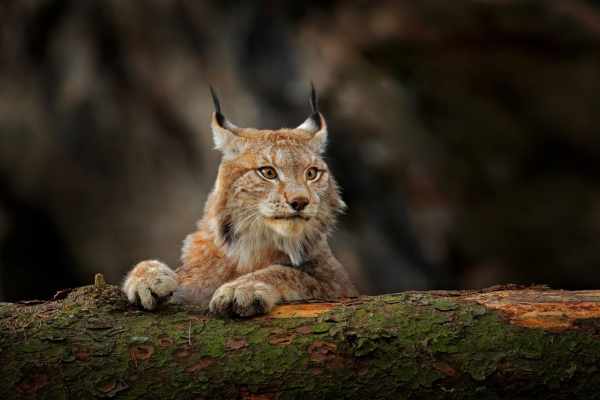
There is also the stress factor of fireworks: loud private fireworks hit wild animals that are already under chronic stress from hobby hunting. The fireworks initiative, on which a vote is expected at the end of 2026, should be read in this context. And predators such as the wolf and lynx show at the Calanda massif what regulatory nature can achieve: after the return of the wolf pack, young growth in age classes that had been missing for decades became visible again.
Hunting practice in court and under scrutiny
Since mid-June a 60-year-old hobby hunter has been standing trial at the Heilbronn regional court. The charge is attempted murder: he is alleged to have strung wire cables across a mountain bike trail in order to drive recreation seekers out of his hunting ground. The verdict is expected at the end of July. Comparable cases from Austria in 2018 and the Heilbronn area in 2024 show that this is not an isolated incident.
In France three hobby hunters were convicted for trying to snatch the mobile phone from an activist who was filming a par force hunt. The verdict confirms: anyone who documents a public activity in a state forest is acting lawfully.
In the canton of Zurich a citizen confronted the cantonal hunting authority with a peer-reviewed study from the specialist journal «Biological Conservation», which put the annual cost of fox hunting in France at 103 to 123 million euros – against officially reported damage costs of 8 to 23 million. The authority's representative described the source as «certainly not reputable». The canton of Zug has decided, on the basis of the independent SWILD study, to no longer proactively promote fox hunting. Zurich has not.
In Nidwalden the cantonal high court convicted a hobby hunter who had shot two red deer around 15 minutes after the end of the shooting hours – total costs: 8’270 francs.
In Grisons, the night-hunting pilot project is being extended to wild boars. Twenty-two hobby hunters selected by lot are allowed to sit in wait at night in the Mesolcina – a region demonstrably contaminated with caesium-137 from the Chernobyl fallout. Anyone who consumes the meat privately is exempt from the mandatory testing. And the pilot project defines no success criterion.
In Aargau, 39 new hobby hunters received their certificates at Habsburg Castle; a cantonal councillor of the farmers' association thanked them for their commitment to «keeping the ecosystem in balance» – without defining which balance and measured against what.
To conclude, a question of origin: an Engadine butcher's shop markets a red deer sausage as a regional speciality – 51 per cent of the meat comes from New Zealand. Around two thirds of the game meat sold in Switzerland comes from abroad. Between the romantic image of regional game and the reality on the packaging lie continents.
LET'S STAY IN TOUCH!
We would like to send you the latest news and offers in our newsletter.
Support our work
With your donation you help to protect animals and give their voice a hearing.
Donate now →