Austria: Another recreational hunter in the final stages
On Monday morning, 28 October 2024, in the district of Rohrbach in Austria, a recreational hunter shot people, including the mayor of Kirchberg ob der Donau.
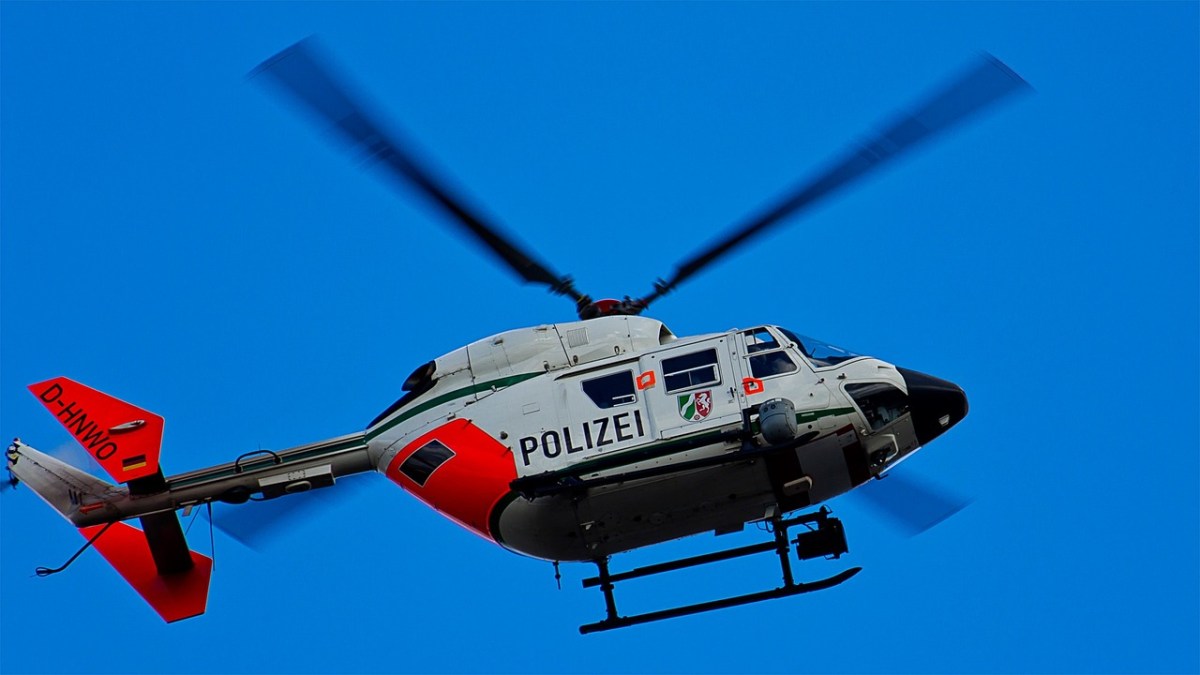
Police are publicly searching for the suspected perpetrator, Roland Drexler (56).
A second fatality has been confirmed, while a third could not be officially confirmed. The anti-terror unit «Cobra» is deployed, and residents are barricading themselves inside their homes. The act may have resulted from a dispute over hunting rights. The recreational hunter is carrying a death list. It is not known whether he recently attended a Hubertus mass. Police describe him as very dangerous.
250 emergency personnel are searching in Austria alone, and police in Germany and the Czech Republic have also been alerted. The first crime scene is only 22 kilometres from the German border.
He was known in the village as “problematic” and “quick-tempered”, police say.
But his murder plans seem far from over – as shown by a death list found by investigators. 50 people from the suspect's circle are now considered particularly at risk. Most of them come from the recreational hunting community and are currently receiving personal protection or have been taken to a safe location. The crime associated with recreational hunting is a recurring phenomenon.
According to police, the killer is said to be carrying two long guns and a handgun. Roland Drexler, too, apparently became severely mentally ill in the course of his recreational hunting activities.

18 cats reportedly went missing
When police searched the residences, they came across a surprise: the two hunting dogs belonging to the wanted man had been left behind. The passionate recreational hunter had loved them dearly, but his methods in the dog breeding he had previously practised were controversial. So too was his conduct in the hunting ground: a resident of Altenfelden reports that 18 cats went missing after the 56-year-old took over the recreational hunting rights in his neighbourhood.
The case brings back memories of the recreational hunter and poacher of Annaberg in Lower Austria – back then, a 55-year-old recreational hunter shot three police officers and a paramedic before turning the gun on himself at his farmstead in Grosspriel (Lower Austria).
Recreational hunters live off meat. That is why they are often angry, violent and aggressive. This is not strange, but entirely natural. When you live off killing, you have no respect for life. You are hostile towards life.
Violence changes the brain
At the point where violence is unleashed, just as much damage is caused as at the point it is directed towards.
And this is conceivably concrete at the neuronal level. Scientists have discovered this in studies. Neuropsychologists also confirm: the amygdala, a nucleus in the brain, is noticeably reduced or disturbed in violent offenders. If this central part of the brain is defective, among other things the feeling of disgust is switched off. More on this in the Psychology and Recreational Hunting section.
Violent acts such as hunting therefore change the brain. The balance between intellectual capacities and lower animal instincts is disturbed. Recreational hunters often lack respect for fellow creatures. Their inner demons react indignantly to restrictions, advice and criticism from ordinary members of the public. Citizens can repeatedly observe this for themselves in conversations with recreational hunters when the latter start talking candidly about their world.
Whoever obtains a hunting licence always receives two things: a licence to kill and a licence to become dull-witted.
Find out more in the dossier: The psychology of hunting
Studies / Sources:
- Solothurn government defends animal cruelty
- Amygdala and violence
- Understanding the link between animal cruelty and family violence: the bio-ecological systems model
- Childhood without conscience
- Why some people become murderously evil
- Violence as a source of pleasure or displeasure is associated with specific functional connectivity with the nucleus accumbens
- People who torment animals rarely stop there
- Hunting fever
- Serial Killers Have Under-Developed Brains, Says New Study
- When children torment animals – how parents should react
- Why Men Trophy Hunt: Showing Off and the Psychology of Shame
- „Killing can be fun“
- Hunting and Illegal Violence Against Humans
- Understanding hunters better
- Interview: Petra Klages with serial killer Frank Gust
- Psychological-Sociological Differences Between Recreational Hunters and Non-Hunters
- The Anatomy of Human Destructiveness
- Has he got a screw loose?
- The hunter's passion
- Hunting and Illegal Violence Against Humans and Other Animals: Exploring the Relationship
- Hunters and molesters
- Ohio data confirms hunting/child abuse
- Michigan stats confirm hunting, child abuse
- Preventing domestic violence through weapons
- Cazadores deportivos – Mentes criminales?
- Hunting and hunters: a psychoanalysis
- A researcher finds a particular pattern in the brains of serial killers
- The Brain
- Recreational Hunters and Their Brain Pattern
- Dugré, J. R., Potvin, S., & Turecki, G. (2025). The dark sides of the brain: A systematic review and meta-analysis of neural correlates of human aggression. Neuroscience & Biobehavioral Reviews.
- Fritz, M., Pfabigan, D. M., & Lamm, C. (2023). Neurobiology of Aggression: Recent findings from structural and functional imaging. Current Psychiatry Reports.
- Seidenbecher, T. et al. (2024). A case-control voxel- and surface-based morphometric study of amygdala volume in aggressive individuals. Brain Structure and Function.
- Yildirim, B. O., & Derntl, B. (2019). Neural correlates of empathy deficits in violent offenders: Evidence from fMRI. Social Cognitive and Affective Neuroscience.
- Decety, J., Chen, C., Harenski, C., & Kiehl, K. A. (2017). Psychopathy and reduced amygdala response to others’ pain: A neuroimaging investigation. Journal of Abnormal Psychology.
- Fitzgerald, D. A. et al. (2020). Violence exposure and neural desensitization: Amygdala and insula responses under repeated affective stimuli. NeuroImage.
- Anderson, N. E., Harenski, C. L., & Kiehl, K. A. (2018). Neural consequences of killing in combat: Amygdala modulation and emotional blunting. Neuropsychologia.
- Porcelli, A. J. et al. (2022). Neural processing of emotional stimuli in slaughterhouse workers: Evidence for desensitization in limbic circuits. Psychoneuroendocrinology.
- McNamee, R. L. et al. (2021). Affective numbing in high-violence occupations: Amygdala and insula attenuation during empathy tasks. Human Brain Mapping.
- Luo, Q., & Yu, H. (2022). Moral decision-making and amygdala modulation during harm assessment involving humans and animals. Cerebral Cortex.
- Bekoff, M., & Pierce, J. (2019). Empathy for animals and its neural substrates: A review of convergent evidence. Animal Sentience.

All articles are written by IG Wild beim Wild as well as by external co-authors. Research, structuring and editorial processes may be supported by AI-assisted tools.
Support our work
With your donation you help protect animals and give their voice a hearing.
Donate now →