Netherlands: Coronavirus Discovered on Mink Farm
The new coronavirus has been detected in several minks on two fur farms in the Netherlands. The Ministry of Agriculture assumes that it was transmitted to the animals by employees of the two affected farms in the province of Noord-Brabant.


The new coronavirus has been detected in several minks on two fur farms in the Netherlands. The Ministry of Agriculture assumes that it was transmitted to the animals by employees of the two affected farms in the province of Noord-Brabant.
The businesses have been placed under lockdown. The removal of animals and manure from the farms is prohibited. A security zone of 400 metres has been established around the businesses for the public to prevent infection, media in the Netherlands report. Pedestrians, cyclists, and other traffic are being kept away. The security zone will remain in place for 2 weeks until there is greater clarity about the spread of the virus.
Dust and air samples are also being taken on and around the farms to determine whether the virus has spread there. The results of the studies are expected within 2 to 3 weeks.
Experts in the field of transmissible diseases (zoonoses) between humans and animals assume that contamination on mink farms does not pose an additional risk to public health, as minks can also only transmit the virus over a limited distance. The employees of the businesses must take additional precautions. Agriculture Minister Carola Schouten also ordered a mandatory reporting requirement for mink breeders and veterinarians in cases of coronavirus symptoms.
According to the ministry, the employees had mild symptoms of infection. The affected animals suffered from gastrointestinal problems and respiratory distress. The mink farms in the villages of Beek en Donk and Milheeze currently house 7’500 and 13’000 animals respectively.
According to Germany's Friedrich Loeffler Institute, initial findings indicate that fruit bats and ferrets are susceptible to SARS-CoV-2 infection, while pigs and chickens are not. Dogs are considered to have low susceptibility to the virus. Cats are somewhat more susceptible, though they are not currently regarded as transmitters of the disease. Infections in tigers and lions have been reported from New York.
China as a Fur Hotspot
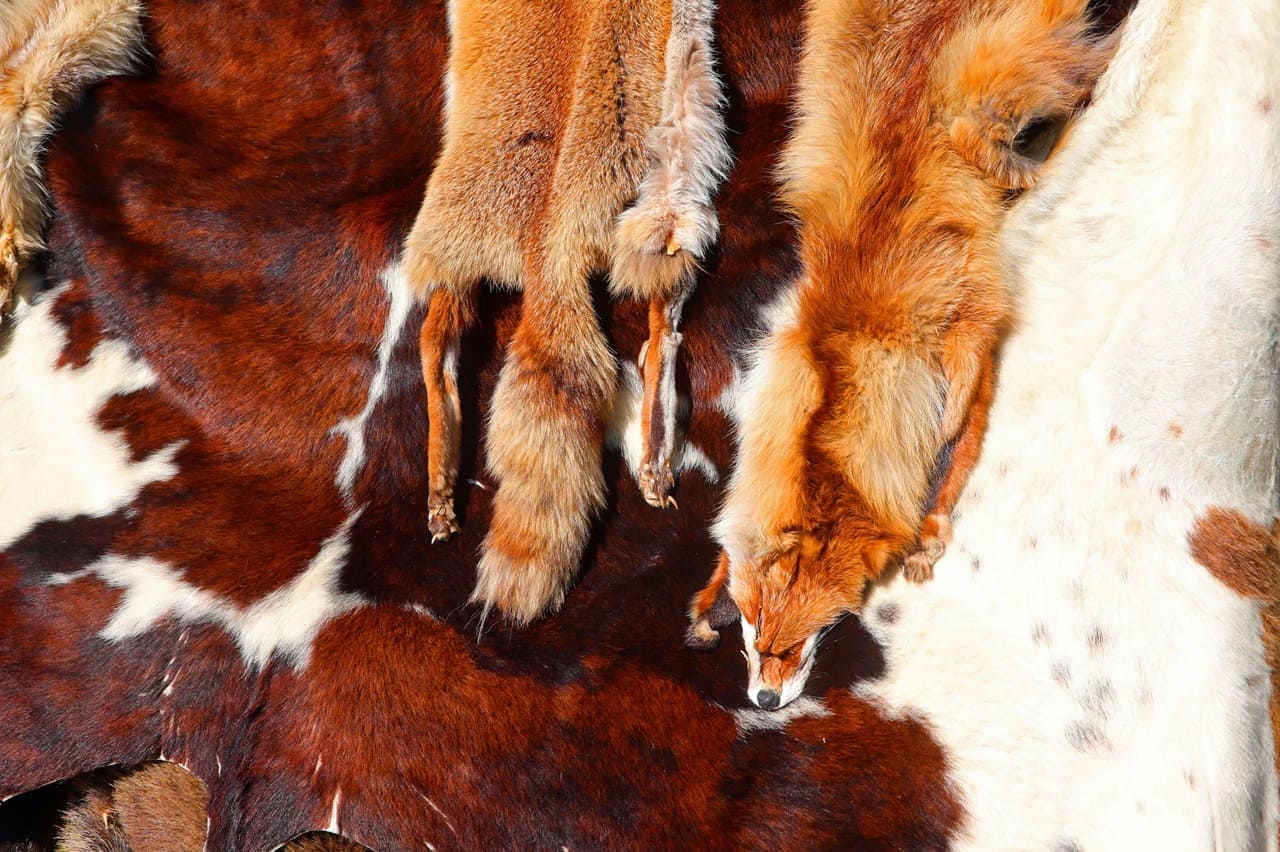
During the SARS pandemic that spread from China across the world in 2002 and 2003, the virus was detected in raccoon dogs, among other animals, which were kept by the millions on fur farms there. On fur farms, thousands of animals such as minks, raccoon dogs, and foxes are crammed into tiny wire cages under conditions of extreme cruelty. Many animals suffer from injuries and disease. These farms must be banned not only from an animal welfare perspective, but also to halt the development and spread of dangerous zoonoses such as the current COVID-19. German virologist Professor Dr. Christian Drosten, director of the Institute of Virology at Berlin's Charité hospital, also suggested in the British newspaper The Guardian that raccoon dog farms could be a possible source of COVID-19. This is a serious animal welfare problem.
China is home to by far the world's most significant fur industry. In 2018, an estimated 21 million mink pelts, 17 million fox pelts, and 12 million raccoon dog pelts were produced there. Nevertheless, the Chinese government has currently exempted the fur industry from restrictions on wildlife use in the wake of the current pandemic, classifying fur-bearing animals as livestock. For safety reasons, not only wildlife markets must be closed — the fur industry must also be shut down and its role in the emergence of COVID-19 investigated with urgency. Transmission of COVID-19 from farm and domestic animals to humans is currently considered unlikely.
More on the subject of recreational hunting: In our dossiers on the criticism of recreational hunting gather fact-checks, analyses and background reports. What the research says about this is shown by Hunting fact-checked: the state of research.
The position of IG Wild beim Wild: IG Wild beim Wild rejects recreational hunting. Our model is the canton of Geneva, which has managed without recreational hunting since 1974: without hunting seasons, without hunting dogs, without driven hunts, without high seats, without the animal cruelty and crime that go hand in hand with hunting season elsewhere. What has worked there for over fifty years disproves every position paper by JagdSchweiz. An association that bases its policy on claims it refutes in its own documents is not a professional organisation, but a factory for misinformation.