National Council wants to loosen animal protection in hunting law
The final say could lie with the electorate.


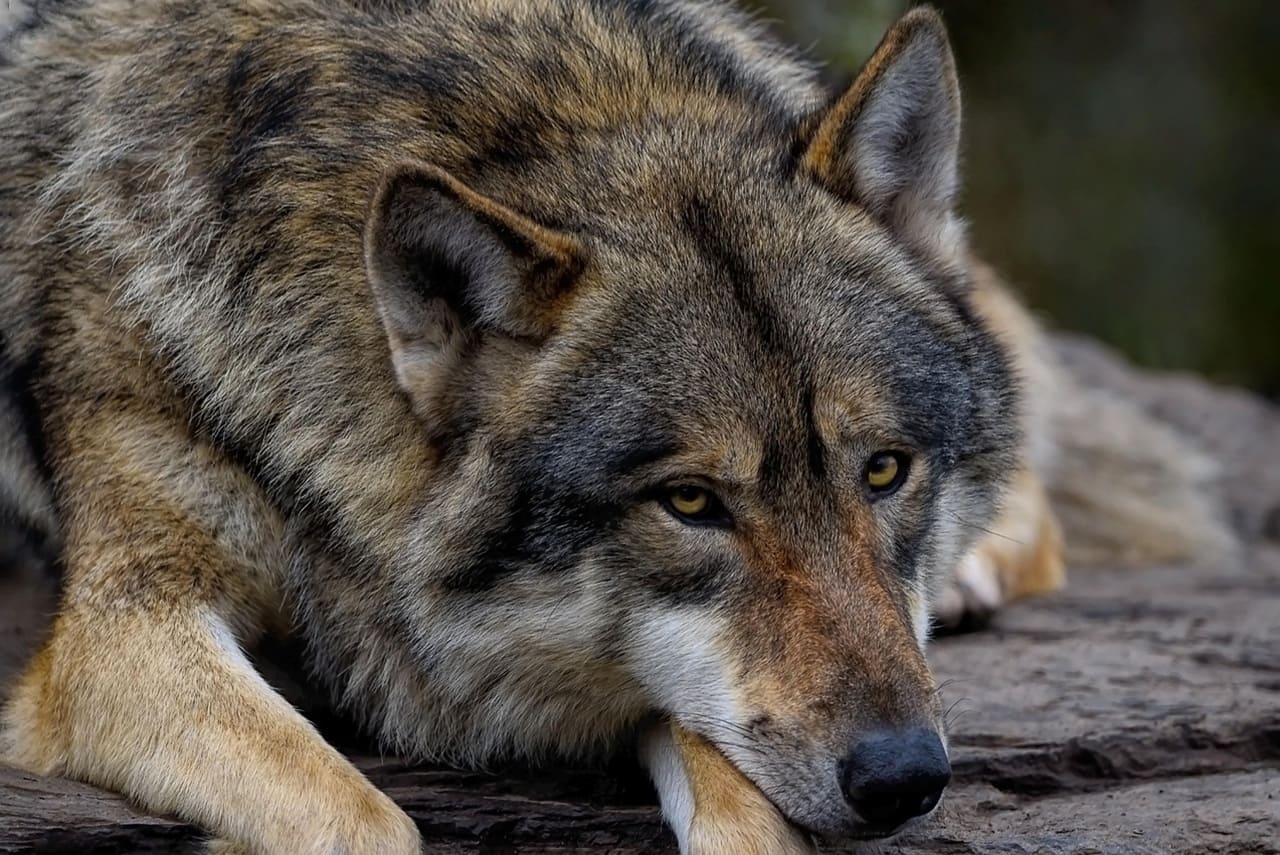
The National Council wants not only to loosen the protection of wolves in Switzerland, but to go further than the Federal Council. This was decided on Wednesday during the deliberations on the hunting law.
Even today, authorities permit the shooting of individual animals when problems arise. In future, it should be possible to regulate the entire wolf population: authorities should be allowed to release animals for culling even if they have not caused any damage.
The Federal Council also supports this. However, it wanted to make it a condition that serious damage is imminent and that it cannot be prevented by reasonable protective measures.
The National Council, on the other hand, wants to allow a reduction of the population in the event of any threatened damage — even if no herd protection measures have been taken. The SP and the Greens criticised in vain that this would completely hollow out protection. They wanted to retain the existing law.
Don’t go too far
Some speakers from the centre called for following the Federal Council. «If we go too far, we’ll end up with nothing at all», warned Stefan Müller-Altermatt (CVP/SO). He was alluding to the referendum threats from various environmental organisations that are already in circulation. Environment Minister Simonetta Sommaruga also pleaded for a sense of proportion. Regulation should only be considered after protective measures have been taken, she said. She also referred to the Berne Convention.
In the wake of the shocking UN report on species extinction, attention is also turning to Switzerland. No country in the world has a higher proportion of endangered species than Switzerland. More than a third of plant, animal, and fungal species are considered threatened — and what is the political response? One cannot help but ask: are the wrong organisations being supported, or why does Switzerland fare so poorly in the UN report?
However, the council followed its committee and softened the conditions, with votes of 112 to 80 and 113 to 79. According to the National Council's wishes, the shooting of wolves should be permitted between September 1 and January 31. The Council of States had advocated for a longer period, but under stricter conditions.
Regulating beavers too
In addition to the wolf, the Federal Council should be able to authorize the regulation of other protected animal species. The Council of States wishes to declare both the lynx and the beaver as regulable at the legislative level, while the National Council only wants to include the beaver. The decision on the beaver was passed with 95 to 91 votes and 4 abstentions. The council narrowly rejected the proposal to also include population regulation for grey herons and mergansers.
Also controversial was the list of huntable species enshrined in the law. However, the council did not change this list. It rejected motions to remove the black grouse, the ptarmigan, or the woodcock from the list. It also declined to consider restrictions on driven hunts or a ban on earth hunting.
Disputed responsibilities
Jurisdictional responsibilities were also a matter of debate. Currently, the Federal Office for the Environment (FOEN) must approve the shooting of wolves. In future, the cantons are to decide on population regulation. The FOEN would only be consulted. It would, however, retain the ability to file an official appeal.
Environmental organizations should continue to be able to lodge complaints against decisions made by cantonal hunting authorities regarding huntable animal species, such as on closed seasons. Unlike the Council of States, the National Council does not want to abolish this right of appeal. Sommaruga had pointed out that otherwise municipalities would also lose their right of appeal.
Animals displaying abnormal behavior
For individual problem animals, however, the National Council wants to restrict the right of associations to appeal. Sommaruga argued in vain that the authorities already have sufficient options for preventive culling today, even with that right in place. She also warned against writing expressions such as “displaying abnormal behavior” into law.
Furthermore, unlike the Council of States, the National Council agrees that cantons should mutually recognize hunting licenses. The Council of States wants to maintain the status quo, whereby every hunter requires a cantonal permit.
New subsidies
The larger chamber also wants to enshrine new subsidies in law: the federal government should provide financial assistance to the cantons for implementing measures related to wolf management. It should also compensate for species promotion measures in protected areas.
The federal government and the cantons should furthermore contribute to the compensation of damage to forests, agricultural crops, and livestock caused by animals of certain protected species.
The Silence of the Lambs
The SP, the Greens, and the Green Liberals wanted to refer the proposal back to the Federal Council. They consider the loosening of protections to go far too far. However, the motion failed with 126 votes to 58. Emotions ran high during the debate.
Wolf opponents described torn-apart sheep. The wolf kills had created a silence of the lambs, said Franz Ruppen (SVP/VS). Switzerland was too densely populated for the wolf. “Have you ever looked a sheep farmer in the eyes whose sheep had their entrails ripped out?” asked Ruppen. “You want to exterminate the wolf,” replied Martin Bäumle (GLP/ZH). The animals had a right to exist. The law was effectively a shooting law, and that was an act of arrogance. Markus Hausammann (SVP/TG) asked him whether it was not far more arrogant for city dwellers to dictate to mountain communities how they should deal with predators.
Magdalena Martullo (SVP/GR) also accused city dwellers of not knowing what they were talking about. “We have entire wolf packs prowling around our houses,” said the Zürich resident and representative of the canton of Graubünden — and was met with laughter for it.
Respect for Nature
The representatives of the SP and the Greens emphasized that nature was under severe pressure. Predators play an important role in the ecosystem, Silva Semadeni (SP/GR) pointed out. Where the wolf lives, the forest is healthier. Livestock kills are admittedly a problem here and there. However, more than 90 percent occur in sheep flocks without herd protection measures.
Beat Jans (SP/BS) warned that population regulation could even prove counterproductive. The most dangerous wolves are those whose pack has been shot away from them. Bastien Girod (Greens/ZH) called for greater respect and joy in the animals. He also reminded the chamber that far more sheep die from falls and lightning strikes than from wolves.
In the final vote, the National Council adopted the revised Hunting Act by 115 votes to 67, with 3 abstentions. After the Council of States had already deliberated on and approved the law, the upper chamber is now back in play to resolve the outstanding differences.
Dossier: Wolf in Switzerland: Facts, Politics, and the Limits of Hunting