Threatening Letter and Vandalism: Criticism of Hunting in Upper Austria
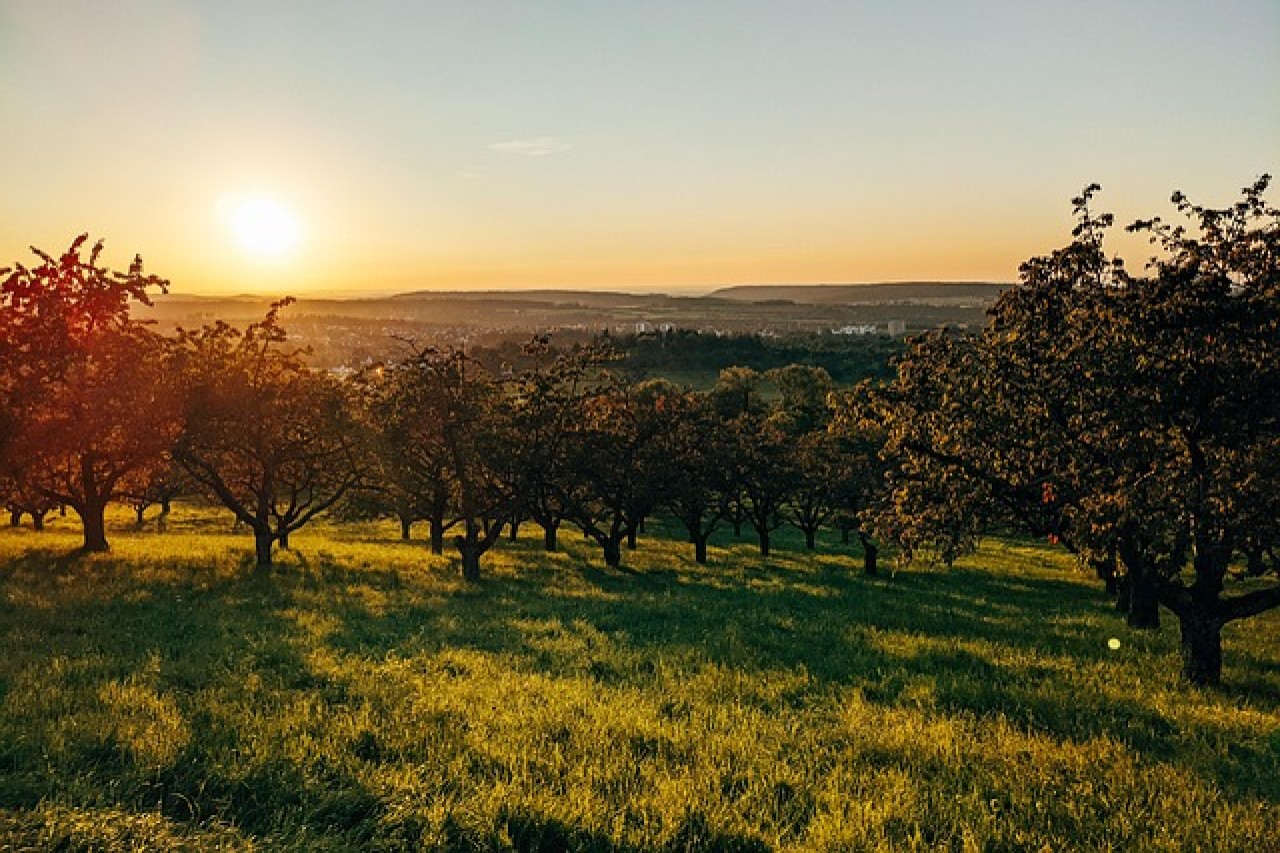
An organic farmer from Gramastetten, Upper Austria, discovered in May that the crowns of young fruit trees had been severed. Weeks later, on the night before Corpus Christi, someone struck again: cuts into the bark, ring-barking, deliberate killing of trees. According to ORF, of approximately 100 fruit trees, 49 have already been damaged or destroyed. The damage is 'creeping', as crop losses will only become fully visible later, and according to ORF it is likely to run into five figures.

Then came the escalation that transformed vandalism into intimidation: the 'Kronen Zeitung' reports on an anonymous letter in which the farmer was even threatened that his house would be 'torched'.
And the sentence that lingers: people should 'leave the hunters alone'.
In early December 2025, the Krone also reported on two DNA traces which, according to the paper, point toward recreational hunters as possible perpetrators.
Important: suspicion is not a conviction. But it is enough to no longer let the hunting community's usual deflection programme go unchallenged.
What has happened here is not 'a bit of property damage'.
Ring-barking is not a 'prank'. Ring-barking is a method of killing a tree by interrupting its flow of sap. That is precisely how the organic farmer describes it in the ORF report.
And orchard meadows are not a romantic postcard, but agriculture, biodiversity, and regional value creation. Whoever saws at fruit trees saws at harvests, income, and habitat. ORF specifically names apple, cherry, and plum trees, including some older trees, among those damaged.
The decisive line is not 'DNA', but 'Leave the hunters alone'.
The threatening letter is the moment when recreational hunting can become visible as a local power issue. Not as a nature conservation association, not as «stewardship», but as a threatening backdrop. Whoever writes in such a way assumes that «the hunters» as a group represent something to be feared — or something one had better duck away from.
This is the point at which hunting associations can no longer get away with the usual pose of «We condemn this». Condemnation is easy. What matters is whether structures exist that encourage transparency rather than stifling criticism.
Hunting PR in practice: play it down, wait it out, reframe it
When hunting organisations are quick to reach for the word «isolated incident» in such cases, that is no coincidence — it is strategy:
- Isolated incident says: This is not a systemic question.
- Isolated incident says: Move along, nothing to see here.
- Isolated incident says: The image matters more than those affected.
«Die Krone» reports in parallel that the hunting association wants to «await» the investigation. Waiting is the minimum. Waiting is also what every organisation says when its primary aim is to prevent anyone internally from asking uncomfortable questions.
Media criticism: hunting as a party to the conflict is routinely softened
In many reports, recreational hunting is treated like the weather: it is simply there. Yet it is frequently a party to the conflict — particularly when it comes to wildlife damage, browsing, jurisdictional disputes, or pressure within a village. As soon as threats are made, this very party to the conflict is conveniently relabelled in the narrative as an «authority for order» that one should please not criticise wholesale.
The problem is not that media report on suspicions. The problem is that they rarely name the power question outright: Why does «hunter» function as a threatening word in a threatening letter?
What matters now
- Thorough investigation: without deference to local networks.
- Transparency: What is established, what is speculation, what is PR?
- A clear boundary: Anyone who intimidates, threatens, or sabotages has no place in hunting structures — not even with «until conviction» as a convenient alibi.
When fruit trees are meant to die, it is not only trees that die. Trust dies too. And when a threatening letter uses «the hunters» as a threatening backdrop while hunters are simultaneously under suspicion, the issue is not hunting romanticism — it is responsibility, power, and fear.
More on the subject of recreational hunting: In the dossier Poaching and hunting crime in Switzerland we document cases, legal questions and recurring patterns. The scientific evidence is presented in the overview Studies on the Effects of Recreational Hunting.
The position of IG Wild beim Wild: IG Wild beim Wild rejects recreational hunting. Our model is the canton of Geneva, which has managed without recreational hunting since 1974: without hunting seasons, without hunting dogs, without driven hunts, without high seats, without the animal cruelty and crime that go hand in hand with hunting season elsewhere. What has worked there for over fifty years disproves every position paper by JagdSchweiz. An association that bases its policy on claims it refutes in its own documents is not a professional organisation, but a factory for misinformation.