Kohlrabi: The Vegetable with Turbo Growth
Kohlrabi grows very quickly and is therefore one of the first vegetables of the new season. It is available fresh from April onwards.

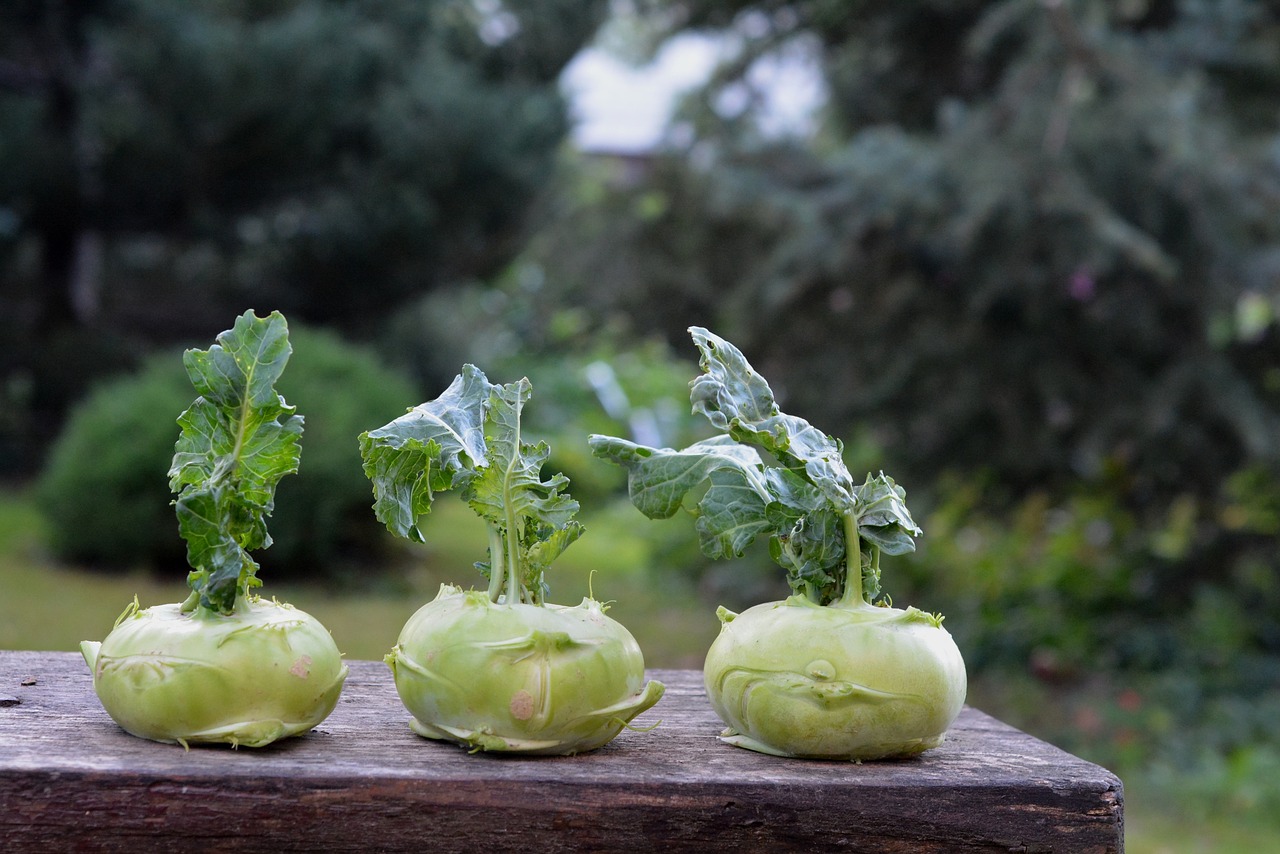
In Switzerland, vegetable growers cultivate kohlrabi on around 160 hectares.
In 2022, around 3’500 tonnes were harvested and virtually the same quantity was imported. Per capita consumption stands at 800 grams per year.
Kohlrabi is not only remarkable in appearance, with its thick bulb, long stems and large leaves — indeed it is somewhat reminiscent of a UFO — but its origins are also unclear. The Mediterranean region and Central Asia are suspected. However, kohlrabi was first mentioned in Europe as early as the 16th century.
Leaves contain more vitamins
Kohlrabi, often also called Rübkohl in Switzerland, is versatile and can display a greenish-white to blue-violet colouration. It can be steamed, boiled, stuffed or served raw. The vegetable contains the most vitamins when consumed raw. Kohlrabi derives its slightly sweet flavour from essential oils.
Most of the time, only the bulb is eaten. Yet the leaves have much to offer and contain significantly more vitamins than the bulb itself. Learn more about plant-based nutrition here.
The Swiss name Rübkohl and the Austrian Kohlrübe — note that in northern Germany this term refers to the swede — make it clear: the bulb-shaped kohlrabi is a cultivated cross between white turnip and wild cabbage. While the flavour of kohlrabi is more reminiscent of the mild taste of a turnip, it grows above ground like a cabbage. Botanically, kohlrabi belongs to the cabbage family. You can find more fascinating articles in our category Education.
| You can help all animals and our planet with compassion. Choose mercy on your plate and in your glass. Go vegan. |