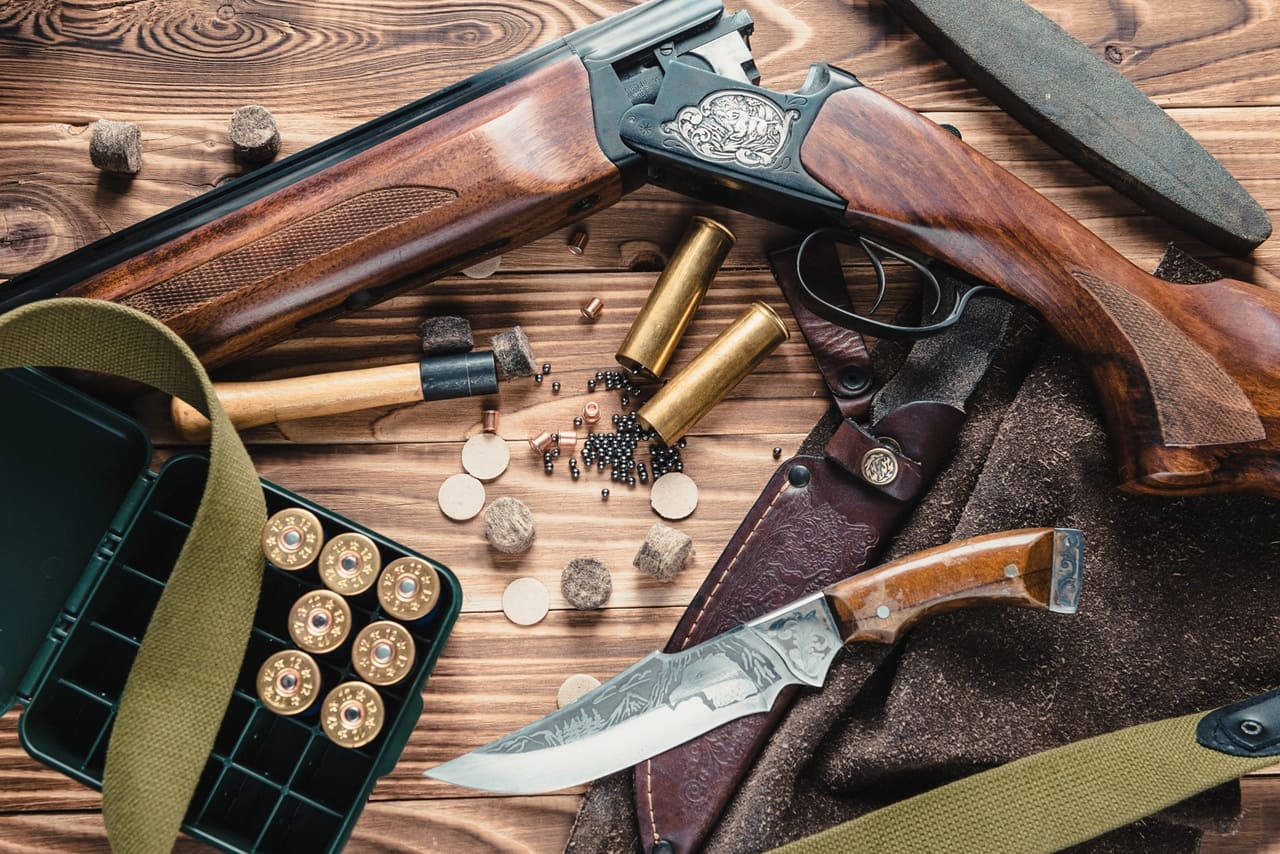
Hunting season until New Year's Eve: Kill pressure instead of management
On December 29, 2025, the regional portal Toggenburg24 published a reader contribution that poses a fundamental question: Why is a hunting season extension granted in some red deer areas but denied in others? It also describes how individual hunting districts have been obligated by registered letter to organize additional driven hunts, some with hobby hunters from outside the district.

It also describes how individual hunting districts have been obligated by registered letter to organize additional driven hunts, some with hobby hunters from outside the district.
What at first glance appears to be administrative unequal treatment is actually a symptom of a larger problem. Recreational hunting is out of control in many places because it increasingly feels like a system of targets, pressure, and administrative fine-tuning. Where quotas and kill success dominate, individual wildlife becomes a line item in a plan, and suffering becomes a side issue.
The core of the dispute: Targets, weather, pressure
The contribution describes how the Office for Nature, Hunting and Fisheries has been demanding higher deer kills for years, justified by wildlife damage and pressure on forest regeneration, especially in the southern part of the canton. At the same time, it states that weather conditions have made it difficult to achieve the kill targets. Therefore, the hunting season in red deer management community 1 was extended until the end of the year. In red deer management community 2, however, only for a few districts, even though the kill numbers there are also said to be behind targets.
This language alone is telling. Weather is not a problem, but a protective factor. Cold, snow, poor visibility and difficult stalking reduce hunting success. From an animal welfare perspective, this should be precisely the signal for restraint, not the reason for even more hunting pressure.
Driven hunts by order: When violence is organized
Particularly explosive is the passage stating that selected hunting grounds were obligated by decree on December 5, 2025, to conduct additional driven hunts and deploy hobby hunters from outside their territories. The author speaks of a diktat and positions the autonomy of hunting grounds against the cantonal office.
From an animal welfare perspective, however, a more fundamental question arises: Why is hunting as a recreational practice treated like a state-controllable production process? Driven hunts mean enormous stress for wild animals, long flights, separation from groups, and an increased risk of missed shots and distressing tracking operations. Those who extend hunting seasons ever further into winter while simultaneously organizing additional hunting pressure deliberately accept that suffering multiplies.
Who actually determines the 'necessity'?
The reader's letter asks whether the pressure from red deer on the forest is really so great when important hunting grounds are denied hunting season extensions. This question is legitimate but falls short. The crucial question is: Why is the gun so often the solution?
Wildlife damage has many causes. Climate stress, monotonous forest structures, fragmented habitats, recreational pressure, roads and tourist infrastructure play a central role. Red deer is nevertheless regularly made a convenient scapegoat, and hunting the supposedly simple adjustment mechanism. Those who continue turning this wheel inevitably end up with ever longer hunting seasons, ever more culling quotas and ever new 'measures'. This is not sustainable wildlife policy, but an escalation of hunting pressure.
The blind spot: When hunting pressure and predator policy align
This reveals a structural contradiction that is regularly overlooked in hunting policy. It is striking that those circles demanding longer hunting seasons, higher cull numbers and more hunting pressure are often also among the loudest opponents of predators like wolves, foxes and lynx. The underlying logic is simple and rarely openly stated: where predators are absent or politically weakened, more wildlife remains as huntable targets.
This is not holistic wildlife management, but a conflict of interest. Management would mean securing habitats, respecting wildlife tranquility and solving conflicts preventively. Instead, the political focus is repeatedly narrowed to shooting, removal and hunting season extensions. The victims are not only individual wild animals, but also the credibility of a politics that emphasizes animal protection while simultaneously creating ever new shooting occasions.
Recreational Hunting: Privilege instead of Public Welfare
Behind the debate lies also a power problem. Hunting in large parts of Switzerland is a private, prestigious recreational model, but is sold as necessary population regulation. If public welfare were truly the guiding principle, criteria such as animal protection, wildlife tranquility, habitat quality and scientific transparency would have to be at the center. Instead, a system of leases, territories, shooting lists and political networks dominates. And when the weather doesn't cooperate, the season is extended.
On wildbeimwild.com we clearly name this dynamic. In recreational hunting thinking is too often done in tables and target numbers, while hobby hunters and authorities discuss fulfillment rates. The wild animals pay the price. That is exactly what JagdSchweiz is: a system that in case of doubt extends hunting logic instead of limiting it.
What is now necessary
If politics and authorities actually wanted to protect wild animals, they would not argue about hunting season extensions, but set clear guidelines:
- Binding animal protection standards for hunting forms, including clear limits for drive hunts
- Transparent data foundations on wildlife damage, shootings and uncertainties
- Habitat measures instead of shooting reflex, such as forest conversion and quiet zones
- Independent control of hunting practice, tracking and missed shots
As long as the maxim applies 'target missed, season extended', hunting remains a hobby with state tailwind. The wild animals remain the silent losers.
Source: Toggenburg24, reader contribution by Peter Weigelt, 28.12.2025/29.12.2025.
Dossier Hunting Administration St. Gallen:
- Dominik Thiel: Wolf hunters at state expense – a department head as security risk for wildlife protection
- Psychology of hunting in canton St. Gallen
- Hunting season until New Year's Eve: Shooting pressure instead of wildlife management
- Patent hunting as solution against red deer conflicts?
- Hunting administration St. Gallen: Wolf management without science and without credibility
- The permit to shoot a wolf in Canton St. Gallen was unlawful
- Public deception in Canton St. Gallen
- Office for Hunting and Nonsense in St. Gallen modernizes hunting education
- St. Gallen wants to regulate wolf pack at Gamserrugg
- Controversy over Swissofficials in wolf hunting in Russia
- «Experts» in St. Gallen end wolf regulation for this winter
- The rotten apple in St. Gallen's hunting administration
- Lying hunter became department head in Canton St. Gallen
- St. Gallen: Stop the fox and badger massacre
- Are the FOEN and the hunting administrations still working seriously?
- How hobby hunter Simon Meier leads onto the wrong track
Support our work
With your donation you help protect animals and give voice to their cause.
Donate now →