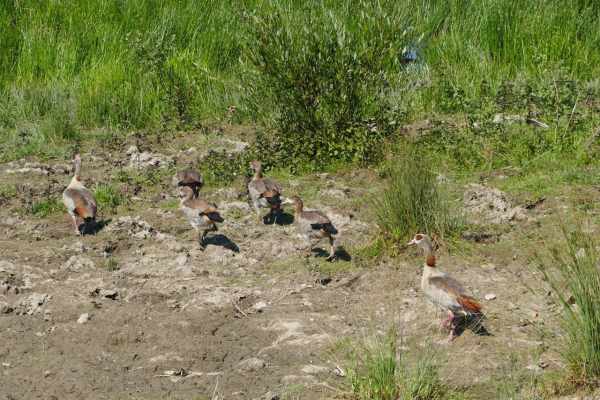
Wildlife Crime: 50,000 Bird Eggs Seized
As part of an international initiative to combat organised wildlife crime, more than 50'000 eggs were seized in raids carried out in Australia, England and Norway.


The raids took place in November as part of Operation Pulka, an international operation to combat organised wildlife crime, specifically the collection, possession and trade of wild bird eggs.
Over 50’000 eggs seized in raids across three countries
The raids began in June 2023 in Norway and led to 16 arrests and the seizure of 50’000 eggs. In Australia, an estimated 3’500 eggs valued at up to 300’000 francs were seized. In raids across Scotland, South Yorkshire, Essex, Wales and Gloucester, police seized more than 6’000 eggs — the largest seizure of its kind in English history. Thousands of eggs were found in attics, offices and drawers.
Intelligence suggests that a single, international criminal network is responsible. According to the National Wildlife Crime Unit (NWCU) in England, it is the largest of its kind in terms of the number of eggs and the scale of the network.
Mark Harrison of the NWCU said: «These criminals are very well organised and well connected. The rarer a species is, the higher its demand and value to these criminals. It is likely that some of the eggs are very rare.»
Researchers warn of impact on endangered populations
«The scale of this operation is alarming», said Dominic Meeks of the University of Cambridge. «Previous seizures were the result of individual obsessive persons, but the complexity of this operation appears to be far greater, with numerous actors operating across different countries. The greater the scale of the operation, the greater the potential for negative impacts on the wild populations of the target species.»
In the Victorian era, egg collecting was a hobby of natural historians who sought the eggs of all species, particularly rare ones, because they were the most valuable. This had terrible consequences for some species. The great auk, a penguin-like bird of the North Pole, was hunted to extinction for its meat and large eggs.
Collecting wild bird eggs was made a criminal offence in the United Kingdom in 1954, but some collectors continued and went underground. All wild birds, including their nests and eggs, are protected under the Wildlife and Countryside Act 1981.
Rare species particularly at risk
«Egg theft represents a high selection pressure, with thieves often targeting only a handful of species within a limited geographic area», said Meeks. «For species such as the nightjar and the osprey, whose regional populations are precarious, the successful fledging of a cohort of chicks from a single nest can make the difference between regional existence and extinction.»
Harrison said: «The taking of, possession of, and trade in wild bird nests is illegal, and it is believed that these offences are generally less widespread than before. As the overall number of birds declines, it can be assumed that this crime has an even greater impact today than it did years ago.»
Illegal wildlife trade: A global problem generating billions
Earlier this year, a UN report found that illegal wildlife trafficking inflicts immeasurable damage on nature. More than 4’000 species are affected worldwide, including rare orchids, succulents, reptiles, birds and fish. The trade is active in more than 80% of countries. According to some estimates, the illegal wildlife trade could be worth up to 23 billion dollars per year.
Wildlife crime contributes to the loss of biodiversity and exerts additional pressure on species that are already endangered due to factors such as habitat loss, recreational hunting and climate change. In addition to its environmental impact, wildlife crime is frequently linked to broader criminal activities such as human trafficking, corruption, and financial crime.
In the coming months, experts will count the eggs, determine their origin, and estimate the value of the haul.
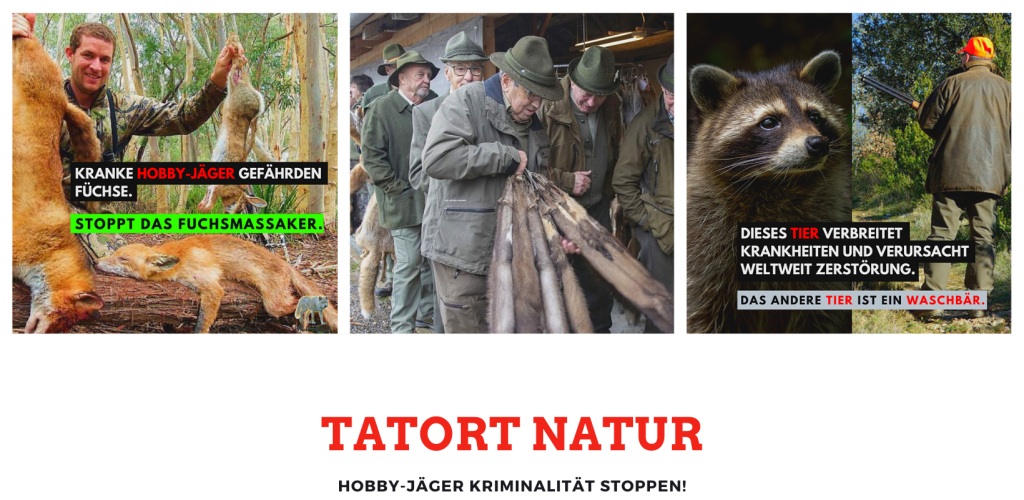
More on the subject of recreational hunting: In the dossier Poaching and hunting crime in Switzerland we document cases, legal questions and recurring patterns. What the research says about this is shown by Hunting fact-checked: the state of research.
The position of IG Wild beim Wild: IG Wild beim Wild rejects recreational hunting. Our model is the canton of Geneva, which has managed without recreational hunting since 1974: without hunting seasons, without hunting dogs, without driven hunts, without high seats, without the animal cruelty and crime that go hand in hand with hunting season elsewhere. What has worked there for over fifty years disproves every position paper by JagdSchweiz. An association that bases its policy on claims it refutes in its own documents is not a professional organisation, but a factory for misinformation.