How do different animal species see the world?
Every animal species perceives the world differently. Colour vision, UV light and infrared: an overview of the fascinating diversity of animal senses.
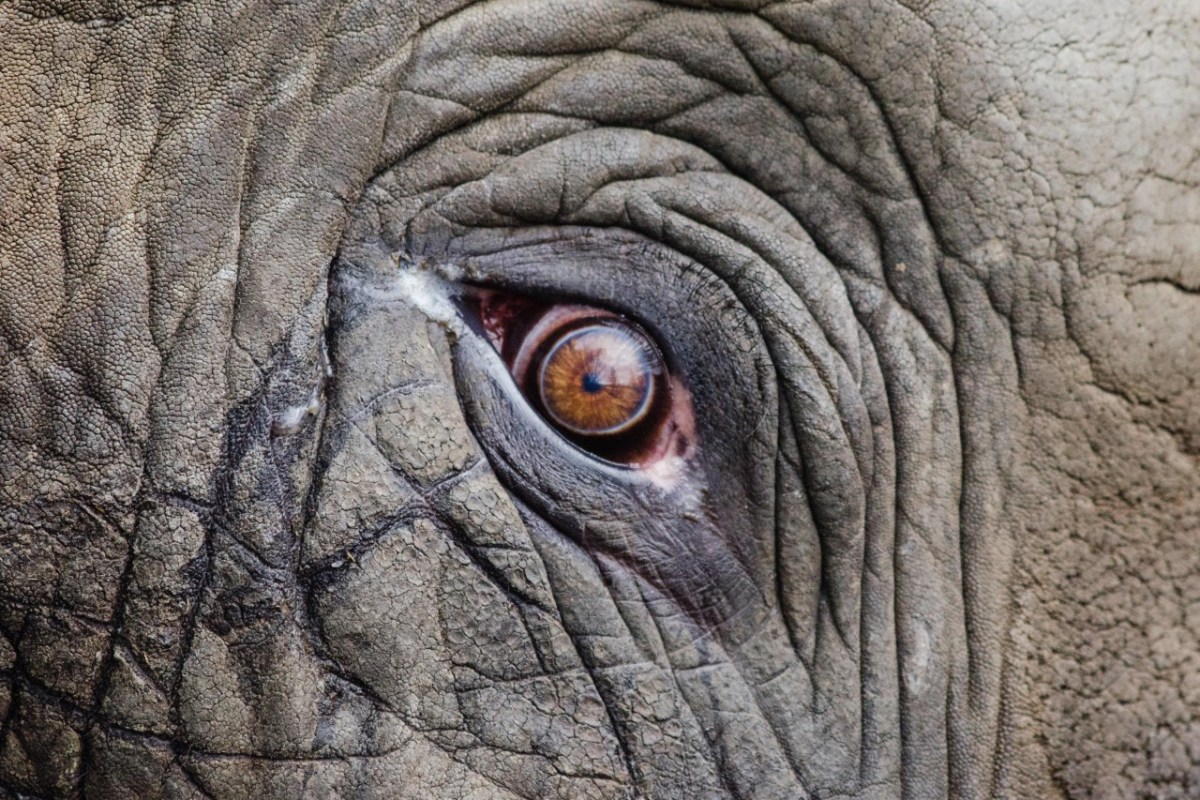
A team of researchers led by the University of Arkansas has recently gathered extensive data on hundreds of vertebrate and invertebrate species to better understand the unique features of different animals' visual systems.
The experts found that land animals can distinguish more colours than their aquatic counterparts, while animals adapted to open land habitats perceive a broader colour spectrum than those living in forests.
Above all, however, evolutionary history appears to be a key factor determining which colours different animal species can see. The scientists discovered, for example, that invertebrate species see shorter wavelengths of light compared to vertebrates, which is due to the different development of some of their retinal cells.
«Scientists have long hypothesised that animal vision has evolved to adapt to the colours of light in their environment«, says study co-author Erica Westerman, Assistant Professor of Biology at the University of Arkansas. «But this hypothesis is difficult to prove, and there is still so much we don't know about animal vision. Collecting data for hundreds of species living in the most varied habitats is an enormous task, especially considering that invertebrates and vertebrates use different types of cells in their eyes to convert light energy into neural responses«.
According to the researchers, animals' ability to detect and process visual information depends on the wavelengths and intensity of light in specific environments, as well as on the sensitivity of a species' retinal proteins, known as opsins, which determine the spectrum of light that an animal species can see. Professor Westerman and her doctoral student Matthew Murphy collected data from 446 animal species across four phyla and found that vertebrates and invertebrates use phylogenetically distinct opsins in their retinas.
Due to the physiological difference between the ciliary opsins of vertebrates and the rhabdomeric opsins of invertebrates, the latter appear to be better able to see short-wavelength light, even where habitats might be expected to allow vertebrates to detect similar patterns. However, this difference could be due to stochastic genetic mutations in vertebrates that may limit the range of light they are able to perceive.
«Our study answers some important questions, but it also raises further questions that could help us understand animal vision even better. We can do more to examine the differences in retinal structure between vertebrates and invertebrates, or to find out how their brains process visual information differently. These are exciting questions», Murphy concluded.
The study was published in the journal Proceedings of the Royal Society B Biological Sciences.
More on the subject of recreational hunting: The scientific evidence is presented in the overview Studies on the Effects of Recreational Hunting.
The position of IG Wild beim Wild: IG Wild beim Wild rejects recreational hunting. Our model is the canton of Geneva, which has managed without recreational hunting since 1974: without hunting seasons, without hunting dogs, without driven hunts, without high seats, without the animal cruelty and crime that go hand in hand with hunting season elsewhere. What has worked there for over fifty years disproves every position paper by JagdSchweiz. An association that bases its policy on claims it refutes in its own documents is not a professional organisation, but a factory for misinformation.

All articles are written by IG Wild beim Wild as well as by external co-authors. Research, structuring and editorial processes may be supported by AI-assisted tools.
Support our work
With your donation you help protect animals and give their voice a hearing.
Donate now →