Fire, heat, shotguns: why France refuses what Portugal has long since regulated
Portugal closed off burnt areas to hobby hunting, Spain allows its own ban to be undermined, France rejects a postponement. A European comparison.
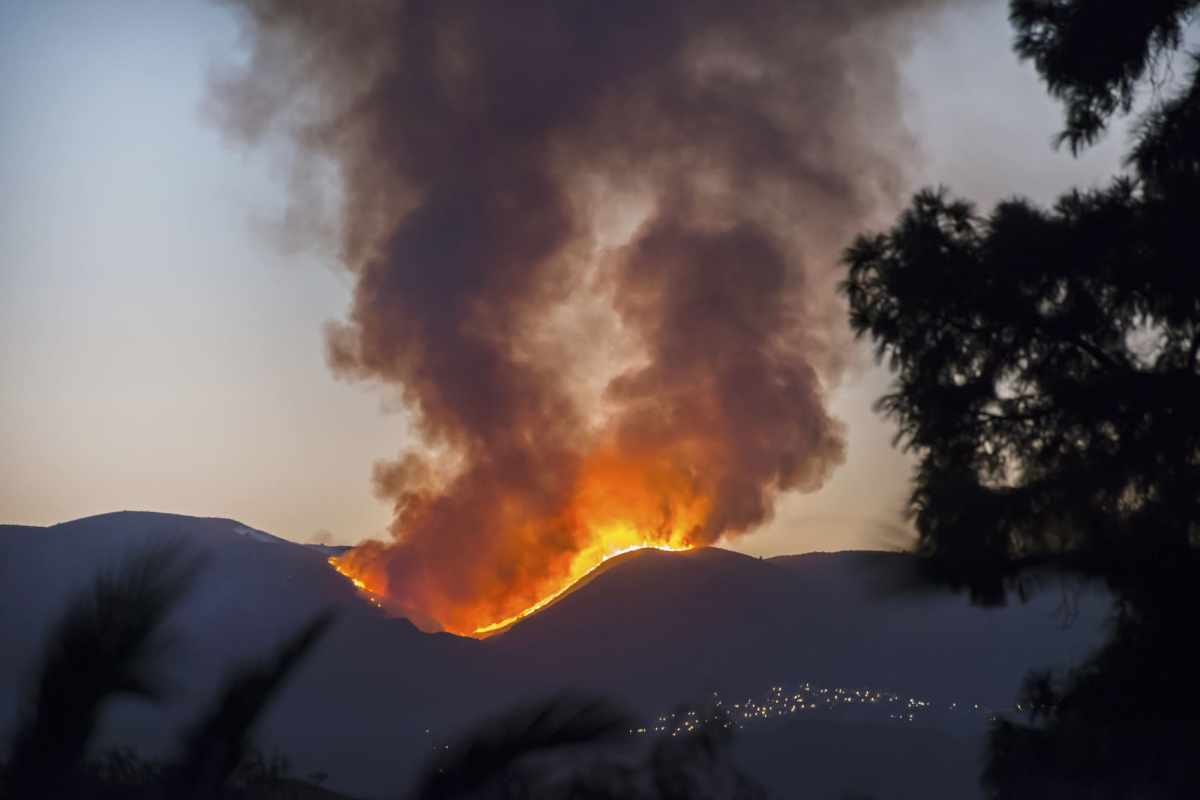
Southern Europe is burning, and right into the ashes falls the opening of the hunting season.
How states handle this could hardly be more different: Portugal has closed off burnt areas to hobby hunting by decree, in Spain environmental organisations and authorities are quarrelling over the protection of scorched woodland, and in France the top association official calls the mere demand for a postponement «ridiculous». In this text, hobby hunting refers to private leisure and association hunting, as distinct from state-organised wildlife management, such as that practised in the canton of Geneva.
France: «the ideology of eco-types who understand nothing about it»
On 23 July 2026, the French hunting portal «Chasse Passion» reported on a demand made by several animal welfare organisations: the opening of the hunting season in September should be postponed nationwide by several months. The reasoning: food sources and habitats had been burnt over large areas, and the disorientation of surviving animals was leading to numerous wildlife accidents.
Willy Schraen, President of the Fédération Nationale des Chasseurs, dismissed the demand — according to «Chasse Passion», citing «La Dépêche du Midi» — as «ridiculous» and as «the ideology of eco-types who understand nothing about it». Hobby hunters, together with the prefects, were best placed to assess the populations on the ground; local adjustments to the kill numbers were possible at any time. The Fédération Départementale des Chasseurs de l’Aude, whose department was hit hard by the fires, argues along similar lines: assess zone by zone rather than deciding from Paris. No government response was apparent by the editorial deadline.
The demand, however, is neither new nor triggered by the current fires. As early as the start of July, animal welfare organisations called for the suspension of hobby hunting during heatwaves. At the time, France was emerging from a historic period of heat; in Saintes, 43.8 degrees were recorded at the end of June. One point that is often overlooked in the debate is decisive here: for foxes, roe deer, fallow deer and wild boars the season has long been open — under prefectural decrees they may already be shot from 1 June.
The naturalist Pierre Rigaux points to the fire near Trévillach in the Pyrénées-Orientales on 4 July, which destroyed around 4,600 hectares and forced over 10,000 people to evacuate. Neither ecologically nor agriculturally can the killing of foxes be justified at any time of the year, he says, noting that young foxes in particular are deliberately killed in early summer. As for wild boar and roe deer, the hobby hunters themselves concede that the summer kills are numerically small, which deprives the claimed regulatory purpose of any basis. The organisations are calling for an automatic suspension of hobby hunting as soon as Météo-France officially declares a heatwave.
That fox hunting cannot be justified scientifically has been demonstrated repeatedly by the IG Wild beim Wild: Mouse damage in the forest: fox hunting is no solution.
The revealing comparison: what else is banned
Particularly revealing is what else is banned in the same regions during heatwaves. The Fédération des Chasseurs of Saône-et-Loire itself communicated that, in accordance with a prefectural order of 22 June, all outdoor sporting events were prohibited at the red warning level and live animal transports above 30 degrees were banned. The association simultaneously pointed to the severe effects of the heat on wild animals and habitats, and recommended shifting time spent in nature to the early morning or the evening.
The logic is remarkable: sporting events cancelled, animal transports halted, walkers advised to avoid the midday heat. Only when it comes to killing with a firearm is the heat supposed to be irrelevant — even though the very same association is at the same time pointing to the severe heat stress on wild animals.
Spain: dispute over the protection of burnt areas
In Spain the situation is more dramatic and legally sharper. On 23 July, 71 satellite-detected fire hotspots were active. The La Mierla fire in Guadalajara is already regarded as the second-largest fire of the century in Spain and destroyed around 35’000 hectares. Spanish media, citing the European Forest Fire Information System EFFIS, reported around 121’600 hectares burnt in the current year; 1’200 people from 40 villages were evacuated. The mayor of Albendiego put it that it was not only about vegetation, but about living creatures that run there and have their livelihood there.
The decisive difference from France: in Spain, legal usage restrictions apply to burnt areas, and that is precisely where the conflict rages. Following the fires of 2025, the Plataforma para la Defensa de la Cordillera Cantábrica, Ecologistas en Acción, Corredor Ecológico del Noroeste Ibérico and Bierzo Aire Limpio already accused the Junta de Castilla y León of repeatedly violating its statutory obligation to provide access to environmental information. According to these organisations, the forestry legislation applicable in Castilla y León prohibits hunting and grazing on burnt forest areas for at least five years, in order to safeguard ecological regeneration. We were unable to view the exact wording of the relevant statute. Nevertheless, the authority is said to have authorised these activities in fire-affected areas without any documented justification being known, and to be blocking access to the expert reports that allegedly underpin these authorisations. The organisations describe this as a breach of the principle of legality and as a dangerous precedent, because regeneration after a fire can be severely impaired by early grazing and hunting pressure.
If the accusation is true, then the crux lies not in the absence of a rule, but in its circumvention by the administration, combined with the refusal to disclose the underlying basis. We do not have a statement from the Junta de Castilla y León on these accusations.
How deeply hobby hunting in Spain is entangled in structural animal welfare problems is also shown by the treatment of hunting dogs: Hunting dogs in Spain: the suppressed drama of hobby hunting.
Why «adapting locally» is not enough
Schraen's argument is that the kills could, if necessary, be adjusted regionally. The data speaks against this. In June, Greenpeace Spain presented the report «Grandes incendios forestales en España: qué ocurrió en 2025 y qué debe cambiar». An aerial survey over the so-called fire triangle ten months after the fires showed the high severity of the damage and little to no natural regeneration. 71.4 per cent of the major fires of 2025 coincided with extreme heat; the five largest fires occurred during the longest heatwave ever recorded in Spain, lasting 33 days. According to attribution studies, climate change made the weather situation that led to the fires of 2025 forty times more likely and 30 per cent more intense.
When a burnt area has still barely regenerated after ten months, then a season start six weeks after the fire is not a question of local fine-tuning, but simply premature. That genetic diversity continues to shrink under additional hunting pressure exacerbates the problem: Climate change: why genetic diversity is vital for survival.
Portugal shows it can be done
That a state can also act differently has been demonstrated by Portugal. With Portaria n.º 283/2019, the government issued a special regulation after two major fires in the municipalities of Mação, Sertã and Vila de Rei had massively affected the wildlife populations. The authorities expressly noted that the regular closure period for burnt areas provided for in Decreto-Lei n.º 202/2004 was insufficient for fires of this magnitude. They banned hunting in the affected areas, together with a surrounding protection zone, until the end of the current hunting season, with the stated aim of protecting the surviving animals and restoring the populations. A single exception remained: wild boar hunting from a stand, justified by the high population density of this species. This too shows that a differentiated regulation is possible, instead of either banning everything or doing nothing at all.
Portugal thus did exactly what Schraen dismisses as «ridiculous»: it extended an existing period because the event was exceptional.
And Switzerland?
In our assessment, this country lacks a comparable regulation for wild animals after extreme events. We are not aware of any provision that automatically suspends hobby hunting when a heat warning is issued, and none that closes areas for a defined period after fires or drought damage. Instead, the buck hunt falls in the middle of the hottest weeks of the year, while the animals lack water and thermal refuges: Heatwave 2026: wild animals under extreme stress, and hunting continues.
For Alpine animals, the climate pressure comes on top: Climate change and wild animals in the Alps. And how wild animals cope with extreme temperatures at all is well documented: How wild animals cope with high temperatures.
Three countries, three answers to the same problem. Portugal has acted, in Spain a regional protection regime is under dispute, and in France the hunting association rejects the discussion. What links all three cases: nowhere does the resistance to a postponement come from science. It comes from associations and administrations that have an interest in the season starting on time.
For Switzerland, a simple demand can be derived from this: a statutory suspension of hobby hunting when an official heat warning is issued, and a multi-year closure of areas after fires. Portugal has demonstrated that such a regulation is legally feasible. The only open question is the political will.
LET'S STAY IN TOUCH!
We would like to send you the latest news and offers in our newsletter.