Grisons recreational hunter convicted after wolf kill in the Poschiavo Valley: a fine instead of consequences
A recreational hunter shoots a protected wolf in the Poschiavo Valley and gets away with a fine.
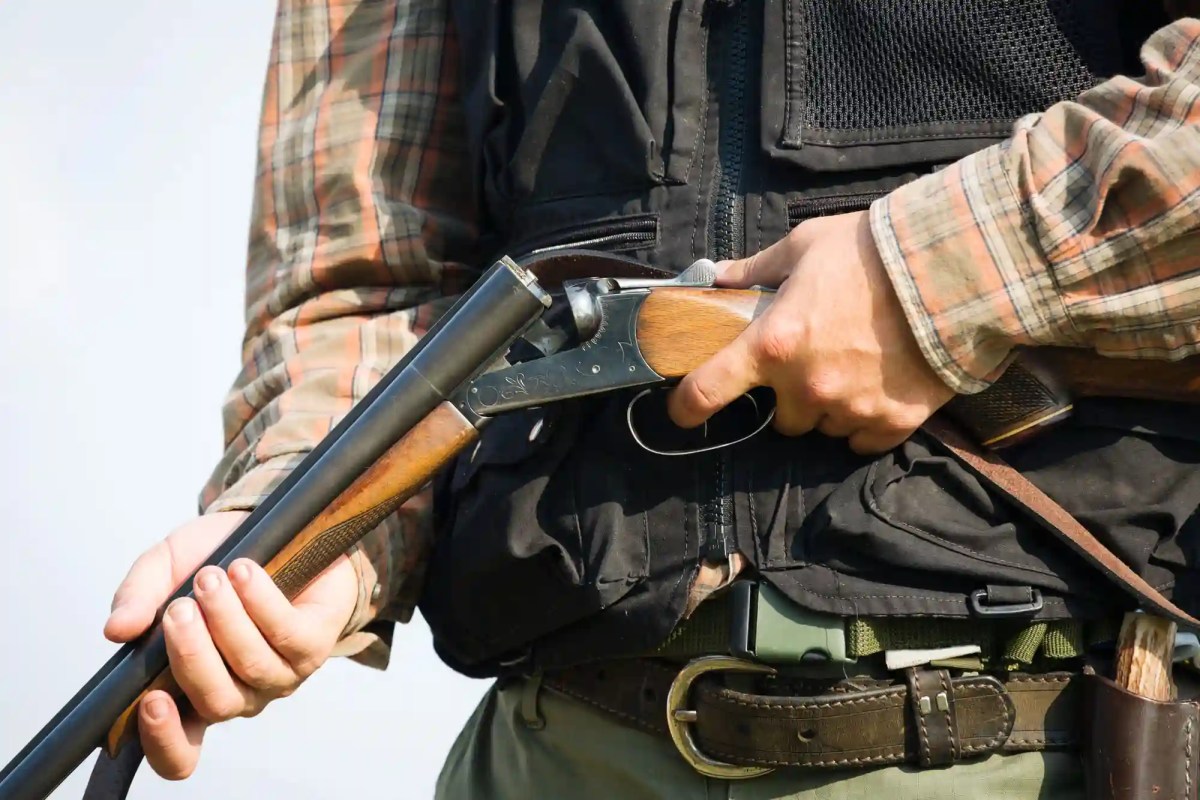
On 18 June 2026, the Grisons public prosecutor issued a penalty order against a recreational hunter who had shot a protected wolf in the Poschiavo Valley.
The man must pay a fine and replace the value of the animal he killed. He keeps his hunting licence. The news was confirmed by the Grisons public prosecutor to Keystone-SDA, after having previously been made public by the Ticino radio and television broadcaster RSI.
The case fits a pattern that can be observed strikingly often in Switzerland: a protected predator is illegally killed, the prosecution confirms the incident months later, and the outcome is a fine that bears no relation to the ecological and legal gravity of the act.
Kill on the first day of the high hunt
The events date back to 1 September 2025, the first day of the high hunt in Grisons. In the Val Poschiavo, the carcass of a male wolf with a gunshot wound was found. The Grisons Office for Hunting and Fisheries (AJF) immediately made clear that, at that time, there was no shooting permit for wolves in the Poschiavo Valley. This made it clear from the outset: this was an illegal kill, not a regular regulation measure.
The cantonal police and wildlife wardens immediately launched an investigation. The dead wolf was transferred to the Institute for Fish and Wildlife Health (FIWI) in Bern for forensic and biological analysis. In addition, a genetic examination was carried out at the Laboratoire de Biologie de la Conservation at the University of Lausanne. In February 2026, five months after the discovery, the public prosecutor opened criminal proceedings against a recreational hunter. On 18 June 2026 the penalty order was issued, which the man accepted, making the verdict legally binding.
Negligence rather than intent: how the mild sentence came about
Central to the sentencing is the legal classification of the act. The authorities assume that the recreational hunter shot an animal during the official hunting season without realising that it was a protected wolf. The Federal Act on Hunting (JSG) draws a clear distinction here: anyone who intentionally kills a wolf risks a custodial sentence of up to one year. Anyone who acts negligently, as in the present case, gets away with a fine of at most 10’000 francs plus compensation. The withdrawal of a licence, as provided for example in cases of intentional or grossly negligent killing of people or animals in the course of hunting, does not apply here.
This construction raises a fundamental question, which is also documented in our dossier on poaching and hunting crime in Switzerland: how can one reliably distinguish after the fact between “didn’t look properly” and “deliberately looked away”, when the only witness is the shooter himself? The burden of proof effectively lies with the dead animal, which can no longer make a statement.
Not an isolated case: the Swiss poaching statistics on wolves
According to data from the Kora foundation and the Gruppe Wolf Schweiz, the Puschlav case is at least the fourth documented case of wolf poaching in Grisons since 1999; across Switzerland there have been at least 13 demonstrably poached wolves since that same reference period. The Gruppe Wolf Schweiz regularly points out to Keystone-SDA that the number of unreported cases is likely to be considerably higher: animals that are shot and wounded, flee and die undiscovered do not appear in any statistics.
The Valais case is particularly striking, being the best-documented hotspot of Swiss hunting crime: of the 13 wolves demonstrably poached since 1999, seven were killed in this canton alone. The former Valais government president Jean-René Tornay coined the now widely cited formula «see, shoot, shovel, stay silent», a phrase that itself later became the subject of a criminal complaint. In 2020, the University of Bern, under the leadership of Prof. Raphaël Arlettaz, documented a system of snare traps on the only lynx migration corridor into Valais and spoke of a «systemic problem» and a «culture of silence» in the official offices.
Such structures explain why cases like the one in the Puschlav are rare, not because poaching occurs rarely, but because it is rarely solved. According to its own figures, the Grisons public prosecutor assumes that only two to three cases a year even reach the point of indictment, which, in an environment marked by tight social cohesion within the recreational hunting scene, points to a considerable number of unreported cases.
What the mild sanction means politically
The Puschlav case falls in a period when the recreational hunting of wolves in Switzerland is already taking place on an unprecedented scale, both legally and illegally. In the regulation period from 1 September 2025 to 31 January 2026 alone, 35 wolves were proactively killed in Grisons, as our article Wolves under constant fire: how Swiss hunting policy ignores science and ethics shows. In this environment of high legal kill figures, the threshold for illegal kills drops further, and monitoring who shot which animal, and when, becomes more difficult.
The fact that a recreational hunter keeps his licence after the demonstrable killing of a strictly protected animal and merely pays a fine sends a signal: the risk of detection is low, and even in the event of detection the consequences remain manageable. For a species whose population is growing only slowly despite intensive regulation and which continues to face considerable political pressure, this is a circumstance that fuels fresh debate about effective monitoring and consistent prosecution in Swiss hunting practice.
LET'S STAY IN TOUCH!
We would love to send you the latest news and offers in our newsletter.