Three hobby hunters convicted: court confirms the right to film chase hunts
The Tribunal correctionnel d'Orléans deemed the grabbing of Pierre Rigaux's smartphone an attempted theft committed jointly.
On 19 June 2026, the Tribunal correctionnel d’Orléans found three hobby hunters guilty of attempted theft committed jointly.
The men had tried to snatch the mobile phone of the hunt-critical activist Pierre Rigaux, with which he was filming a parforce hunt. The incident dates back to 23 November 2024 in the forest of Orléans.
What happened
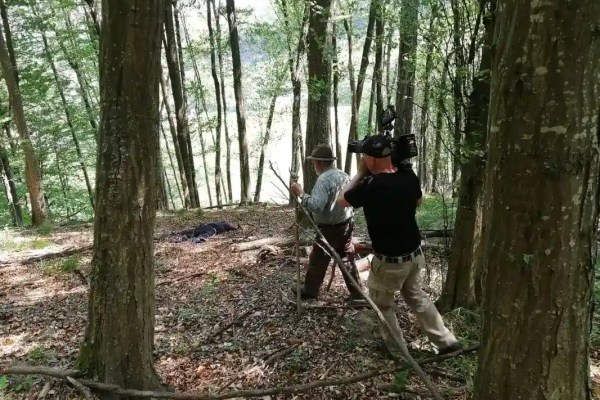
On that day, Rigaux was following a «chasse à courre», the chase hunt with packs of hounds on horseback long since banned in Germany and Switzerland, and was documenting it with his phone. Several participants got into an altercation with him. Three of them tried to take the device from his hand.
In court, one of the defendants admitted to reaching for the phone, but gave it a different meaning: it had not been about theft, but about deleting the footage. They had not wanted to be filmed, because Rigaux uses the images not for documentation but to abolish hobby hunting. It had already been the third time he had been filmed.
The legal assessment
Public prosecutor Grégoire Hue made clear that even a temporary appropriation of the phone was enough to constitute an attempted theft. The court followed this line. The three defendants were sentenced to a suspended fine of 500 euros and must additionally pay Rigaux 100 euros in damages.
Originally, charges such as violence and death threats had also been on the table. After the investigation, however, these were not pursued in court. All that remained was the grabbing of the smartphone.
A recognised right to film hobby hunting
Rigaux welcomed the verdict on social media. He sees it as a confirmation of the right to film hobby hunting activities in state forests. That is precisely the core point the hunting press prefers to gloss over in its reporting: anyone who documents a public activity in a public forest is acting lawfully. Anyone who responds by seizing someone else's property is committing a criminal offence.
In publicly accessible state forests, hobby hunting is regarded as a collective, publicly visible activity with no entitlement to protection of one's image. Filming is covered by the legitimate interest in information, in France as well as in Germany and Switzerland.
Before the hearing, the Société de vénerie had stated that it condemned all violence, while at the same time criticising methods it described as provocative and designed to cause scandal. The same organisation had, in other cases too, demonstratively distanced itself from assaults, while the documented practices spoke for themselves.
The telling lesson of the hunting press
It is remarkable what lesson parts of the French hunting media draw from the verdict. Instead of questioning the act itself, the gist is: hobby hunters should stay calm and on no account reach for a phone or camera, as otherwise the image of hobby hunting as a whole would suffer. So it is not about right or wrong, but about the public effect. The concern is not the filming, but that it is exposed.
That is precisely the sore point. An activity that shuns transparent observation and reflexively reaches for someone else's devices when being filmed reveals just how poorly it stands up to public scrutiny. The camera becomes a threat because what is filmed is inconvenient.
The case is part of a growing number of clashes between hobby hunters and their critics in France. Only recently, hobby hunters stood trial in another case over suspected poaching, and tensions are increasingly coming to a head in the relationship between farmers and hobby hunters too.
LET'S STAY IN TOUCH!
We would like to send you the latest news and offers in our newsletter.
Support our work
With your donation, you help to protect animals and give their voice a hearing.
Donate now →