England's new animal welfare strategy and hunting
Why the government is now tackling the sensitive issues — and why the hunting lobby is striking back immediately.

On 22 December 2025, the British Department for Environment, Food & Rural Affairs (Defra) published the «Animal welfare strategy for England».
The ambition is considerable: the government speaks of the most far-reaching reforms in a generation and announces plans to close animal welfare loopholes that have been exploited for years. Of particular relevance to hobby hunters is the fact that the strategy addresses several practices long regarded as grey areas: snare traps, trail hunting, and a close season for hares.
The core issue: wildlife is no longer treated as a footnote
The strategy treats wildlife not merely as a «nature issue» but as an animal welfare matter. This is politically significant, because hunting and wildlife management in Great Britain are frequently defended as culture, land use or «rural life». Defra counters this with a moral premise: where laws and practice lag behind the current state of knowledge, they must be tightened.
Trail hunting: the government calls the cover story by its name
On trail hunting (hounds following an artificial scent trail), the strategy states that this practice can serve as a cover to effectively resume genuine fox hunts. This is precisely the criticism that has been raised for years: the problem is not the ritual itself, but the practical impossibility of distinguishing it in the field when a fox is ultimately killed. Defra announces a consultation for early 2026 and signals that a ban is under consideration.
From a hunting-critical perspective, this is the decisive point: a law is only as strong as its enforceability. As long as the practice muddies the evidentiary waters, the 2004 ban remains, in part, a paper fence.
Snare traps: the end of a method that factors in «bycatch»
The government's position is even clearer on snares. Snares are non-selective. Those who set them accept that, alongside the target animal, domestic animals and non-target species may also become trapped. Humane World for Animals UK welcomes the announced ban and emphasises precisely this unpredictability and the suffering caused by restraint.
The strategy thereby follows a principle that is often suppressed in hunting policy: 'correct' application cannot remedy a systemic flaw. If the method itself amounts to stress, injury and prolonged restraint, 'better guidance' is not a solution — it is cosmetic.
Hares: A Closed Season as a Test Case for Genuine Animal Welfare
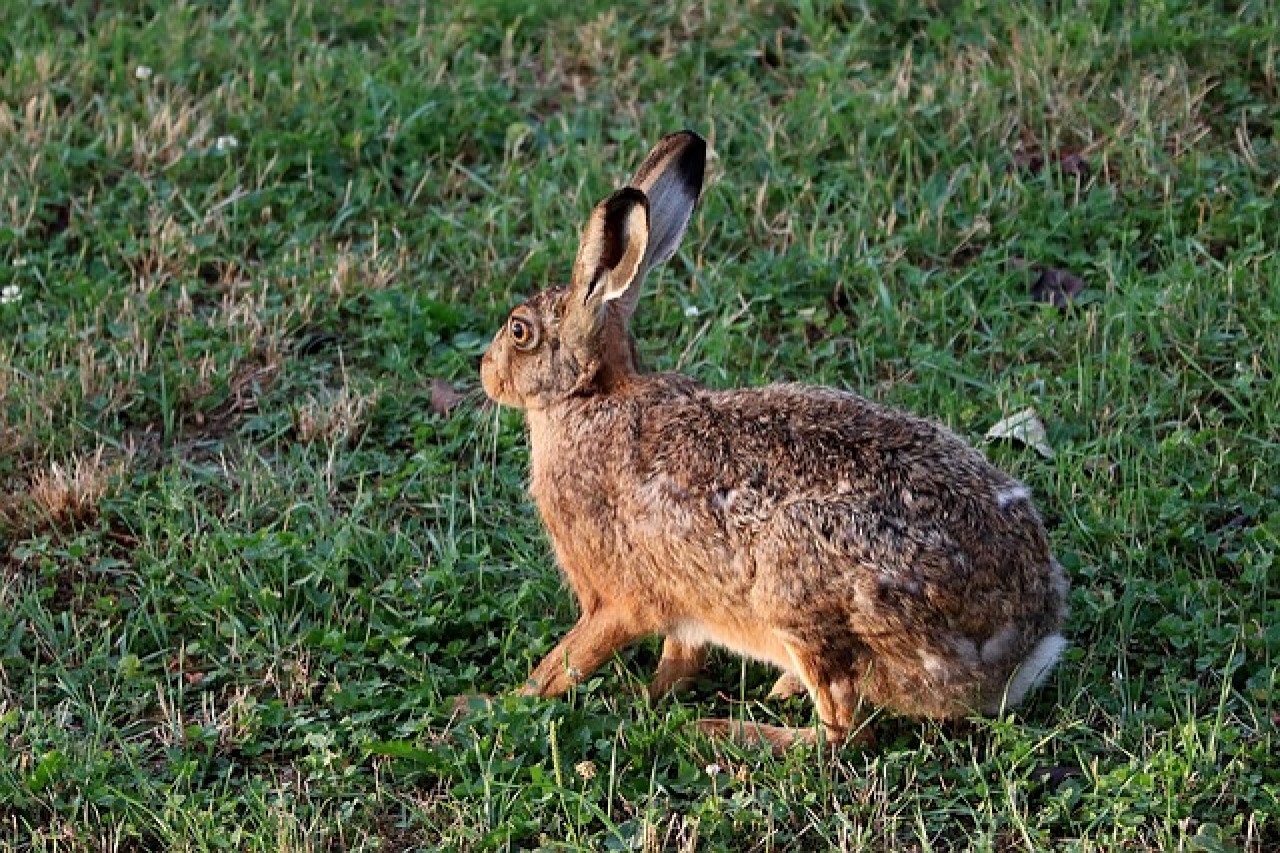
In England, there is currently no statutory closed season for hares during the breeding period. The strategy addresses this and proposes a close season from February to October . The rationale is as simple as it is damning: if does are shot during this period, their young are left behind.
The political volatility of this measure is evident from how swiftly counter-arguments have emerged. And this brings us to the hunting lobby.
The Counter-Campaign: FACE and BASC Invoke 'Evidence' to Preserve the Status Quo
Within hours of the publication, the European hunting umbrella organisation FACE disseminated a statement from its British member BASC. The message: the government had acted without 'proper consultation', and the proposals on a snare ban and hare closed season were 'not evidence-based'. The additional charge was levelled that the strategy references 'extremist animal rights groups', thereby undermining trust.
BASC sets out several core claims:
- 'Modern snares', when used correctly, meet international standards and are 'essential' for livestock protection and conservation.
- Rather than a ban, a statutory obligation to comply with a code of practice is required.
- Brown hares are listed as 'Least Concern' by the IUCN, populations have increased, and hares can cause agricultural damage.
- The primary problem is illegal hare coursing by organized crime, and enforcement should focus on this.
Why These Arguments Do Not Hold Up from a Hunting-Critical Perspective
First: 'International standards' are not a blank cheque.
Even where guidelines for 'humane' trapping methods exist, the fundamental problem with snares remains: they are a trapping technique with a high risk of non-target captures and injuries.Animal welfare arguments against snares are directed not only at misuse, but at the very principle of the method. Humane World for Animals UK explicitly uses the term 'indiscriminate' and documents that domestic animals are also affected.
Second: 'Least Concern' does not answer the animal welfare question.
The IUCN category says something about the extinction risk of a species in a broader context — not about the suffering of individual animals, and not automatically about regional populations or breeding-season protection. A close season is not a conservation gimmick but an animal welfare mechanism: it prevents foreseeable suffering caused by killing pregnant animals and orphaning their young. This is precisely the point highlighted by Defra and by reports on the proposed close season.
Third: illegal criminality as a diversionary tactic.
Yes, illegal hare coursing is a problem. But it does not follow that legally sanctioned, suffering-relevant rules should be left untouched. A state can do both: combat criminality and at the same time set legal standards in the lawful sphere. Those who focus exclusively on 'the illegal actors' shift the debate away from the real question: which practices do we as a society still wish to permit?
Fourth: the 'consultation' objection is political, not necessarily substantive.
BASC describes the lack of involvement as a breach of trust. That may well be the case, but it does not change the fact that a government is legitimately entitled to tighten regulations when it identifies gaps and abuse. Defra explicitly justifies the strategy on the grounds that existing rules have not kept pace with the evidence and that loopholes have been exploited.
What matters now: enforcement rather than feel-good formulas
The strategy reads in many places like a statement of direction — but it is only the beginning. What will be decisive is whether prohibitions are formulated in a way that works in the field, whether inspections are adequately funded, and whether the burden of proof does not once again founder on practical reality. Born Free, for example, welcomes the plans on trail hunting and hares, but at the same time emphasises that the details and their implementation will be critical.
England's animal welfare strategy tackles hunting issues where it hurts most: dogs, traps, breeding seasons. That is precisely why FACE and BASC immediately mobilise against snares and closed seasons, using the familiar triad of 'evidence', 'practicality' and 'consultation'. For a hunt-critical assessment this is a textbook case: when a method can only be talked up as 'animal-welfare-compliant' through codes, exemptions and interpretations, that is often the strongest argument for ending it.