
Poaching and hunting criminality in Switzerland: Systematic impunity and the limits of self-regulation
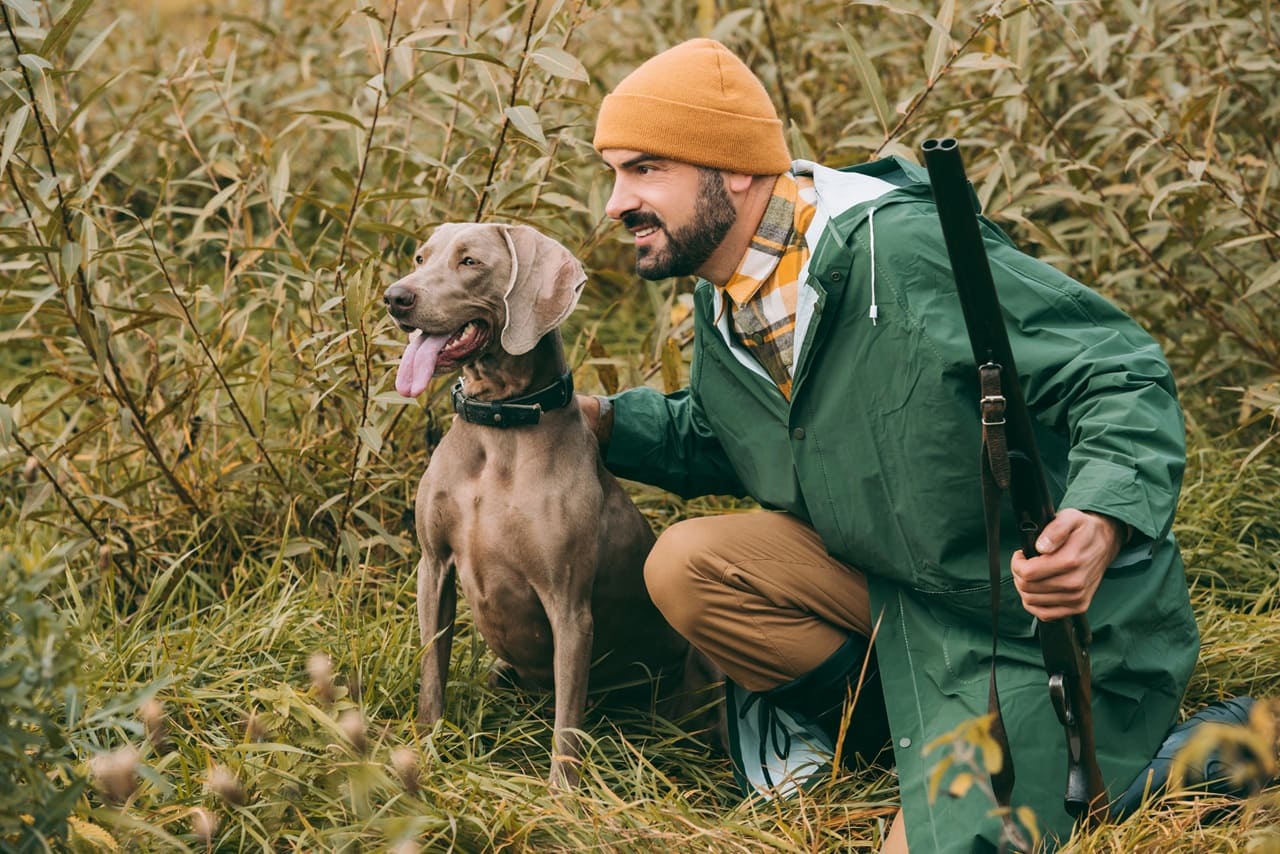
Poaching is officially regarded as a marginal problem in Switzerland. Cantonal hunting inspectorates speak of 'few isolated cases', hunting associations emphasize their members' law-abiding nature, and national statistics simply do not exist. This dossier demonstrates why this portrayal does not withstand scrutiny: Scientific studies, court proceedings and investigative research document a structural problem that extends far beyond classical poaching and calls into question the credibility of the entire recreational hunting system.
The dossier is based on data from the KORA Foundation, court rulings, cantonal hunting statistics, Pro Natura research and media reports. It documents forms of hunting criminality, examines structural weaknesses in monitoring and prosecution, and shows why predators such as lynx and wolves are particularly affected. Those who wish to delve deeper will find the foundation for broader argumentation in the Introduction to hunting criticism.
What to expect here
- How big is the problem? Why national statistics don't exist and what the few available figures reveal.
- Forms of hunting criminality: From snares and illegal shootings to poisoning of protected species.
- Who controls the recreational hunters? Why hunting supervision and wildlife management are structurally overwhelmed or biased.
- Criminal prosecution: Why proceedings are dropped and what penalties are imposed.
- Cantons in focus: Valais, Schwyz and Graubünden as hotspots.
- Predators as primary victims: Why lynx, wolves and birds of prey are systematically persecuted.
- The Geneva model as counterexample: Professional wildlife management instead of self-regulation.
- What needs to change: Concrete political demands.
- Arguments: Responses to the most common counterarguments.
How big is the problem?
Switzerland does not maintain national statistics on poaching. This is not a technical gap, but a structural failure. While Germany annually records hunting poaching cases in criminal statistics (2020: 1,080 cases), there is no systematic data collection in Switzerland at either federal or cantonal level. The cantonal hunting inspectorates simply have no figures, as investigations by Tierwelt and SRF have shown. Or they refuse to release them.
The few available data points nevertheless paint a picture: The Graubünden hunting inspector estimated 10 to 20 cases per year in Graubünden canton alone. The Valais hunting department registers 5 to 10 cases annually. The Aargau prosecutor's office reported 31 convictions for offences and 41 for violations under the Hunting Act for the period 2005 to 2015. Canton Bern listed 42 crimes against the Hunting Act for 2021. Zurich cantonal police reported eleven crimes between 2010 and 2016, with a perpetrator identified in only one single case.
These figures represent minimum estimates. Heinrich Haller, former director of the Swiss National Park, documented several hundred proven poaching cases in the Engadin, Münster Valley and adjacent areas abroad since 1910 alone. In the National Park itself, at least 77 poached animals have been found since 1910: 34 chamois, 28 red deer, 9 Alpine ibex, 3 roe deer and 3 golden eagles.
Graubünden prosecutor Claudio Riedi explained the lack of figures by stating that poaching proceedings are often combined with other offences and therefore do not appear as poaching in statistics. What is meant as an explanation actually describes the problem: A crime that does not exist statistically cannot be addressed politically.
Forms of hunting criminality
Hunting criminality in Switzerland is more diverse than the classic image of the nocturnal poacher. The documented forms include:
Illegal shooting of huntable species: Hobby hunters who shoot outside hunting season, without permits, in foreign territories or beyond allocated quotas. In Prättigau, Graubünden cantonal police solved ten cases in 2021 where a local hobby hunter had regularly killed chamois and roe deer bucks as well as non-huntable stags outside hunting season since 2014.
Targeted killing of protected species: The killing of lynx, wolves, golden eagles or birds of prey is not a trivial offence, but a crime prosecuted ex officio (Art. 17 JSG). Nevertheless, KORA data, media reports and court judgments document numerous cases. Since 1999, at least 13 wolves have been demonstrably poached in Switzerland, with experts stating the dark figure is considerably higher. For lynx, illegal shooting is the second most common cause of death according to WWF Switzerland.
Snares and poisoning: In the Valais foothills, the research team led by Prof. Raphaël Arlettaz (University of Bern) discovered a system of 17 lynx traps in 2016, three still active, strategically placed at the only migration corridor into Valais. In canton Freiburg, cantonal councillor and hobby hunter Roger Schuwey was convicted after laying poisoned bait.
Mistaken shootings and negligence: The «black list» of documented cases includes a hobby hunter who shot a tomcat because he mistook it for a fox, another who killed an Icelandic pony instead of a wild boar, and hobby hunters who shot four deer in a nature reserve in Bilten. Swiss Animal Protection STS concluded in an investigation that recreational hunters are among the worst marksmen.
Organized poaching: In the canton of Jura, four hobby hunters, including an assistant game warden, poached a total of 138 deer, 36 hares, 12 wild boar and 11 chamois between 2002 and 2006. In the Puschlav valley, three men were convicted in 2021 for illegally killing three stags and a protected common buzzard within one year.
More on this: The black list of JagdSchweiz and Dossier on hunting accidents in Switzerland
Who controls the recreational hunters?
Control of recreational hunting in Switzerland is structurally compromised. In most cantons, it is the hunting administrations themselves—authorities institutionally intertwined with recreational hunters—who are supposed to prosecute violations or fail to prosecute them. Game wardens who conduct field inspections are understaffed: in many cantons, only a few game wardens monitor hundreds of recreational hunters.
Interconnections between hunting supervision and recreational hunters are not the exception but the rule. In the canton of Jura, one of the convicted poachers was an assistant game warden. In Graubünden, a man convicted as a poacher was simultaneously a police officer in the neighboring village. In Valais, RTS investigations quoted an anonymous employee of the cantonal hunting service saying that formerly the office motto was that a «good lynx» was «a dead lynx». The same employee admitted to having shot a lynx himself.
Nine cantons refused to release data on errant shots to Swiss Animal Protection STS, despite reference to the Freedom of Information Act. This refusal attitude is not a sign of transparency, but of a system that prioritizes self-control over public accountability.
More on this: Dossier: Hobby hunter lobby in Switzerland and Argumentarium for professional game wardens
Criminal prosecution: Why proceedings are discontinued
The Swiss Hunting Act (JSG) distinguishes between crimes (Art. 17: imprisonment up to three years or monetary penalty) and contraventions (Art. 18: fine up to 20,000 francs). In practice, however, penalties regularly fall at the lower end of the scale. The hobby hunter who shot a golden eagle in Seewis in 1976 paid a 250 franc fine. A Valais resident without hunting or gun license who repeatedly shot at deer from his car and filmed his activities received twelve months imprisonment and an 800 franc fine from the Entremont district court, one of the harshest sentences in recent years.
The main problems in criminal prosecution are: poaching takes place in remote areas, there are hardly any witnesses, evidence is thin, and dead animals are often not found or not examined. In Valais, investigations following reports from hikers who found traps ran into dead ends for years because police could no longer find the traps during later inspections. Only research work by the University of Bern, which secured DNA traces on the snare traps, led to a conviction.
Another problem is the statute of limitations. Contraventions expire after three years, crimes after seven to ten years. Given the difficult evidence situation, these deadlines are frequently insufficient. Additionally: when a hobby hunter is convicted, he does not automatically lose his hunting license in many cantons. Revocation regulations vary by canton and are often toothless.
Cantons in focus
Valais: Systemic looking away
The canton of Valais is the most thoroughly documented hotspot of hunting criminality in Switzerland. Of the 13 wolves demonstrably poached since 1999, seven were in Valais. The 2020 study by Prof. Raphaël Arlettaz (University of Bern) showed that the conspicuously low lynx populations in Valais can only be explained by poaching. His team found 17 snare traps on the only lynx migration corridor. DNA on the traps led to a hobby hunter who had already been photographed next to two dead lynxes in 1995, but was acquitted at the time.
Arlettaz spoke of a "systemic problem" in Valais administrative offices and a "culture of silence". The former Valais government president Jean-René Tornay had publicly used the formula "see, shoot, shovel, silence", a phrase that became the subject of criminal charges.
More on this: All posts in the category Crime and Hunting
Schwyz: Bounties, Poaching and Milieu Loyalty
The canton of Schwyz has been described in an analysis as an "eldorado for hunting crimes". Documented cases include snare poaching near Pfäffikon, prohibited hunting methods such as wire snares, and a bounty system where compensation for livestock kills effectively acts as premiums on wolves. The prosecution rate for hunting offences is low, and the connections between recreational hunters, hunting authorities and local politics are close.
More on this: Psychology of Recreational Hunting in Canton Schwyz
Graubünden: Dark Figure and Border Region
Graubünden is the canton with the most shootings and an estimated dark figure of 10 to 20 poaching cases per year. The proximity to Italy and Austria facilitates cross-border poaching. In Puschlav, a poached wolf was found in 2021, and in Prättigau, police uncovered a years-long poaching series. The prosecutor's office reports 2 to 3 cases per year that reach indictment, suggesting a high dark figure.
Predators as Primary Victims
Predators such as lynx, wolves and birds of prey are disproportionately affected by poaching, not because they accidentally come into the crosshairs, but because they are deliberately eliminated. The motivation differs fundamentally from classic poaching: it's not about the individual animal killed, but about eliminating a competitor that interferes with recreational hunting or small livestock farming. Pro Natura spoke in a documentary of a "second extinction" of the lynx in Switzerland.
The KORA Foundation confirms: The most frequent known cause of death for wolves in Switzerland is authorized shooting, followed by traffic accidents and illegal shootings. For lynx, illegal shooting is the second most frequent cause of death according to WWF. Particularly alarming: Researchers from the KORA Foundation documented several cases of "silenced transmitters" in radio-collared lynxes, which most likely can be attributed to illegal killings. Without radiotelemetry, many of these cases would never have been discovered.
Birds of prey are also affected. In the Swiss National Park, three golden eagles have been documented as poaching victims since 1910. Poisoning cases where birds of prey were killed with prepared baits are known from several cantons. The Sempach Bird Observatory has been warning for years that the dark figure for persecution of birds of prey is high.
More on this: Dossier: The Wolf in Europe and The Significance of the Lynx for Biodiversity Conservation
The Geneva Model as a Counter-Example
The Canton of Geneva has demonstrated since 1974 that professional wildlife management functions without recreational hunting. The state Gardes de l'environnement are trained specialists with clear mandates and public accountability. There is no personal union between controllers and the controlled, no hunting associations that are supposed to supervise their own members, and no hobby hunters working as auxiliary game wardens in wildlife management.
Geneva is relevant to the question of hunting crime because the model eliminates the structural conflict of interest: Those who hold the monopoly on weapons in the forest must be trained, controlled and independent. This is not the case in the hunting license system of most Swiss cantons.
More on this: Abolition of Recreational Hunting: The Geneva Model and Dossier: Hunting Ban Switzerland
What needs to change
- National poaching statistics: The federal government must introduce uniform, publicly accessible statistics on hunting offenses. Without a data foundation, there is no evidence-based policy.
- Independent hunting supervision: Control of recreational hunting must not lie with authorities that are institutionally intertwined with recreational hunters. Professional, independent game wardens following the Geneva model are the solution.
- Automatic license revocation: Upon conviction for hunting offenses, the hunting license must be mandatorily revoked, uniformly across cantons and without discretionary leeway for hunting authorities.
- DNA database for wildlife: Establishment of a forensic DNA database for poached predators, analogous to criminal prosecution for other offenses.
- Whistleblower protection: Anonymous reporting systems for suspected poaching that do not go through hunting administration but directly to the prosecutor's office.
- Higher penalties and longer statutes of limitations: Current fines are not a deterrent. For protected species, the statute of limitations should be extended and the penalty range increased.
Arguments
«Poaching is a marginal phenomenon, there are only a few isolated cases.»
This claim cannot be substantiated because there are no national statistics. The few available cantonal data show double-digit case numbers per canton per year. The dark figure is significantly higher according to experts like Heinrich Haller, Prof. Arlettaz and WWF. For lynx, illegal shooting is the second most common cause of death. To speak of «isolated cases» given this data situation is disingenuous.
«Recreational hunters regulate themselves and take action against bad actors.»
The documented cases show the opposite. In Valais, according to independent investigations, a culture of looking the other way prevailed. In Canton Jura, an auxiliary game warden was himself involved in organized poaching. In Graubünden, a poacher was simultaneously a police officer. Self-regulation does not work when controllers and the controlled belong to the same milieu.
«Predators are not deliberately targeted, these are tragic mix-ups.»
Prof. Arlettaz's study documents a system of 17 strategically placed snares at the only lynx migration corridor into Valais. This is not a mix-up but planned elimination. Pro Natura spoke of a threatening «second extinction» of the lynx. KORA data on «silenced transmitters» of radio-collared lynx corroborate the suspicion of systematic persecution.
«The penalties are appropriate, hunting law is sufficient.»
250 Swiss francs fine for a poached golden eagle. Statute of limitations after three years for infractions. No automatic license revocation. Current practice shows: The penalty level has no deterrent effect. Those who poach face at worst a fine lower than a speeding violation on the highway.
«There is also poaching in Canton Geneva, so the hunting ban is useless.»
Nobody claims that a hunting ban completely prevents poaching. What Geneva demonstrates is that a system without structural conflicts of interest can combat poaching more effectively. Professional wildlife wardens have no personal incentive to eliminate predators. They monitor and are monitored, independent of hunting associations and local recreational hunting politics.
Quicklinks
Related articles and dossiers on wildbeimwild.com:
- The blacklist of JagdSchweiz
- Category: Crime and Hunting (536+ articles)
- Dossier: Hunting accidents in Switzerland
- Dossier: Hunting and animal welfare
- Dossier: The wolf in Europe
- Arguments for professional wildlife wardens
- Abolition of recreational hunting: The Geneva model
- Dossier: Hobby hunters lobby in Switzerland
- Psychology of recreational hunting in Canton Schwyz
- Why recreational hunting fails as population control
Sources: KORA Foundation (wolf and lynx loss data), WWF Switzerland (position on hunting and trophy hunting), Pro Natura (documentary «Who kills the lynx?»), Prof. Raphaël Arlettaz, University of Bern (Valais lynx poaching study, 2020), Heinrich Haller (poaching in the National Park and Engadin), Tierwelt (investigation «Urgently sought: poaching statistics», 2016), SRF («Poaching in Switzerland: The appeal of illegal trophy hunting», 2021), Swiss Animal Protection STS (investigation into missed shots), Federal Act on Hunting and the Protection of Wild Mammals and Birds (JSG, Art. 17 and 18), cantonal hunting statistics (AG, BE, VS, GR, ZH).