
Self-Regulation of Wildlife Populations: Scientific Evidence from Geneva, the National Park, and International Comparisons
Self-regulation is not a theory: 50 years in Geneva and 110 years in the National Park demonstrate that wildlife stabilizes without hobby hunting.
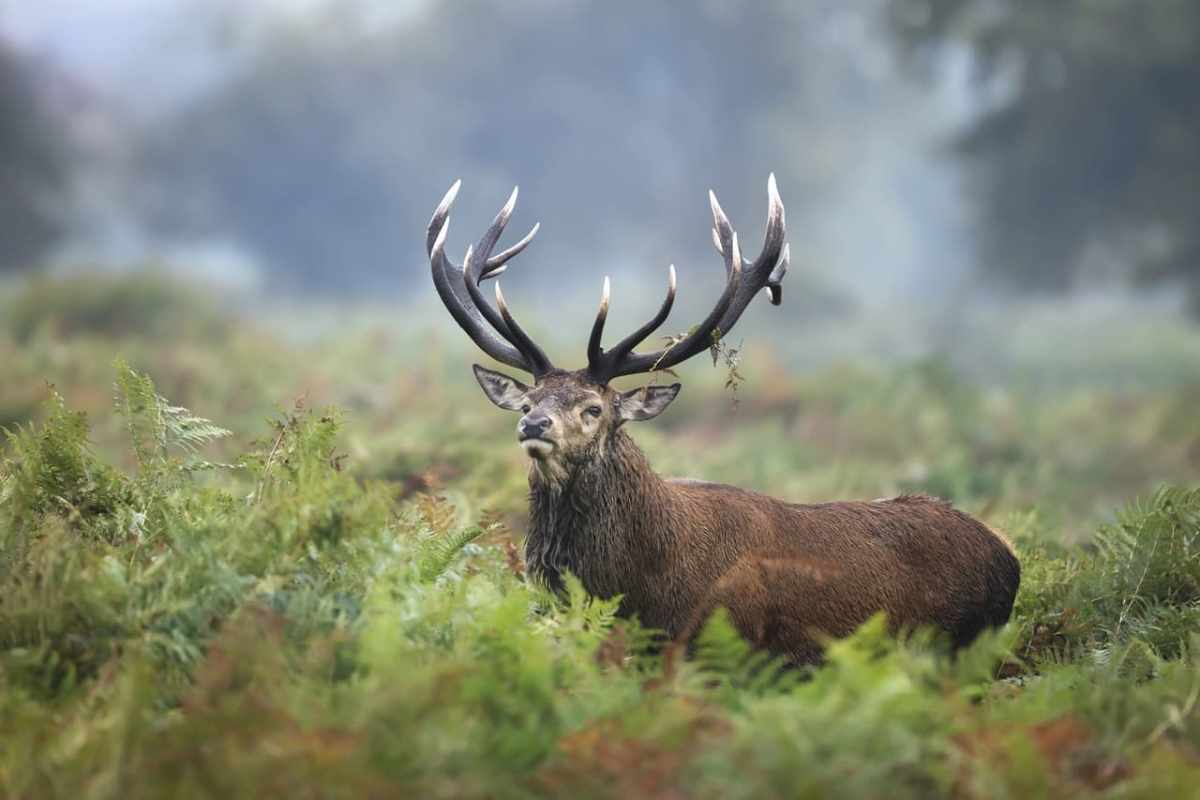
The question of whether wildlife populations can self-regulate without hobby hunting is central to the legitimacy of Swiss hunting practices and highly politicized.
The hobby hunting lobby argues that without culling, ecological balance would collapse. The opposing position, supported by long-term observations in the canton of Geneva, in the Swiss National Park, and by international research, tells a different story: wildlife populations are regulated primarily by food availability, predators, and habitat capacity — not by shooting quotas. This dossier brings together the scientific evidence and honestly addresses where researchers genuinely disagree.
What to expect here
- Canton of Geneva since 1974: 50 years of long-term experimentation in a densely populated canton with intact biodiversity and stable ungulate populations.
- Swiss National Park since 1914: 110 years of hunting prohibition, scientifically documented species diversity, and a nuanced analysis of the deer problem of the 1980s.
- Compensatory reproduction: why hobby hunting produces the very populations it claims to regulate. Evidence from wild boar, red deer, bear, puma, and jackal.
- Where researchers disagree: browsing damage, predators as a substitute for hunting, and the scalability of the Geneva model.
- International comparative findings: from Luxembourg to Yellowstone to the Słowiński National Park in Poland.
- What must follow politically: concrete demands on the federal government, cantons, and research institutions.
- Arguments: responses to the six most common objections to the self-regulation thesis.
- Quick links: to related dossiers and study overviews.
Canton of Geneva since 1974: Europe's longest field experiment
The canton of Geneva is the world's unique long-term experiment in a hunting ban within a densely populated, economically intensively used area. On May 19, 1974, around two-thirds of Geneva's population voted to abolish the militia-based hunting system. Since then, twelve cantonal wildlife wardens of the «Police de la nature» have handled all necessary wildlife interventions.
What the data shows after more than fifty years is impressive. A cantonal long-term study documents a strong increase in biodiversity since 1974. Today, Geneva is considered one of the most biodiverse cantons in Switzerland, despite its high population density, viticulture, and international airport. Lake Geneva and the Rhône have become waterfowl reserves of international significance. The number of overwintering waterfowl rose spectacularly after the hunting ban, with no comparable trend in neighboring cantons. The hare population density stands at 17.7 animals per 100 hectares, well above the Swiss average. Ungulate populations are also stable: around 100 red deer and 330 roe deer. Roe deer, red deer, and wild boar, which were considered nearly extinct in 1974, have reestablished themselves.
Public acceptance is overwhelming. In 2004, nearly 90 percent of Geneva's population opposed the reintroduction of hobby hunting. In 2009, the cantonal parliament rejected a corresponding motion by 71 votes to 5.
The Limits of the Geneva Model
Even critically minded researchers must acknowledge: the Geneva model is not a model without any regulation. As wildlife populations grew, significant forest damage caused by ungulates was documented, necessitating the development of a forest-wildlife management concept in accordance with the FOEN's implementation guidelines. As countermeasures, wildlife fences were reinforced and targeted culls of roe deer were carried out, overseen by professional wildlife wardens.
The hunting-affiliated magazine «Tierwelt» notes that “so well, that even the small canton cannot do without hunting,” and reports that the hare population had to be kept in check. In 2007, around 60 animals were relocated to Valais and France. In addition, growing wildlife populations increased the risk of wildlife-related accidents. Between 50 and 100 such incidents are reported per year.
Critical contextualization is essential: the Geneva model refutes the claim that hunting-free systems lead to collapse. At the same time, it demonstrates that professional interventions remain necessary — but carried out by trained wildlife wardens, not armed hobby hunters. Fauna inspector Gottlieb Dandliker states clearly that roe deer do not threaten the forest and that little damage is recorded in the predominantly oak forests.
More on this: Geneva and the hunting ban and Studies on the impact of hunting on wildlife
Swiss National Park since 1914: the oldest experiment
The Swiss National Park has been legally protected as a reserve since its founding in 1914, in which nature remains free from all human intervention, including hunting. It is therefore the oldest and strictest hunting-free area in Switzerland.
Botanists assumed in 1914 that the former alpine pastures would quickly become overgrown. Research findings show the opposite. Species diversity increased from an average of 17 species per square meter in 1921 to 42 species per square meter in 2011. Female deer keep grassland short through grazing, thereby promoting biodiversity. More recent studies confirm that the emergence of young trees is less influenced by browsing and instead depends more on site-specific and climatic conditions. At current deer densities, forest regeneration is by no means being prevented. A study published in 2025 in “Ecology and Evolution” also demonstrated how red deer contrast their habitat selection inside and outside the national park — evidence of complex behavioral adaptations in hunting-free spaces.
The deer problem of the 1980s: real crisis or political instrumentalization?
This is where the greatest scientific controversy lies. Following the founding of the national park, red deer populations developed exponentially. In the 1980s, peak numbers of around 3,000 animals were recorded. The causes were multiple: the national park lacks all natural predators, particularly the wolf. Hunting outside the national park was primarily focused on stags until the 1970s — that is, trophy hunting — and was unable to curb population growth. Winter feeding outside the park additionally led to forest damage and winter mortality.
The high population numbers led to repeated, massive winter die-offs, impairment of forest regeneration, and agricultural yield losses. This triggered political controversies between the 1950s and 1990s that shook the very foundations of the national park. The judgment of the national park's own research, however, is nuanced. The fears of an ecological catastrophe were, from today's perspective, unfounded. Nevertheless, a hunting-based regulation of the red deer population was considered appropriate. The solution was a two-stage hunting approach outside the protected area — namely the main hunt in September and a special hunt in late autumn — without violating the fundamental hunting ban within the national park.
Interspecific competition: not just idyll
Research findings from the Val Trupchun show that at high red deer densities, chamois increasingly retreat to less food-rich scree slopes. The horn growth of chamois kids correlates negatively with red deer density. A higher deer population also negatively affects the population growth rate of ibex. A comparable pattern is shown by a Polish study from the hunting-free Słowiński National Park. There, high red deer densities significantly displaced the roe deer population through resource competition. Self-regulation therefore does not automatically mean harmony for all species simultaneously. It can be associated with dominant species that displace others.
More on this: The chamois in Switzerland and The red deer in Switzerland
Compensatory reproduction: the strongest scientific counterargument
A central biological principle supports the position of hunting critics: compensatory reproduction. Wildlife populations respond to losses from hunting with increased birth rates, earlier sexual maturity, and larger litters.
The evidence is international and spans multiple species. A French long-term study conducted over 22 years demonstrated that hunting pressure significantly increases the reproduction rate of wild boar. Under normal circumstances, only the lead sow reproduces. When she is shot, all females in the group begin to reproduce. In Switzerland, red deer populations rose from around 23,000 to over 40,000 animals between 2000 and 2024, even though the number of animals shot nearly doubled during the same period. Hobby hunting preferentially targets males — and thus trophies — which shifts the sex ratio in favor of fertile females.
International studies provide additional findings. Swedish researchers showed that female bears shorten the rearing period of their young in response to hunting pressure, in order to reproduce again more quickly. A study from Washington State refuted the “compensatory mortality hypothesis” for mountain lions. Heavy hunting correlated with increased immigration, lower juvenile survival rates, and a younger age structure — but not with the predicted population stabilization. In the case of the black-backed jackal, hunting led to a younger age structure and an expanding rather than stable population, as the social control exercised by older animals was lost.
These findings support the central thesis of the critique of hunting: hobby hunting produces the very population levels it claims to prevent.
More on this: Why hobby hunting fails as a population control method and Hunting myths: 12 claims critically examined
Where researchers actually disagree
Natural predators as a substitute for hobby hunting?
WSL researchers Andrea Kupferschmid and Kurt Bollmann show that wolves significantly alter the spatial behavior of ungulates and locally reduce browsing damage. However, this effect applies only to a limited extent, and the picture is more nuanced than simple causality. In the Calanda region, home to Switzerland’s first wolf pack, browsing damage to silver fir, maple, and rowan decreased noticeably within the core territory. The influence of the lynx on roe deer browsing has also been demonstrated, including through research conducted by BOKU Vienna in the canton of St. Gallen.
At the same time, forestry associations such as the Swiss Forestry Association are taking a clear stance: “Large predators like lynx and wolf cannot solve the regeneration problem,” but they do influence the spatial distribution and behavior of ungulates. These associations are therefore calling for an intensification of hobby hunting. This is noteworthy because WSL data simultaneously show that forestry professionals rate wildlife impact as low or negligible on around 68 percent of the assessed forest area.
Browsing damage: widespread and critical, or locally contained?
The 2025 Forest Report by BAFU and WSL confirms that excessively high wildlife populations in certain areas are impairing natural regeneration. At the same time, it identifies heat, drought, storms, and harmful organisms as greater stressors. According to WSL researcher Kupferschmid, forestry professionals rate wildlife impact as low or negligible on 68 percent of forest area. Only 5 percent is considered silviculturally unsustainable. The browsing question cannot be answered with simple yes-or-no responses.
Transferability of the Geneva model
The most common counter-position from the hunting lobby is that Geneva is too small and too urban, and that the model cannot be transferred elsewhere. The counter-argument is factually strong. Geneva is densely populated, has intensive viticulture, an international airport, and direct cross-border traffic with heavily hunted areas of France and the canton of Vaud. If professional wildlife management works in this context, there is no structural argument against transferability to larger, less densely populated cantons. However, scalability is a genuine research question. Geneva covers 282 square kilometers, Graubünden 7,105 square kilometers. Twelve cantonal wildlife wardens are sufficient for Geneva. How many would Graubünden need? Reliable modeling calculations are absent from the literature.
More on this: The forest-wildlife conflict in Switzerland and Wolf in Switzerland: facts, politics, and the limits of hunting
Overview of international comparative findings
- Canton of Geneva, since 1974: Biodiversity is increasing, ungulate populations are stable, brown hare at Switzerland's highest recorded level. Caveat: professional interventions remain necessary.
- Swiss National Park, since 1914: Species diversity has increased significantly, with no ecological catastrophe. Caveat: the deer problem of the 1980s required special measures outside the park.
- Luxembourg, ban on fox hunting since 2015: No epidemics, no explosion in fox populations. Limitation: short time series.
- Yellowstone, wolf reintroduction: Behavioral changes in red deer, vegetation regenerates. Limitation: complex trophic cascades, not directly transferable to Central Europe.
- Słowiński National Park Poland, without hunting: Red deer displaces roe deer through resource competition. Demonstrates side effects in the absence of predators.
More on this: The Fox in Switzerland and Hunting and Biodiversity: Does Hunting Protect Nature?
What Would Need to Change
- Recognition of scientific evidence: The federal government and cantons must take into account empirical findings from Geneva, the National Park, and international research as the basis for decisions when revising hunting legislation. Scientific evidence must not be overridden by lobbying interests.
- Independently funded long-term monitoring: An independently funded long-term study must document wildlife populations in Geneva, in the National Park, and in comparable hunting-intensive cantons in parallel over at least twenty years. Only then will the question of transferability be empirically answerable.
- Pilot cantons for hunting-free zones: Two to four Swiss cantons test the wildlife warden model on defined areas with transparent cost calculations and open performance monitoring. Model motion: Wildlife Wardens Instead of Hobby Hunters.
- Disclosure of harvest statistics: The trend of growing populations despite rising kill numbers — such as red deer increasing from 23,000 to over 40,000 animals in 24 years — belongs in the public debate. Compensatory reproduction is not a peripheral issue but a structural argument against the population management narrative.
- Dialogue between forestry and wildlife biology: The browsing damage question is currently dominated by forestry associations that simultaneously insist on hobby hunting. A joint working group involving wildlife biology, WSL, cantonal authorities, and animal welfare organizations should develop viable alternatives.
Argumentarium: Objections to the self-regulation thesis, and what holds true
“Without hunting, populations will explode and nature will collapse.” Geneva has refuted this claim for 50 years, and the Swiss National Park for 110 years. In both systems, biodiversity has not collapsed — it has increased. The core thesis of the hobby hunting lobby is empirically disproven.
“The Geneva model cannot be transferred because Geneva is urban.” Geneva has an international airport, intensive viticulture, and direct cross-border traffic to regions with intensive hunting. If wildlife management works there, no structural argument speaks against it working equally well in less densely populated cantons. The question of scalability is a research mandate, not a refutation.
"Hobby hunting is necessary to regulate populations." Compensatory reproduction shows the opposite. Swiss red deer populations rose from 23,000 to over 40,000 animals, even though the number of culls nearly doubled. Hobby hunting produces the very populations it claims to prevent.
"Without hunting, forests will collapse due to browsing damage." WSL data show that forestry professionals rate wildlife impact as low or negligible on 68 percent of forest area. Only 5 percent is considered unsustainable from a silvicultural standpoint. The 2025 Forest Report identifies heat, drought, and storms as greater stressors than browsing damage.
"Predators alone cannot regulate populations." That is correct, and no one claims otherwise. The hunting-critical position is: professional wildlife wardens, supplemented by natural predators and sensible habitat management, are sufficient. Hobby hunting is not part of the solution here — it is part of the problem.
"The deer problem of the 1980s shows that hunting-free zones do not work." The assessment of national park research itself is nuanced: the fears of an ecological catastrophe are, in retrospect, considered to have been unfounded. Hunting-based management outside the park may well have been warranted, but the hunting ban within the park itself never had to be lifted.
Quick Links
Posts on Wild beim Wild
- Geneva Hunting Ban
- Initiative Calls for “Wildlife Wardens Instead of Hunters”
- Why Hobby Hunting Fails as Population Control
- Studies on the Impact of Hunting on Wildlife
- Switzerland Hunts — But Why, Really?
- Template Texts for Hunting-Critical Motions in Cantonal Parliaments
Related Dossiers
- Geneva and the Hunting Ban
- The Wildlife Warden Model: Professional Wildlife Management with a Code of Ethics
- Alternatives to Hobby Hunting
- Hunting and Biodiversity: Does Hunting Protect Nature?
- Argumentarium for Professional Wildlife Wardens
- The Forest-Wildlife Conflict: Why the Browsing Narrative Does Not Justify Hobby Hunting
- Hunting Myths: 12 Claims Critically Examined
- The Wolf in Switzerland: Facts, Politics, and the Limits of Hunting
Our Standard
Self-regulation is not a theory — it is a 50-year field experiment in Geneva and a 110-year experiment in the Swiss National Park. The data show: wildlife populations stabilize, biodiversity increases, the ecosystem does not collapse. Compensatory reproduction exposes hobby hunting as a structurally ineffective regulatory instrument. The real question is not whether equilibrium is possible without hobby hunting. The question is why political Switzerland has been ignoring this equilibrium for decades.
The IG Wild beim Wild compiles the scientific evidence because an honest public debate about hobby hunting must begin with facts, not myths. This dossier is continuously updated whenever new studies, figures, or political developments require it.
More on the topic of hobby hunting: In our dossier overview we compile fact-checks, analyses, and background reports.