
The wildlife warden model – professional wildlife management with a code of ethics
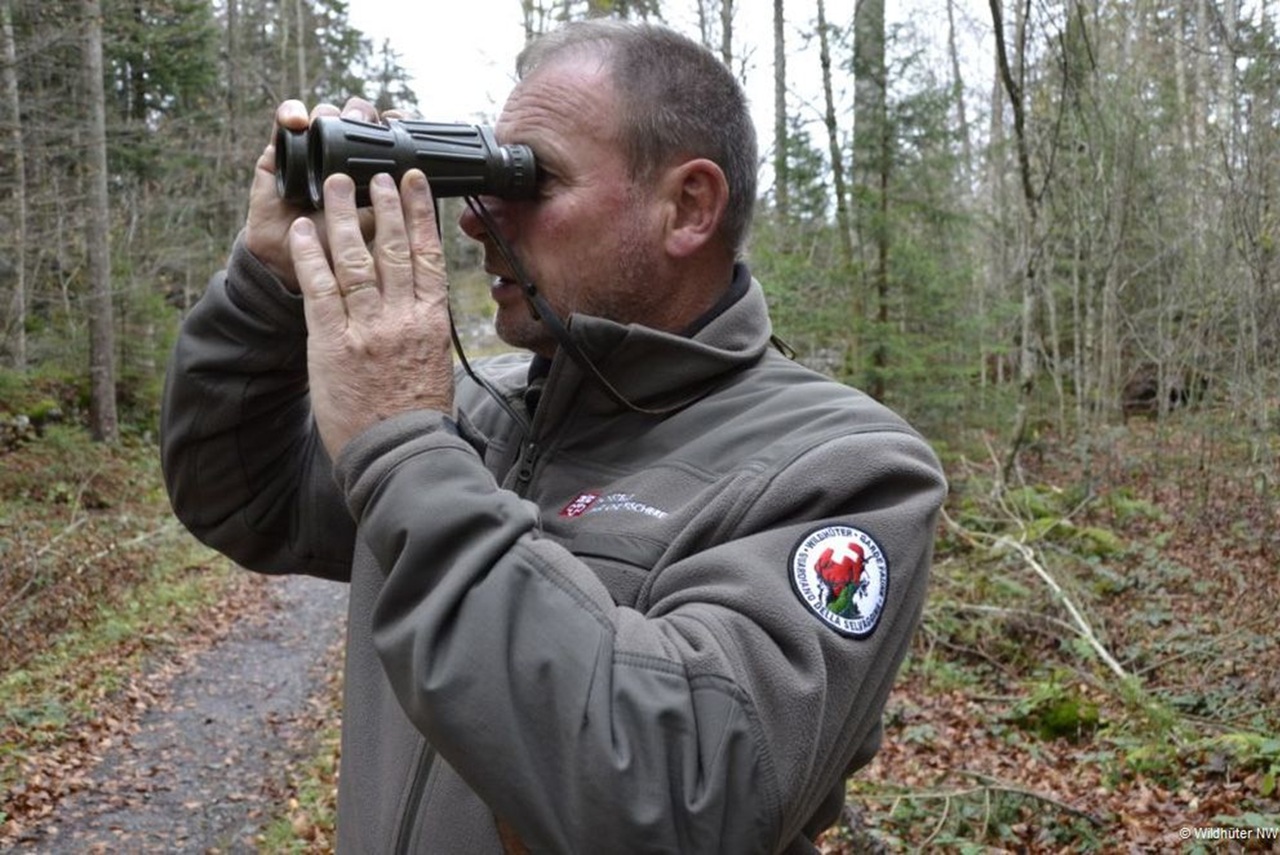
The wildlife warden model is considered the evidence-based alternative to hobby hunting. But to prevent it from becoming a hunting system in new clothes, one thing is needed: a binding code of ethics that not only describes the fundamental difference from current hunting practice, but anchors it legally and institutionally.
What awaits you here
- The problem with the status quo: Why today's wildlife warden system is structurally intertwined with hobby hunting and what this means for credibility.
- What a code of ethics must achieve: Six principles that distinguish a professional wildlife warden model from a hunting system in state uniform.
- Distinction from hobby hunting: Tabular comparison by motivation, legitimacy, transparency, control and intervention principle.
- The Geneva model as an example, with limitations: What Geneva does right and where a consistent wildlife warden model would need to go further.
- Rethinking education: Which disciplines a wildlife warden education should include without mandatory hunting license.
- What would need to change: Political demands for legal anchoring at federal level.
- Arguments: Answers to the most common objections to the wildlife warden model.
- Quick links: All relevant articles, dossiers and external sources.
The problem with the status quo
The Swiss Wildlife Warden Association (SWHV) today trains state-employed wildlife wardens in seven modules over three years, with certificate examination and federal diploma. The training includes ecology, wildlife biology, weapon handling and nature conservation.
The problem: Anyone who wants to become a gamekeeper today must have a hunting license. This means: The current gamekeeper system is structurally interwoven with the hunting system. Anyone who wants to become a gamekeeper must first become a hobby hunter. This exact connection must be severed if the model is to be a genuine alternative.
More on this: Arguments for professional gamekeepers and Initiative demands «Gamekeepers instead of hunters»
What a code of ethics must achieve
A modern gamekeeper system requires a binding code of ethics that institutionally anchors the following principles:
1. No killing for pleasure
Wild animals are not 'harvested,' hunted, or managed as resources. Interventions in wild animal populations are only permissible when they are ecologically, animal welfare, or safety justified and documented. The Geneva model has lived this principle since 1974: 'In Geneva, no animals are taken for hunting interests, but exclusively where it is ecologically, animal welfare, or safety justified.'
2. The principle of least intervention
Before a wild animal is killed, all non-lethal methods must be examined and documented: deterrence, habitat management, fencing, relocation. Death by shooting or trapping is the last resort, not the first. Prof. Rudolf Winkelmayer formulates it precisely: 'The goal must be modern wildlife or biodiversity management that always seeks the mildest means of problem-solving in all cases. Death by trap or shot is the exact opposite of this.'
3. Ban on trophy mentality and selective culling
No gamekeeper may select animals based on trophy value, weight, or aesthetic criteria. Lead animals, mother animals, and social groups enjoy special protection because their function for population stability is scientifically proven. The Swiss Animal Protection STS states: 'Hunting animals for pure pleasure in hunting or to obtain trophies is ethically indefensible.'
4. No management obligation to increase populations
Wild animal populations are not 'managed' to maximize them for later interventions. Management in the sense of feeding outside emergency periods, artificial population increases, or habitat manipulation in favor of certain species is prohibited. The goal is ecological balance, not maximum wildlife density.
5. Science-based decisions
Every intervention is based on a documented management plan that is reviewed by independent wildlife ecologists. Culling plans are public, population data transparent, results are evaluated annually and published.
6. Democratic accountability
Gamekeepers are employees of the public sector – not a private lobby. They report to parliamentary-controlled authorities, not hunting associations or landowners.
More on this: Geneva and the hunting ban and Hunting and animal protection: What practice does to wild animals
Distinction from hobby hunting
| Criterion | Hobby hunting | Gamekeeper model with code of ethics |
|---|---|---|
| Motivation | Recreational pleasure, tradition, trophy | Ecological necessity |
| Legitimation | Private, patent rights, association structure | State, democratically controlled |
| Decision basis | Personal discretion, hunting tradition | Scientific management plan |
| Intervention principle | Killing as the rule | Killing as last resort |
| Transparency | No public reporting obligation | Complete public documentation |
| Trophy mentality | Structurally anchored | Explicitly prohibited |
| Social groups | Are disturbed and deliberately hunted | Protection of lead animals and family groups |
| Control | Hunting association, cantonal authorities | Parliament, independent expert bodies |
More on this: Hunting laws and control: Why self-supervision is not enough and Hunting myths: 12 claims you should examine critically
The Geneva model as example – with limitations
The canton of Geneva has demonstrated since 1974 that state wildlife management functions without recreational hunting. However, the Geneva model is not ideal either: wildlife wardens there continue to shoot animals – but exclusively within the framework of officially accountable plans, without hunting pleasure as a motive.
A consistent wildlife warden model with a code of ethics would go one step further: it would not only regulate shooting through official channels, but define it as an exception subject to strict justification requirements – comparable to the principle of proportionality in the rule of law.
More on this: Geneva and the hunting ban and Alternatives to hunting: What really helps without killing animals
Rethinking education
A credible wildlife warden model requires new educational logic. Instead of the mandatory hunting license as a prerequisite, education should be built on the following disciplines:
- Wildlife ecology and population biology – scientific foundations of population regulation
- Animal ethics and animal welfare law – legal and philosophical foundations for dealing with sentient beings
- Non-lethal conflict resolution – deterrence, fencing, habitat design, relocation
- Behavioral biology – social structures, stress responses, learning capacity of wild animals
- Democratic communication – public relations, parliamentary reporting, citizen participation
- Shooting practice – only as an emergency instrument, not as a core discipline
More on this: Psychology of hunting and The hunting license
Political demands
A wildlife warden model with a code of ethics requires legal anchoring at the federal level:
- Separation of hunting license and wildlife warden profession – wildlife wardens are not hunters in state employment
- Binding federal framework for intervention thresholds and justification requirements
- Independent expert commission to evaluate all cantonal management plans
- Public register of all interventions in wildlife populations, digitally accessible
- Gradual cantonal expansion following the Geneva model, beginning with pilot cantons
Arguments
'Wildlife wardens are just hunters in state uniforms.' That is precisely the danger, and precisely why a binding code of ethics is needed. A wildlife warden model without institutional demarcation from recreational hunting would indeed be just a label change. The difference lies in motivation (ecological necessity instead of recreational pleasure), in the intervention principle (last resort instead of standard method), in control (parliamentary instead of club-internal) and in transparency (public instead of closed). These differences must be legally anchored, not just claimed.
'The Geneva model only works in a small, urban canton.' Geneva is more densely populated and more intensively used for agriculture than many patent hunting cantons. If the model has worked there since 1974, no structural argument speaks against it also working in more rural cantons. What changes is the scale, not the principle. Pilot projects in additional cantons would expand the evidence base.
'Without hobby hunters, there is no personnel for population regulation.' In Geneva, 11 wildlife wardens accomplish what over 400 hobby hunters previously did poorly. The costs are one million francs per year. Professional wildlife wardens are more efficient because they intervene in a targeted and justified manner, instead of shooting across areas and seasons. 99.5 percent of animals shot in Geneva die instantly, without tracking, without injured animals.
'Who is supposed to pay for this?' The total costs of recreational hunting, forest subsidies, wildlife accident costs, administrative expenses, court proceedings, are never fully calculated. Wildlife accident costs alone amount to 40 to 50 million francs per year. The Geneva model costs one million. An independent total cost calculation would show that professional wildlife management is not more expensive, but cheaper.
«Training to become a game warden rightfully requires hunting experience.» The current system requires a hunting license as an access requirement. This means: anyone who wants to professionally protect wildlife must first learn to kill them as a hobby. This is not a quality feature, but a structural conflict of interest. Training should be based on wildlife ecology, animal ethics, behavioral biology, and non-lethal conflict resolution, not hunting practice.
«Wildlife needs management, otherwise there will be chaos.» JagdSchweiz itself stated in writing in 2011 that wildlife populations also regulate themselves naturally even in cultural landscapes. Where predators are present, this happens even more effectively than through human intervention. The game warden model does not replace nature, but supplements it where genuine conflicts exist, using the mildest means necessary.
Quicklinks
Articles on Wild beim Wild
- Animal welfare problem: Wildlife dies agonizingly because of hobby hunters
- The hobby hunter in the 21st century
- Why recreational hunting fails as population control
- Studies on the impact of hunting on wildlife
- Initiative demands 'Game wardens instead of hunters'
- Switzerland hunts, but why actually still?
- Template texts for hunting-critical initiatives in cantonal parliaments
Related dossiers
- Wildlife corridors and habitat connectivity: Why wildlife bridges and spatial planning are more effective than shooting
- Cultural landscape as myth
- Hunting laws and control: Why self-supervision is not enough
- Alternatives to recreational hunting
- Geneva and the hunting ban
- The game warden model – professional wildlife management with code of honor
Our standard
The game warden model is only a genuine alternative to recreational hunting if it does not reproduce the same logic: wildlife as resource, as prey, as backdrop for human recreational needs. A code of honor is not an optional accessory, but the basic prerequisite for credibility and respect.
Behavioral research, animal ethics, and 50 years of Geneva experience show together: wildlife needs no hunter and no quasi-hunter in state uniform. They need specialists who understand their task as a protection and compensation function, not as a license for population management. A game warden model with a genuine code of honor would not be the end of hunting in new clothes, but the beginning of a fundamentally different relationship between humans and wilderness.
More on this topic: In our hunting dossier we bundle fact-checks, analyses, and background reports.