Corona: Close Slaughterhouses Instead of Imposing Lockdowns
Prevention is better than cure. The influence of humans’ unnatural meat consumption on the risk of contracting so-called lifestyle diseases or viruses (Corona) is considerable. Conversely, studies show that a well-planned and balanced plant-based diet can reduce this risk. Narrowing the debates about the Corona pandemic exclusively to the biomedical, technological, or economic perspective


Prevention is better than cure. The influence of humans’ unnatural meat consumption on the risk of contracting so-called lifestyle diseases or viruses (Corona) is considerable.
Conversely, studies show that a well-planned and balanced plant-based diet can reduce this risk.
Narrowing the debates about the Corona pandemic exclusively to the biomedical, technological, or economic perspective — and thereby irresponsibly oversimplifying the issue — is troubling in the current climate of acute crisis.
For weeks, the coronavirus SARS-CoV-2 has been keeping the world on edge. In the wake of globalised travel, yet another disease has spread across the entire globe at lightning speed. Many pathogens transported this way originate from wild animals; some come from domestic animals or livestock.75 % of newly emerging infectious diseases are of animal origin.
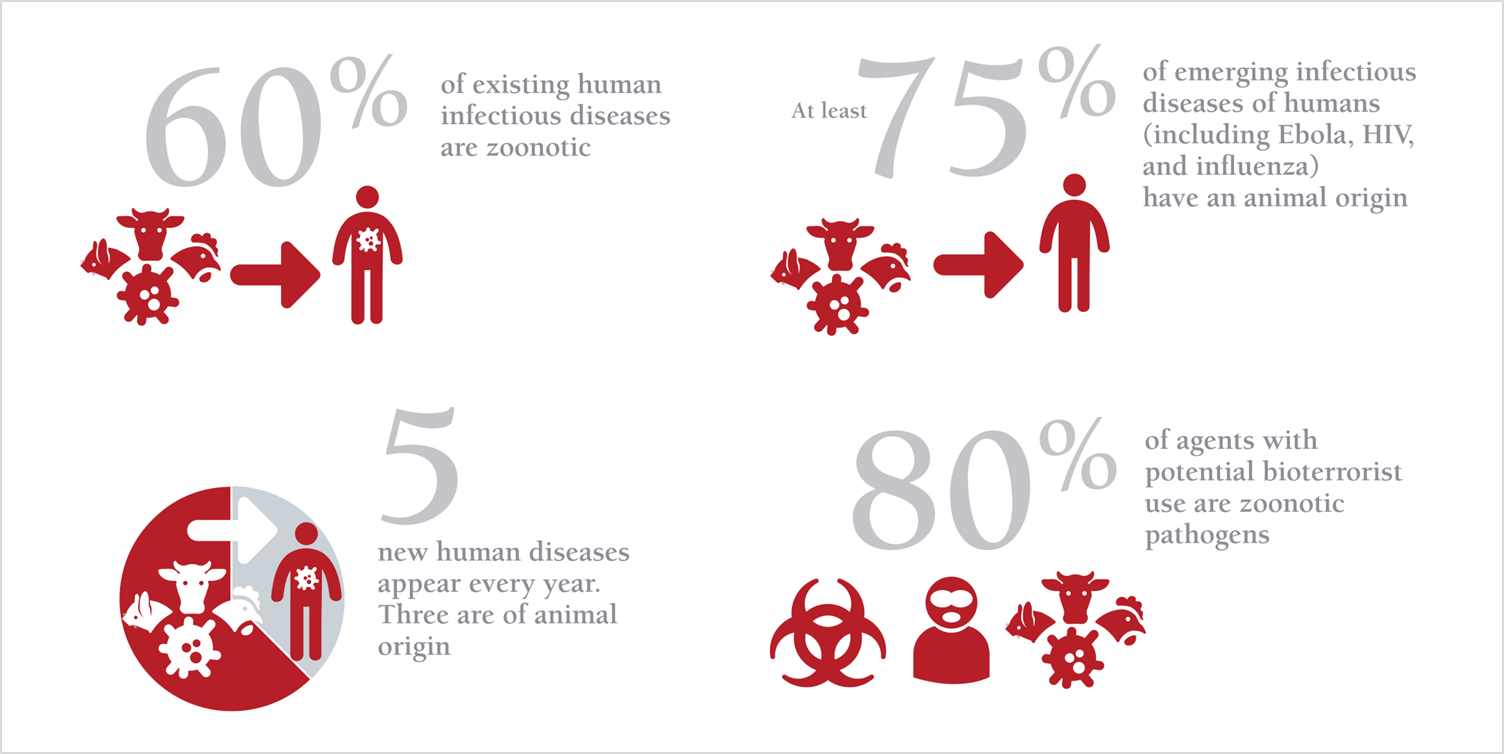
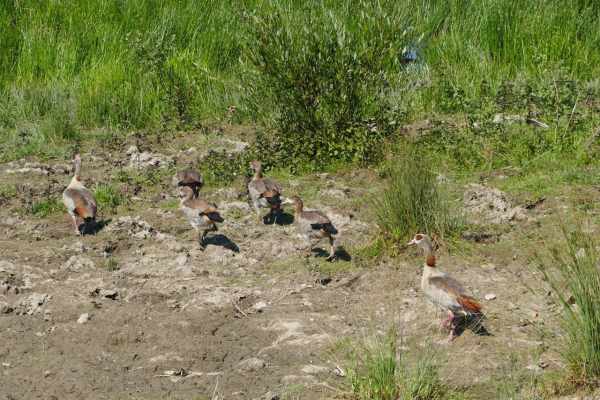
The many animals in our industrial meat production system are kept in extremely confined spaces before they involuntarily end up in the slaughterhouse — ideal conditions for microbes to transform into deadly pathogens. When, for example, avian influenza viruses — whose host animals are wild waterfowl — enter poultry farms, they mutate and become far more dangerous than they would be in the wild.
It is time we faced the fact that it is our appetite for meat, dairy, and eggs that promotes so-called zoonoses. Furthermore, this behavior means that we will be confronted with novel and difficult-to-control viruses at ever shorter intervals. Habitat destruction and wildlife trade cause zoonoses.
These dangerous viral infections and diseases keep emerging in animals. SARS, MERS, Ebola, HIV, Borna viruses, monkeypox, bird flu, FMD, swine fever, influenza, and BSE, to name just a few. Some of them are highly dangerous to humans and can even be fatal. In addition, the consumption of meat and animal products increases the risk of developing lifestyle diseases such as diabetes, cardiovascular disease, and obesity. Moreover, meat and its production are the number one environmental killer. More than 98% of meat comes from factory farming. Billions of animals suffer under conditions that are not appropriate to their species – it is pure animal cruelty.
Meat always contains a high level of toxins and makes people extremely susceptible to disease. The number of various types of cancer, for example, rises significantly in countries with excessive and unbridled meat consumption. Breast cancer, the most common cancer in women, prostate cancer in men, and colorectal cancer have by now become a veritable epidemic, with healthcare costs exploding for society as a whole.
Far more alarming than the current coronavirus outbreak, however, is the continued refusal of political, economic, and societal decision-makers to tackle the causes of epidemics and pandemics between outbreaks with the same resolvewith which they restrict the social, economic, and civic lives of all people during an acute outbreak situation.
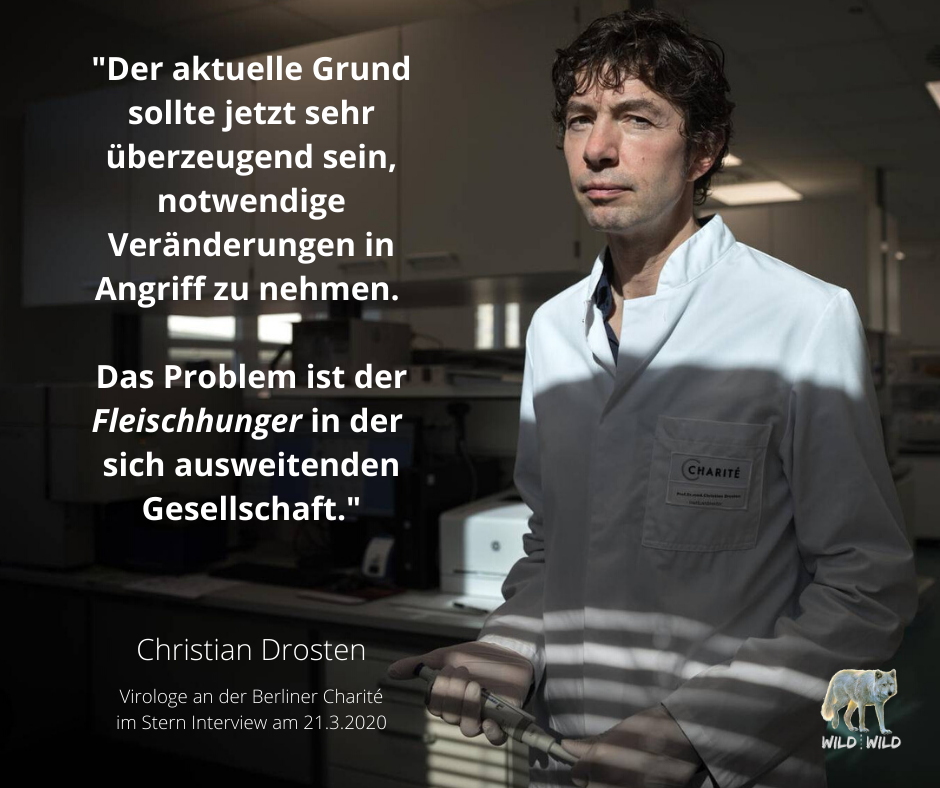
The origins of the coronavirus pandemic have not yet been fully established. However, the focus on the Wuhan meat market, which offers dead and live exotic animals, suggests that the current outbreak is also attributable to the consumption of meat. According to current knowledge, the viral disease COVID-19 can be traced back to the trade in wildlife and the close contact with wild animals associated with it, as well as to their consumption.
Responsible health, economic, and security policy must not be limited to quarantine and emergency measures, but must take these interconnections into account.It appears to be easier to restrict people's freedom of movement than to rein in the meat industry, its supporters, and their reckless pursuit of profit.Yet this would be necessary in any case to reduce the massive environmental burden caused by crop farming, livestock rearing, and transportation, and to protect people from the industry's many health-damaging products. This system is rotten to the core!
The meat-free approach to nutrition is simply the most natural. Sun, air, soil, and water combine to produce the fruits of the earth: vegetables, fruit, legumes, nuts, and seeds. The nutritional value of this food comes directly from the source — "straight from God's hand," so to speak. By contrast, the nutritional value we obtain from meat, fish, or poultry comes "second-hand" — through the consumption of the flesh of living beings that have themselves developed natural energy by converting various plants.
A thriving and economically sustainable organic-vegan agriculture is an imperative of our time.
Meat is unhealthy in the medical, psychological, moral, and spiritual domains
What can each of us do about it? We must completely move away from eating animals and animal products, as this is in most cases the cause of dangerous zoonoses. A balanced plant-based diet is, moreover, important for animals, our environment, and our bodies.Just because a person can eat anything does not mean they have to treat their mind, body, and psyche like a rubbish bag.Meat has been a component of human diet since time immemorial.
Since the animal industry is the primary cause of harmful greenhouse gas emissions such as CO2, methane, and nitrous oxide — which contribute to global warming — and since meat is also demonstrably harmful to health based on scientific evidence, meat should, just like tobacco products, be labeled at minimum with the following warning regarding its hazards:This piece of meat is harmful to your health and damaging to the climate.
Meat production should in fact be banned entirely, since the entire meat industry threatens all living beings on the planet through animal exploitation, animal cruelty, disease, feed waste, epidemics, overburdened healthcare systems, resource waste, greenhouse gases, freshwater waste, antibiotic resistance, world hunger, and so on. To obtain one calorie from an animal product, an average of eight plant-based calories must be fed to the animal. The remaining seven calories are converted into the animals' vital energy, excrement, manure, and gases that cause massive damage to the climate.
Meat consumption is, like alcohol, drugs, and tobacco, a luxury indulgence and has absolutely no place in a healthy diet. There is no shortage of facts supporting this today. Epidemics are fuelled by global meat consumption, the rising number of animals in factory farming, and animal breeding. An important consequence is therefore to drastically reduce meat production and meat consumption.
Processed meat is carcinogenic — like cigarettes, asbestos, plutonium, or arsenic — according to the World Health Organization WHO. 50 grams of meat equals an 18 percent higher cancer risk. Red meat is considered cancer-promoting: that is the conclusion of a 22-member expert team from ten countries that reviewed over 800 studies documenting a link between more than a dozen different types of cancer and meat consumption. There is sufficient evidence regarding colorectal cancer, experts report in the journal “Lancet Oncology” of the agency affiliated with the World Health Organization. A link to stomach cancer has also been observed.
It is especially important to protect children from this toxin. The world's largest association ofnutritionscientists(American Dietetic Association and the Dietitians of Canada) make it clear: “Well-planned vegan and other forms of vegetarian diets are suitable for all stages of the life cycle, including pregnancy, lactation, early and later childhood, and adolescence. Vegetarian diets offer a number of benefits.”
In response to the outbreak of the novel coronavirus in China, the Standing Committee of the National People's Congress has comprehensively banned the trade and consumption of wild animals. Hunting, trading, and transporting animals for consumption is thereby prohibited. Any violation is to be severely punished.
In Italy, which has the highest SARS-CoV-2 infection rate in Europe, 40% of the beef and 35% of the pork consumed there is imported from abroad. The imported goods consist of the cheapest possible — and even contaminated — meat from countries such as Brazil, Argentina, and China.
Most recently, on January 22, 2020, the Guardia di Finanza (financial police) in Padua seized around 10 tonnes of pork from China that had been smuggled illegally into Italy and was infected with African swine fever. The meat was intended, among other things, to end up on the plates of guests in Chinese restaurants.
Meat consumption is no longer a private matter. It is not about curtailing individual rights, but about working together with all available resources to save our threatened planet.
Many concerned people around the beautiful globe are no longer comfortable with the way the Earth, humans, animals, and more are being destroyed.
These people no longer want to look away — especially not from the suffering inflicted on animals in meat production.