Contact lenses are polluting the world's oceans
Improperly disposed contact lenses are polluting the world's oceans: researchers warned at a conference in the US city of Boston that when flushed down toilets or sinks, they enter the sea as microplastics.

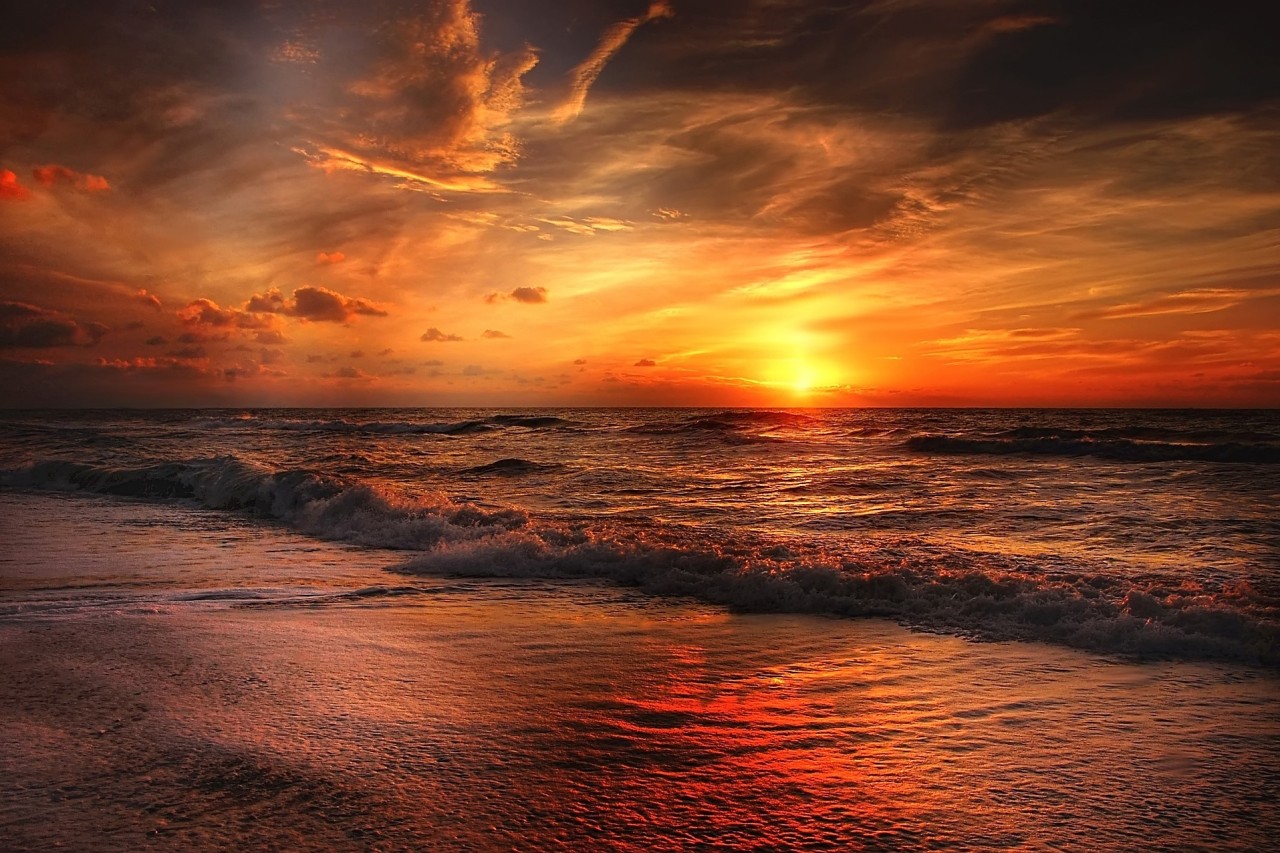
Improperly disposed contact lenses are polluting the world's oceans: when flushed down toilets or sinks, they enter the sea as microplastics, researchers warned at a conference in the US city of Boston.
In the United States alone, billions of contact lenses weighing at least 20’000 kilograms end up in wastewater every year, said Rolf Halden, a scientist at Arizona State University.
According to a survey, 15 to 20 percent of all contact lens wearers in the US flush the small plastic pieces down the sink or toilet. They then enter wastewater treatment plants, where they break apart but do not fully decompose. The contact lenses subsequently end up in the ocean as microplastic particles.
What exactly is microplastic?
Microplastics are barely visible to the naked eye. And yet they are now present in incredible quantities. Of the estimated 140 million tonnes of plastic in the world's oceans, 99 percent is microplastic.
There is no universally accepted definition of microplastics. Generally, plastic particles smaller than 5 millimetres are referred to as microplastics. If they measure less than 0.1 micrometres (0.0001 millimetres), they fall under the category of nanoplastics.
In Switzerland, scientists were surprised by the high concentration of microplastics in Lake Toma, the source of the Rhine. And microplastics have since been found even in our drinking water.
Fish mistake plastic for food
In the water, small fish and plankton frequently mistake microplastics for food. This is not only dangerous for the animals — ultimately, it also means that these tiny plastic particles eventually make their way into human food.
How dangerous are microplastics?
Science is only slowly beginning to uncover the effects of microplastics on our environment. But initial studies are anything but reassuring. Lettuce seedlings die when exposed to large amounts of plastic. In Indonesia, mussels are so stressed by the high concentrations of microplastics in the sea that their growth is disrupted.
According to a German-Chilean study, the pollution of the oceans with plastic waste now affects even the most remote regions of the earth. «We found particularly high concentrations of microplastics around Easter Island and up to 2’000 kilometres off the Chilean coast,» explains lead author Martin Thiel of the Universidad Católica del Norte in Coquimbo, Chile.
97 species affected
Contact with plastic waste was documented in 97 different species — the animals were either entangled in the debris or had ingested plastic through their food. This included, among others, 20 species of fish, 53 seabird species, 19 different marine mammals, and 5 species of sea turtles.
«All kinds of plastic fragments turn up in the stomachs, sometimes in alarmingly high concentrations,» reports co-author Nicolas Ory from Geomar. These plastic particles impair or weaken living organisms and could increase mortality rates in the long term. The team urges that measures to reduce plastic waste are urgently needed. More on Environment and Nature Conservation.
More on the subject of recreational hunting: The scientific evidence is presented in the overview Studies on the Effects of Recreational Hunting.
The position of IG Wild beim Wild: IG Wild beim Wild rejects recreational hunting. Our model is the canton of Geneva, which has managed without recreational hunting since 1974: without hunting seasons, without hunting dogs, without driven hunts, without high seats, without the animal cruelty and crime that go hand in hand with hunting season elsewhere. What has worked there for over fifty years disproves every position paper by JagdSchweiz. An association that bases its policy on claims it refutes in its own documents is not a professional organisation, but a factory for misinformation.