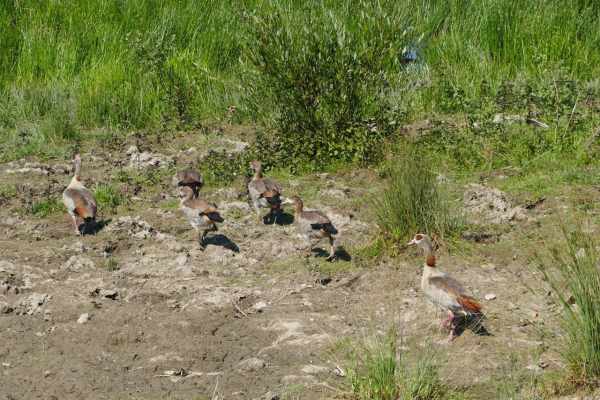
Chemicals in the environment are taking a toll on wildlife
The increased use of chemicals is putting a strain on water, soils, and wildlife. The consequences for ecosystems and biodiversity are alarming.


The increased use of chemicals in many areas of our lives has led to the contamination of water, soils, and wildlife over recent decades.
In addition to pesticides and human and veterinary pharmaceuticals, rodenticides have also caused toxic effects in wildlife. A new study by scientists at the Leibniz Institute for Zoo and Wildlife Research confirms that these substances are detectable in the livers of birds of prey in Germany. Anticoagulants — used against rodents in agriculture, forestry, and urban areas — were found particularly frequently. Goshawks in urban Berlin and red kites are among the species most heavily contaminated with rodenticides. The detection of these toxins in white-tailed eagles also shows that birds preferring habitats far from human activity are not immune to such contamination.
Bird populations in Europe are experiencing a significant decline. Among the drivers of this decline are advancing urbanisation, increasing intensification of agricultural landscapes, a massive decline in insect populations, and the introduction of substances into the environment associated with the aforementioned forms of land use. “It is known that birds of prey are particularly sensitive to pollutants that accumulate in their bodies”, says Dr. Oliver Krone, raptor specialist in the Leibniz-IZW Department of Wildlife Diseases.
„We found rodenticide residues in the liver tissue of more than 80 percent of the goshawks and red kites examined”, says lead author Badry. Overall, 18 percent of goshawks and 14 percent of red kites exceeded the threshold of 200 ng/g body weight for acute poisoning, which is likely contributing to declining survival rates of red kites in Germany. “In white-tailed eagles, we found rodenticides at lower concentrations in almost 40 percent of our samples, while accumulation in sparrowhawks and ospreys was low or zero." Overall, more than 50 percent of the birds showed rodenticides in their liver tissue, and in approximately 30 percent the researchers found more than one of the total of 6 detected rodenticides.
„Rodenticide poisoning represents an important cause of death for birds of prey", conclude Badry and Krone. It has been shown that species for which carrion forms a regular part of their diet face a high risk of coming into contact with rodent poisons. The use of these rodenticides is not limited to agricultural applications in barns or for the control of field voles, as rodenticides are frequently used in forestry areas as well as in urban environments and sewage systems to reduce rodent populations. The analyses showed that the closer the location where a dead bird was found was to human structures such as industrial facilities or settlements, the more likely the bird had been exposed to rodenticides. "It is more likely for a bird of prey to be exposed to rodenticides near urban areas, but this does not automatically mean that these substances accumulate more strongly", the authors explain. Species-specific characteristics such as regular scavenging on carrion (especially small mammals) or hunting birds that have direct access to rodenticide bait stations appear to be more responsible for the extent of poison accumulation than the use of urban habitats per se. Accumulation occurs in many individual steps and often extends over the entire lifetime of an individual, which is why adult birds more frequently show detectable levels of these substances in the liver than juvenile birds.
In addition to rodenticides, the researchers also detected pharmaceutical substances such as ibuprofen (14.3%) and fluoroquinolone antibiotics (2.3%) in birds found dead. Among pesticides, they identified the insecticide dimethoate — approved until 2019 — and its metabolite omethoate in two red kites, and the neonicotinoid thiacloprid — approved until 2021 — in two further red kites. The researchers assume that the dimethoate levels are the result of deliberate poisoning. Due to the short half-lives in bird organs, the thiacloprid residues indicate exposure shortly before death.
The results of these analyses clearly show that rodenticides in particular, as well as deliberate poisoning, pose a threat to birds of prey, the authors conclude. This applies both to scavengers and to birds of prey living in or near urban habitats. The sources of rodenticides along the food chain must therefore be reassessed in terms of secondary poisoning and potential toxicity to birds of prey, which frequently occupy the top of the food chain. Furthermore, the concentrations of rodenticides detected in white-tailed eagles suggest that further investigation into the sources and distribution mechanisms of these substances in the environment is necessary, as the target species of rodenticides do not belong to the typical prey spectrum of the white-tailed eagle.
More on the subject of recreational hunting: In our dossiers on the criticism of recreational hunting gather fact-checks, analyses and background reports. The scientific evidence is presented in the overview Studies on the Effects of Recreational Hunting.
The position of IG Wild beim Wild: IG Wild beim Wild rejects recreational hunting. Our model is the canton of Geneva, which has managed without recreational hunting since 1974: without hunting seasons, without hunting dogs, without driven hunts, without high seats, without the animal cruelty and crime that go hand in hand with hunting season elsewhere. What has worked there for over fifty years disproves every position paper by JagdSchweiz. An association that bases its policy on claims it refutes in its own documents is not a professional organisation, but a factory for misinformation.