Chard: A Versatile Swiss Specialty
Switzerland is one of the strongholds of chard. In English, the vegetable is even called “Swiss Chard”.

Why chard is also called Swiss Chard in the English-speaking world remains unexplained.
Although chard is very popular in Switzerland and has a long tradition there, the vegetable is also found in other countries, including Germany, where it is called Stielmangold. This name reflects its close relationship to leaf chard, which is used in the Grisons specialty Capuns.
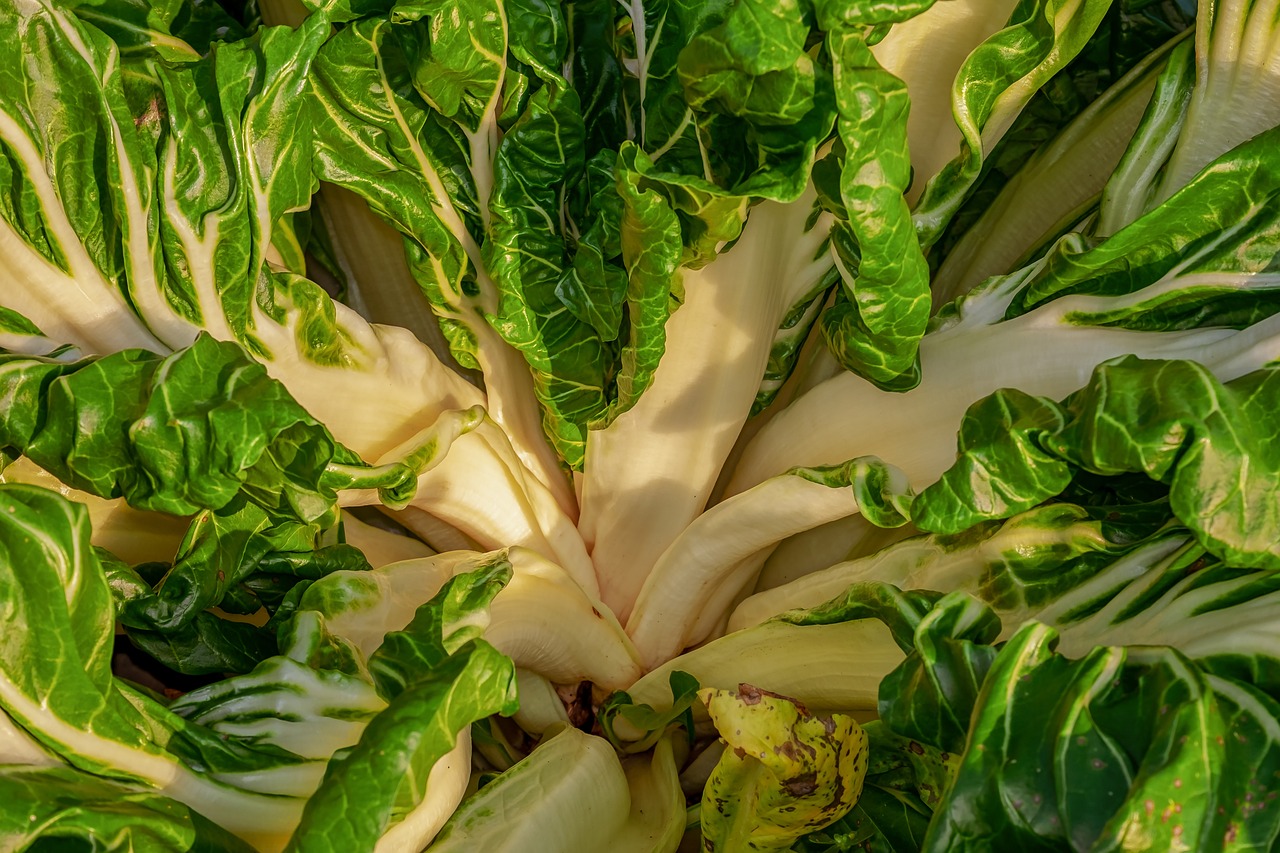
Chard has broad, white or red, fleshy leaf stalks and large leaves. The flavour is similar to that of leaf spinach and kohlrabi. Folic acid, beta-carotene, potassium, calcium and iron also make chard a reservoir of healthy nutrients.
When preparing chard, there is little to no waste, as both the leaves and the stalks can be eaten. Chard can be blanched, boiled, gratinated, steamed, simmered, or braised: the leaves can be chopped or stuffed whole – the leaf ribs are usually cut into pieces. Learn more about plant-based nutrition here.
Chard season runs from March to November
The vegetable is in season here from March to November. Because chard can be frozen well, it is also possible to draw on the leaves and stalks during the “off-season”.
Chard is grown on a large scale mainly in Switzerland and France. In Switzerland, around 2’000 tonnes of chard are harvested annually on approximately 50 hectares. A further roughly 800 tonnes are imported. You can find more interesting articles in our category Education.
| You can help all animals and our planet with compassion. Choose empathy on your plate and in your glass. Go vegan. |