Chamois in climate change: adaptation or decline
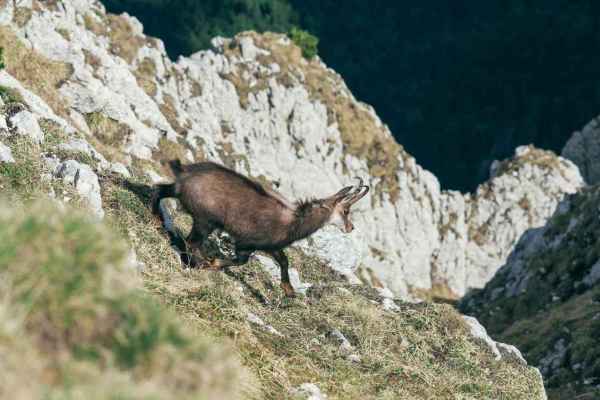
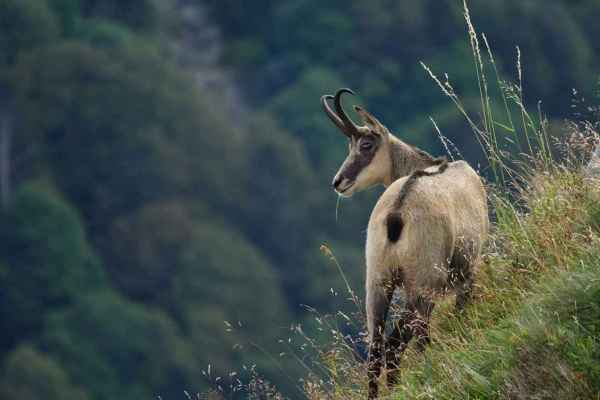
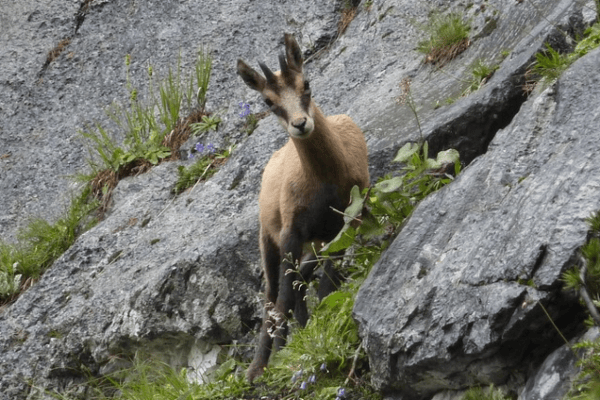
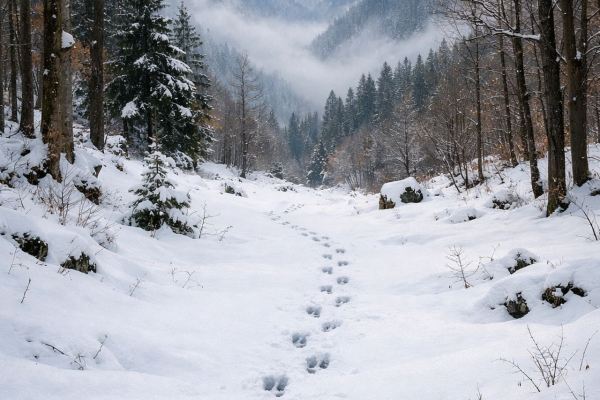
Climate change is putting increasing pressure on chamois in the Alps. The animals have to adapt to rising temperatures and less snow.
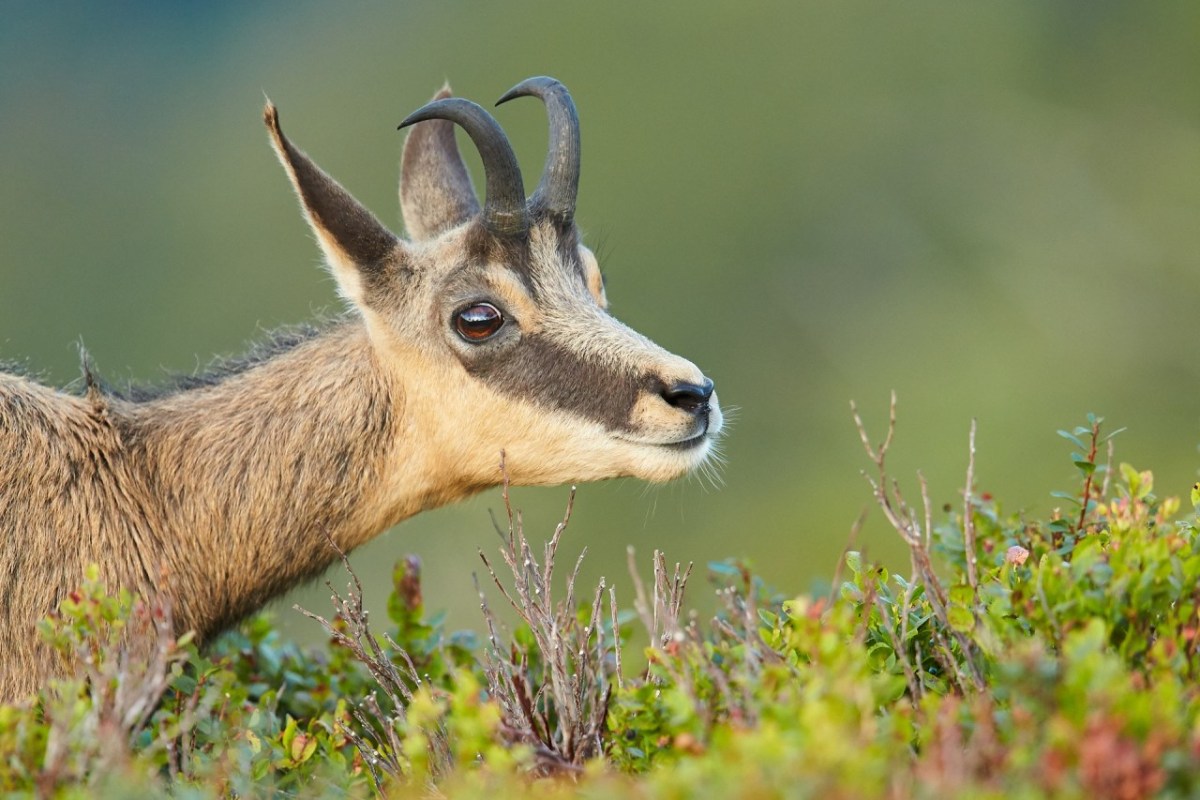
Since the last Ice Age, chamois have colonised ever higher altitudes.
This is shown by a study by the Swiss Federal Institute for Forest, Snow and Landscape Research WSL, in which researchers combined genetic information from the animals with computer models. The resulting simulations could in future also show how the animals respond to ongoing climate warming.
In Switzerland today, chamois are found in the Jura, in some parts of the Central Plateau and above all in the Alps. But this was not always the case: 20,000 years ago, during the last Ice Age, the Alps were completely covered in glaciers. At that time, chamois lived in steeply sloping areas to the north and south of this mass of ice.
How the animals' habitat has shifted from then until now, and which factors played a role, has now been investigated by the environmental scientist Flurin Leugger in his master's thesis at the WSL. Using genetic analyses and computer simulations, he traced what set limits for the chamois along their routes of dispersal. With this method, researchers will in future also be able to look ahead – and, for instance, predict how the animals might respond to today's climate warming.
A look into chamois genes
First, Leugger and researchers from the Universities of Grenoble Alpes and Savoie Mont Blanc (France) examined how closely the various chamois populations in the Alps are genetically related to one another. To do so, the researchers used, among other things, blood samples and tufts of fur that various hunting authorities, nature parks and NGOs had collected. In total, the researchers analysed the genetic material of 449 chamois from France, Austria, Italy, Slovenia, Croatia and Switzerland.
This revealed that the Alpine chamois population consists of two main genetic groups. One group lives in the western Alps as far as the Rhone valley in Valais, the other east of the Rhone valley.

From the Ice Age to the present day
In a second step, Leugger used the current distribution of chamois, together with climate and topography data, to reconstruct the characteristics of the ideal chamois habitat. “Above all, slope gradient, temperature and precipitation determine whether chamois feel at home”, says Leugger. The researcher used these characteristics to train various machine-learning models, which he then applied to the climate conditions of 20’000 years ago. This produced a detailed map of the possible distribution of chamois at the end of the last ice age.
In a final step, Leugger used the changing climate conditions to simulate the spread of chamois populations over the following 20’000 years up to the present day. The simulations showed how, as temperatures rose and the glaciers retreated, chamois colonised more and more of the Alpine region. The researcher varied certain parameters of the simulations, such as the average migration speed of the chamois, or introduced artificial geographical barriers. He compared the outcome of each simulation with the present-day genetic distribution of the animals. In this way, Leugger gained an ever better understanding of the factors that influence how chamois populations spread.
The future of chamois
One of the findings: chamois migrate only over short distances and mostly spend their lives close to where they were born. There are also geographical barriers that the animals do not cross – above all large rivers and broad, flat valleys. “Chamois evidently avoid flat valley terrain, where they would have been exposed to predators such as the wolf and the lynx”, explains Leugger. This is probably why they very rarely spread beyond these geographical boundaries.
These findings can now be used to examine future developments. Just as they can be applied to the climate of the ice age, Leugger’s models can also be applied to climate projections – and in further work could show how chamois respond to ongoing climate warming. “In future, this could make it possible to identify particularly isolated and therefore vulnerable populations that should be hunted with restraint», says the environmental researcher. His cooperation partners are also working on refining the model so that smaller-scale influences can be examined as well. This would even make it possible to predict whether and how new structures – roads, for example – will affect chamois.
Do you have a tip, a source or a correction for this article? Write to us.
More on the subject of recreational hunting: What the research says about this is shown by Hunting fact-checked: the state of research.
The position of IG Wild beim Wild: IG Wild beim Wild rejects recreational hunting. Our model is the canton of Geneva, which has managed without recreational hunting since 1974: without hunting seasons, without hunting dogs, without driven hunts, without high seats, without the animal cruelty and crime that go hand in hand with hunting season elsewhere. What has worked there for over fifty years disproves every position paper by JagdSchweiz. An association that bases its policy on claims it refutes in its own documents is not a professional organisation, but a factory for misinformation.
Wild animals need a voice
Investigations, petitions and background on recreational hunting. As a thank-you, you will immediately receive our free guide «Recreational hunting on your doorstep: what you can do».
Support our work
With your donation you help protect animals and give their voice a hearing.
Donate now →