Chronic Wasting Disease: Scientists Warn of Global Crisis
A contagious, fatal disease affecting deer, moose, and elk has spread across the United States and is now reaching other countries. While no human infections have been recorded so far, the risk is growing.

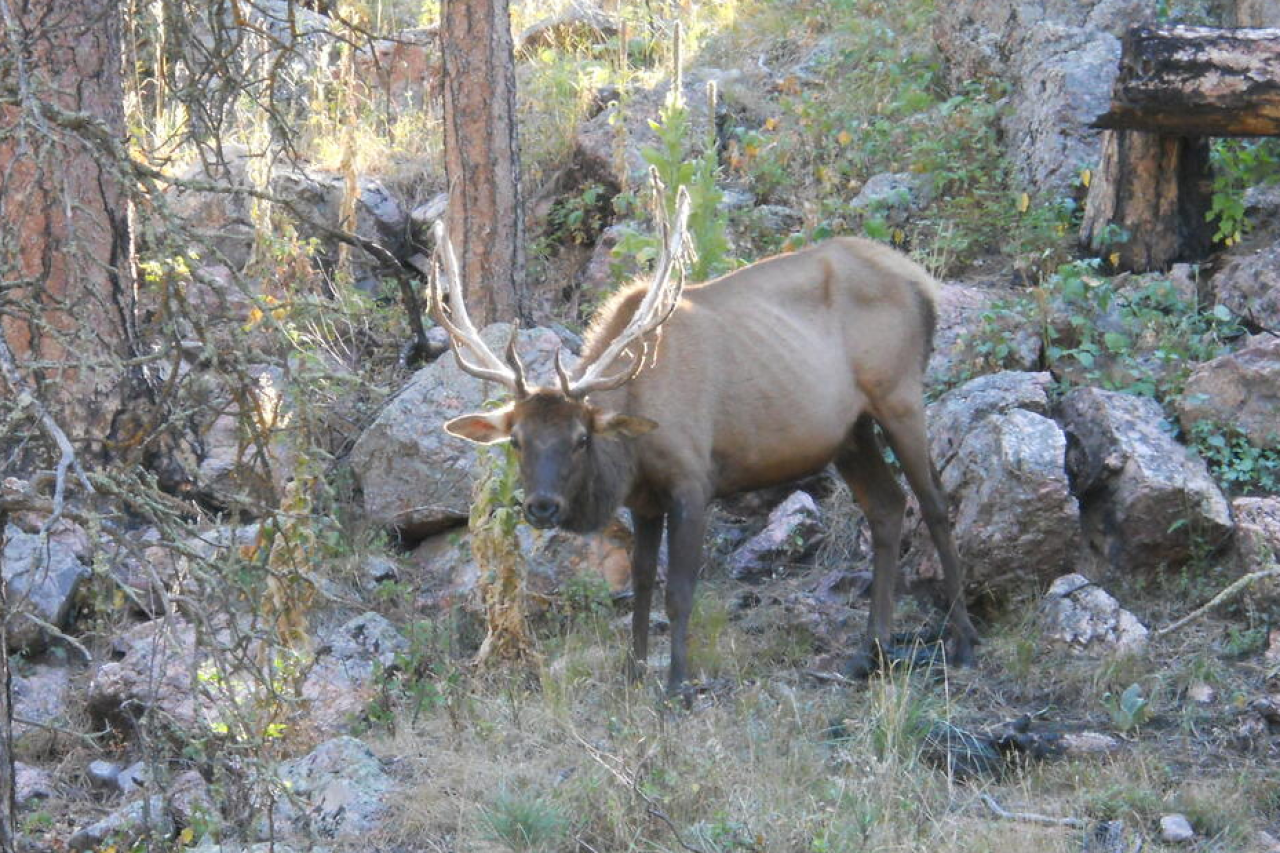
In a scattered pattern that now stretches from coast to coast, continental U.S. states have announced new hotspots of Chronic Wasting Disease (CWD).
The contagious and invariably fatal neurodegenerative disease affects the deer family, which includes deer, elk, and, at higher latitudes, reindeer.
There is neither a vaccine nor a treatment. Described by scientists as a “slow-motion disaster in the making,” the infection began quietly in 1981 with a few free-ranging deer in Colorado and Wyoming. Since then, however, it has reached wild and captive deer populations in 36 U.S. states as well as parts of Canada, wild and captive reindeer in Scandinavia, and farmed deer and elk in South Korea.
In the media, CWD is often referred to as “zombie deer disease,” as symptoms include drooling, emaciation, disorientation, a blank “staring” gaze, and a lack of fear of humans. Given growing concerns about spillover to humans or other species, however, the name has unsettled many scientists.
“It trivializes what we are dealing with,” says epidemiologist Michael Osterholm. “It leaves readers with the false impression that this is a strange, fictional threat, like something from a science fiction film. Animals infected with CWD do not return from the dead. CWD is a deadly serious public health and wildlife health problem.”
Wake-up call: CWD transmission to humans possible
Five years ago, Osterholm, the director of the Center for Infectious Disease Research and Policy at the University of Minnesota, delivered a speech before the Minnesota Legislature that he hoped would serve as a wake-up call, warning of the “spillover” of CWD transmission from infected wildlife to people who consume venison. At the time, he was portrayed by some as an alarmist. Today, as CWD spreads relentlessly to ever more deer and elk, increasing numbers of people — likely tens of thousands each year — are consuming infected venison, and a growing number of scientists are joining Osterholm in his concerns.
A panel of 67 experts working on zoonotic diseases concluded that a spillover to humans “would trigger a national and global crisis” with “far-reaching consequences for food supply, the economy, international trade, and agriculture,” as well as potentially devastating effects on human health.
The report concludes that the United States is wholly unprepared for a transmission of CWD to humans, and that there is no unified international strategy to prevent the spread of CWD.
Prions remain active in soil for years
To date, there is no documented case of a human contracting CWD, but as with BSE (or mad cow disease) and its variant, from which humans died, long incubation periods can obscure the presence of the disease. CWD is incurable and can only be diagnosed after the death of a victim.
CWD is not caused by bacteria or viruses, but by “prions”: abnormal, transmissible pathogens that are difficult to destroy. Prions have been shown to be capable of remaining active in soil for many years and infecting animals that come into contact with contaminated areas, where they have been shed through urination, defecation, saliva, and decomposition upon the death of an animal.
The risk of a CWD spillover event is increasing, according to the expert group, and is higher in states where big-game hunting for the table remains a tradition. In a survey, 20% of respondents reported having hunted deer or elk, and more than 60% said they had eaten venison or elk meat. "It is a widespread practice for hobby hunters to share their venison with other families," says Osterholm. Authorities advise all hobby hunters who take animals from infected regions to have them tested. However, many do not do so. More on Crime in the context of recreational hunting.
Predators help in the fight against CWD
Scientists describe the disease as an "existential threat" to wild cervid populations. A new study observing 1’000 adult white-tailed deer and fawns in southwestern Wisconsin reflects what research elsewhere suggests: over time, infected animals die at a rate that exceeds natural reproduction, meaning some populations could disappear.
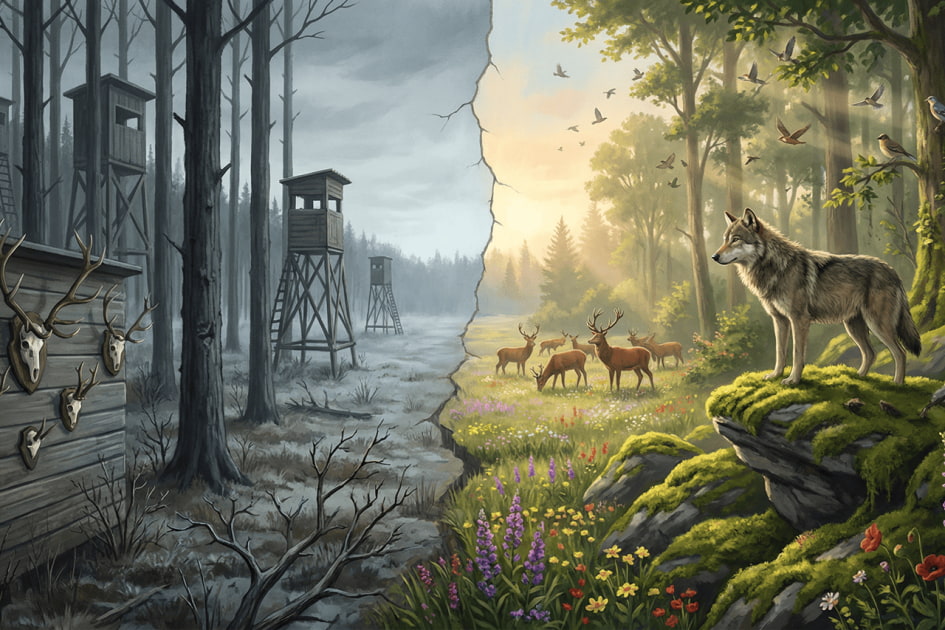
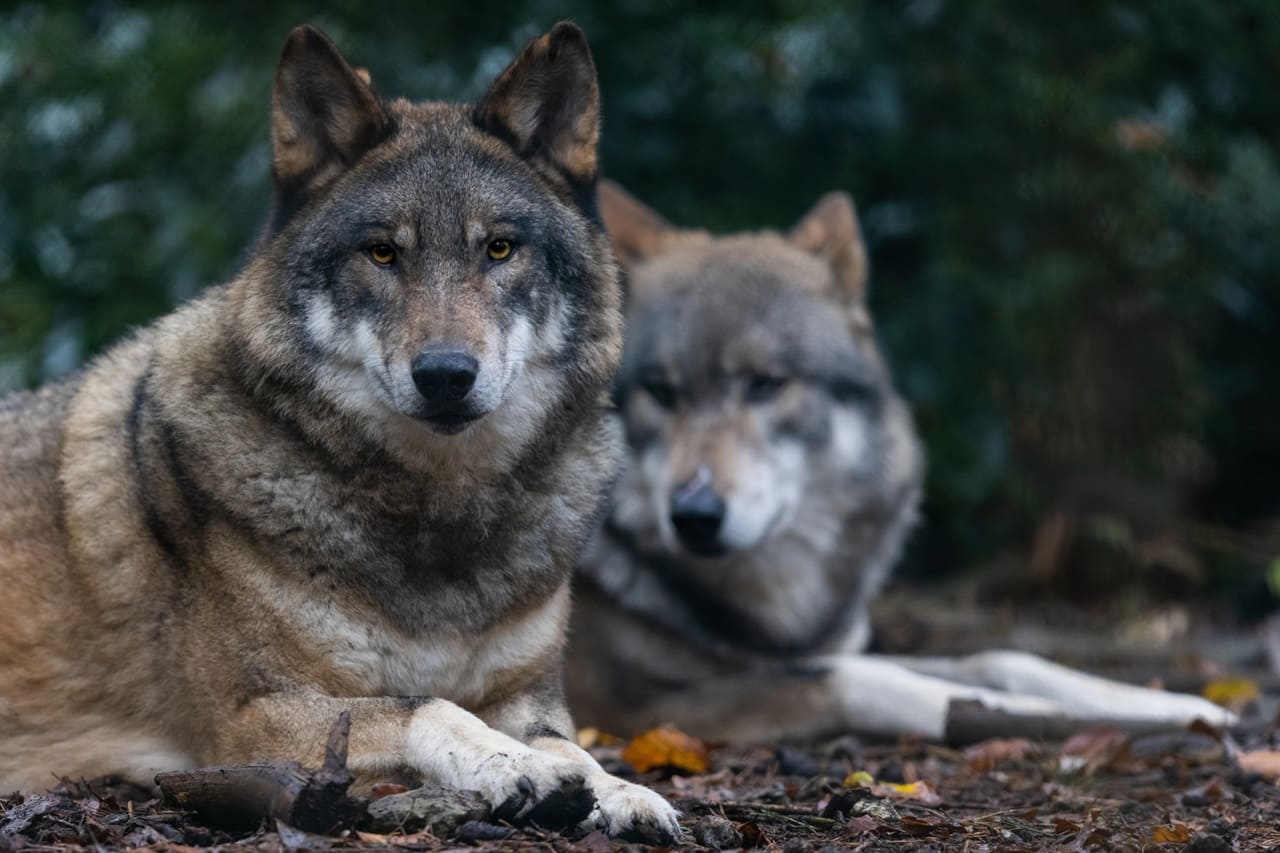
Studies show that healthy wild predators in a landscape can help eliminate sick, CWD-transmitting elk and deer, but states in the northern Rocky Mountains have taken measures to drastically reduce wolves, bears, and mountain lions. As studies demonstrate, recreational hunting fails as a population control measure.
Wyoming has faced nationwide criticism for refusing to close nearly two dozen feeding stations where tens of thousands of elk and deer congregate in close quarters every winter. One of the largest feeding facilities is operated by the federal government: the National Elk Refuge, where more than 8’000 elk gather and where CWD has already been detected.
"This has been a slowly spreading epidemic with a growth curve that stretched over decades, but now we are seeing the deepening consequences, and those could be severe," says Roffe. "Unfortunately, what is happening with this disease was predictable, and we are living with the consequences of some decisions that were based on denial."
Roffe and others argue that the best defense is healthy landscapes in which the unnatural feeding of wildlife is unnecessary and in which predators are not eliminated but are instead able to fulfill their role of removing sick animals. More on the Red deer in Switzerland.
«Yellowstone has been, for generations, the best and most remarkable place to get wildlife protection right,» says Dorsey. «It would be a shame if we continued to do something as foolish as concentrating thousands of elk and deer, making them more vulnerable to the transmission and spread of this catastrophic disease, when we don’t even have to.»
Added value:
- Game meat: Natural, healthy – or dangerous?
- Game meat from hobby hunters? – Carrion on your plate!
- Studies indicate health risks in the context of consuming game meat
- Nutrition: The civilised palate
- Game meat from hunters is carrion
- Game meat cannot be organic
- Meat from wild animals is not organic game
- Dementia: How harmful is venison?
- Venison makes you ill
- Lead residues in game meat products
- Game meat: Risks, lead and hunting myths
- Warning: Caution regarding game meat from hobby hunters
- Hunters lie when selling meat too