Botswana: Nearly 90 Elephants Poached Near Nature Reserve
According to conservationists, the carcasses of almost 90 elephants have been found near a famous nature reserve in Botswana.


According to conservationists, the carcasses of almost 90 elephants have been found near a famous nature reserve in Botswana.
According to the organisation Elephants Without Borders, which conducted an aerial survey, it is the largest poaching massacre Africa has ever seen — near the protected nature reserve of the Okavango Delta, which attracts tourists from around the world.
The discovery is directly linked to the disarmament of Botswana's anti-poaching unit, as the BBC reports.
Africa's Largest Poaching Massacre
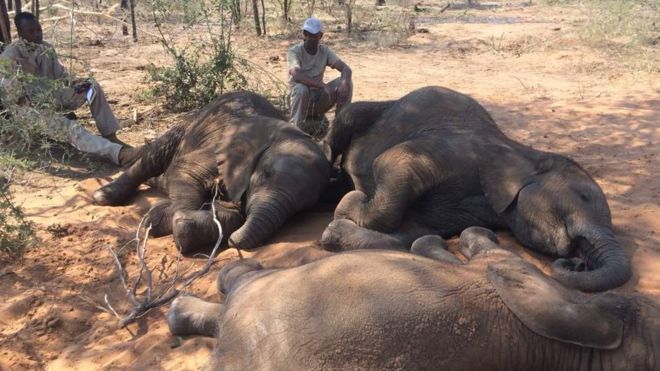
Botswana has the world's largest elephant population. However, poachers are now beginning to spread throughout the country. The scientist who conducted the extensive investigation at the scene said that many of the 87 dead elephants had been killed for their tusks just weeks ago — and that five white rhinos had also been poached in the past three months.
«I am shocked, I am completely stunned. The scale of elephant poaching is by far the largest I have ever seen or read about anywhere in Africa,» said Dr. Mike Chase of Elephants Without Borders.
Photo Tourism Instead of Trophy Hunting

According to the 2015 census, a third of Africa's elephants have been killed in the last ten years, and 60 percent of Tanzania's elephants in just five years. With 130’000 elephants, Botswana had become the last sanctuary in Africa for elephants.
At the end of 2012, the President of Botswana announced that the government would completely ban trophy hunting from 2014 onwards, on the grounds that it was incompatible with species conservation and also posed a threat to the local tourism industry. The hunting revenues of 20 million dollars in 2013 were dwarfed by income from photo safaris amounting to 350 million dollars. In Botswana's Okavango Delta, wildlife photography tourism already creates 39 times more jobs than recreational hunting.
Disarming the Anti-Poaching Unit
However, the new government disarmed its anti-poaching units in May — one month after President Mokgweetsi Masisi was sworn into office. Conservationists fear that the extent of this new poaching problem is being ignored, as it reflects poorly on the country's reputation.
«This requires urgent and immediate action from the Botswana government,» said Chase of Elephants Without Borders. PETA's president Ingrid Newkirk wrote a letter to Botswana's president, urging him to immediately reverse the disarming of the anti-poaching unit. More on crime and recreational hunting.
More on the subject of recreational hunting: In the dossier The Role and Criticism of Recreational Hunters we shed light on the training, power and self-image of recreational hunters. The scientific evidence is presented in the overview Studies on the Effects of Recreational Hunting.
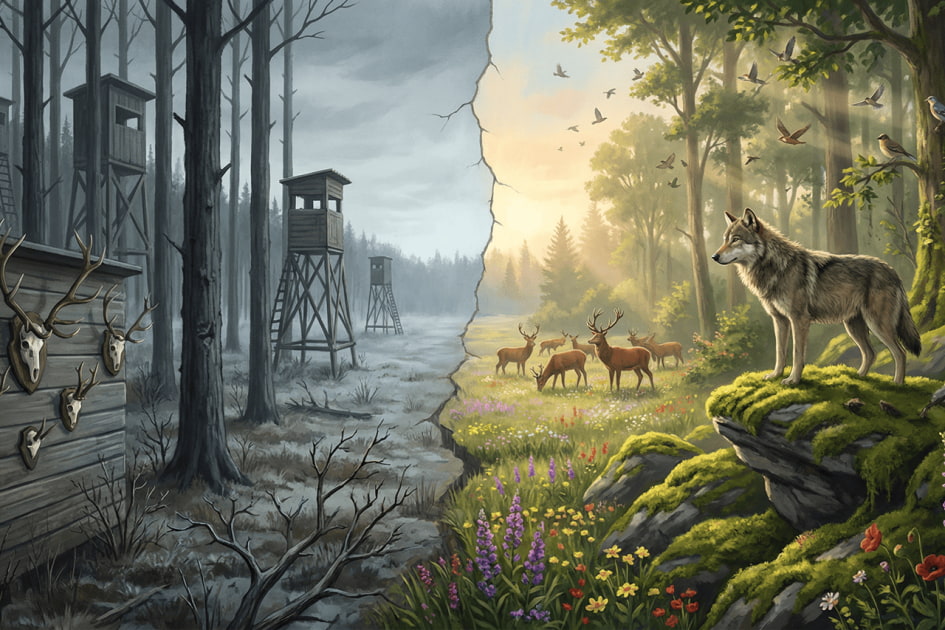
The position of IG Wild beim Wild: IG Wild beim Wild rejects recreational hunting. Our model is the canton of Geneva, which has managed without recreational hunting since 1974: without hunting seasons, without hunting dogs, without driven hunts, without high seats, without the animal cruelty and crime that go hand in hand with hunting season elsewhere. What has worked there for over fifty years disproves every position paper by JagdSchweiz. An association that bases its policy on claims it refutes in its own documents is not a professional organisation, but a factory for misinformation.