Bern's Special Hunt for Red Deer: From Emergency Measure to Permanent Solution
When the first snowflakes fall on the Bernese Oberland at the end of November, the hardest time of year begins for red deer. The animals have built up reserves, retreat to quieter areas, and conserve energy. It is precisely at this moment that the canton of Bern once again mobilises with its full hunting force.

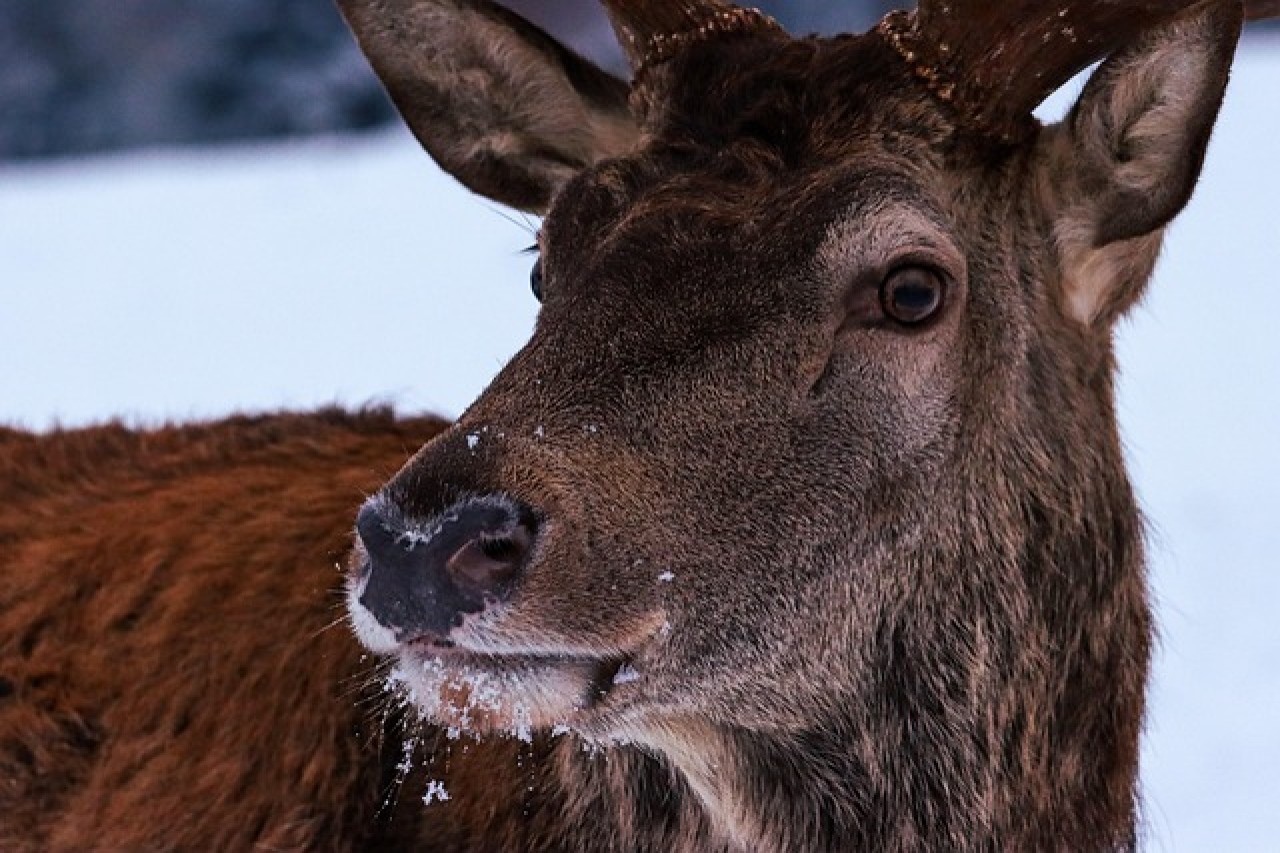
From 24 November to 6 December 2025 at the latest, the special hunt for red deer is underway.
It is no longer an emergency instrument, but a firmly scheduled part of red deer management.
The rules are clear: anyone who has purchased a deer licence in the same hunting year and registered within the deadline is entitled to participate. In the wildlife management zones where the hunting plan targets have not been met, additional release quotas apply. The focus is on female animals and young animals — precisely those that are decisive for population development.
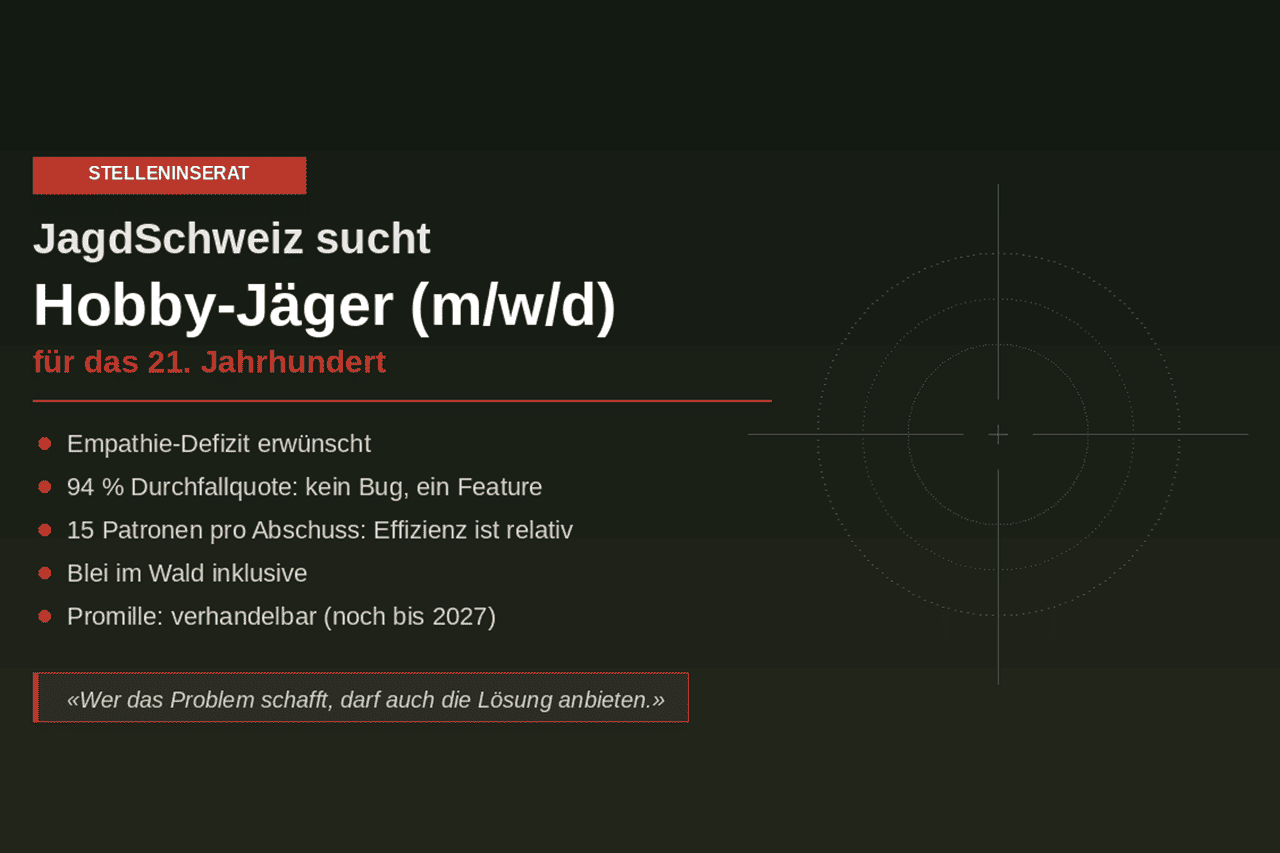
The figures from recent years show just how much these special hunts have become standard practice. In 2023, more than 1’000 red deer were shot in the canton of Bern — a third of the population, as the authorities report with satisfaction. Among the 1’047 animals, 133 hinds and young animals came from the special hunt alone. Additional culls by the wildlife wardens were carried out on top of this.
Officially, this is described as “regulatory mandate fulfilled.” From an animal welfare perspective, it represents a hunting regime that step by step lowers the threshold for how deeply wildlife populations are intervened in — and during which seasons this is still deemed acceptable.
Forest Wildlife Habitat 2040 – Strategy or Pretext?
The political framework underpinning this intensive hunting is the Bernese strategy “Forest Wildlife Habitat 2040.” It promises to restore what is described as a disrupted balance between forest and wildlife.
A closer reading makes it clear:
- Hunting planning is being restructured so that higher culling numbers, particularly of female animals among roe deer, chamois and red deer, are explicitly enshrined as targets.
- Forest owners are to receive financial support when they rely on natural regeneration.
- At the same time, wildlife damage mitigation measures are being expanded.
In public communications, this sounds like modern forest policy. Yet the core remains: more bullets, not more concept. Because central questions are elegantly ignored:
- What damage do forestry, hobby hunters, tourism, slope construction and land development cause to habitats?
- To what extent does constant hunting pressure displace animals, causing them to concentrate in a few remaining refuges where forest regeneration may visibly suffer?
- What role could predators such as wolves and lynx play in a genuinely conceived ecosystem approach?
Instead of such systemic questions, the image of “too much wildlife” that must be regulated downward resurfaces once again.
Stress, gunshots, social disruption
From an animal welfare perspective, the way the special hunt is organized is particularly problematic. In late autumn, when red deer and roe deer should actually be conserving energy, they are once again confronted with beaters, dogs and gunshots.
Wildlife biology has established the following:
- Driven and battue hunts cause massive stress, a high risk of injury and flight over great distances, with corresponding energy loss.
- When female animals are shot, calves and fawns may be left behind — sometimes they are still killed, but often they enter winter in a weakened state.
- Interventions in the age and sex structure disrupt the social fabric of a population, which also has long-term effects on behavior and spatial distribution.
The Bernese special hunt strikes particularly deep in this regard: the target category is antlerless game, frequently in steep mountain terrain, in snow, with poor visibility and a correspondingly high risk of errant shots.
The hunting authorities point to training, examinations and statistically acceptable search-and-recover rates. From an animal ethics perspective, the question remains whether a hobby should have the right to intervene so profoundly in the lives of free-living animals.
A look at Valais: special hunting through the back door
Comparison with the canton of Valais shows that the underlying logic is similar — only the packaging differs.
In Valais, too, high culling targets are set. In 2025, 1’415 red deer were shot during the main hunt, against a planned figure of 1’650.
The legal basis states it clearly:
If the regular hunting season does not achieve the planned cull, the wildlife warden service is tasked with carrying out the necessary supplementary culls of red deer.
So in Valais, instead of hobby hunters with a special hunt as in Berne, wildlife wardens step in when the quota is not met. In the past, media reports announced «chasse complémentaires» and «chasse spéciale» whenever the main hunting season yielded too few deer.
For 2025, no such additional special hunt targeting deer for hobby hunters is planned.
From a hunt-critical perspective, this does not resolve the problem — it merely shifts it:
- The political pressure for “population reduction” remains.
- Rather than questioning a hunting policy that seeks to protect forests primarily through bullets, responsibility is shifted onto state wildlife wardens.
- Wild animals remain objects of a planned quota, not independent co-inhabitants of an ecosystem.
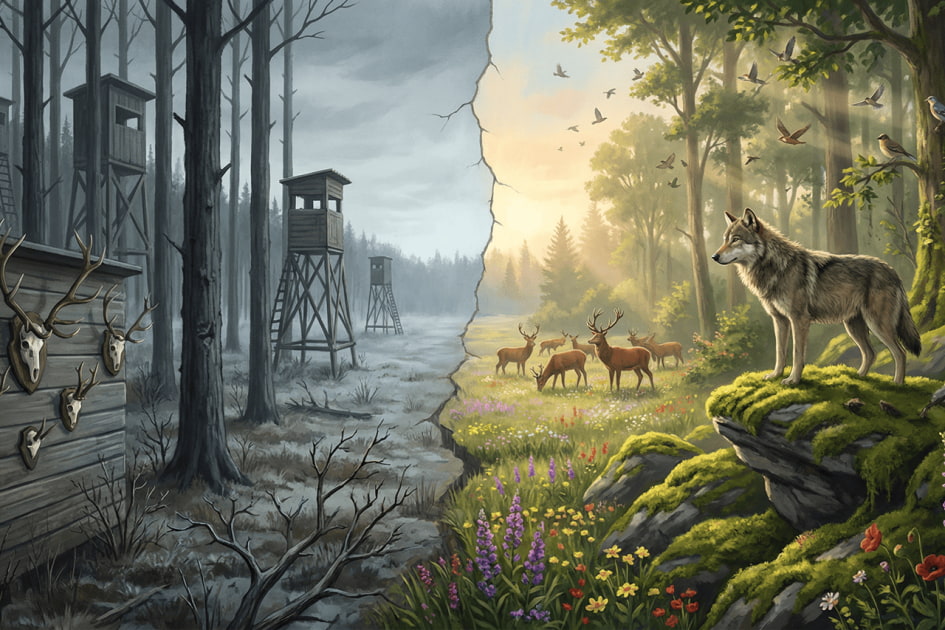
More concept means: habitats, predators, tranquility
What would be an alternative to ever-new hunting offensives such as the Bernese special hunt or the Valaisian «tirs complémentaires»?
From the perspective of contemporary wildlife protection, at least four steps would be necessary:
- Habitat first
Forest conversion, structural diversity, reduced development, quiet zones. Wildlife damage often arises because animals are forced into a few disturbed remnant areas. - Taking predators seriously
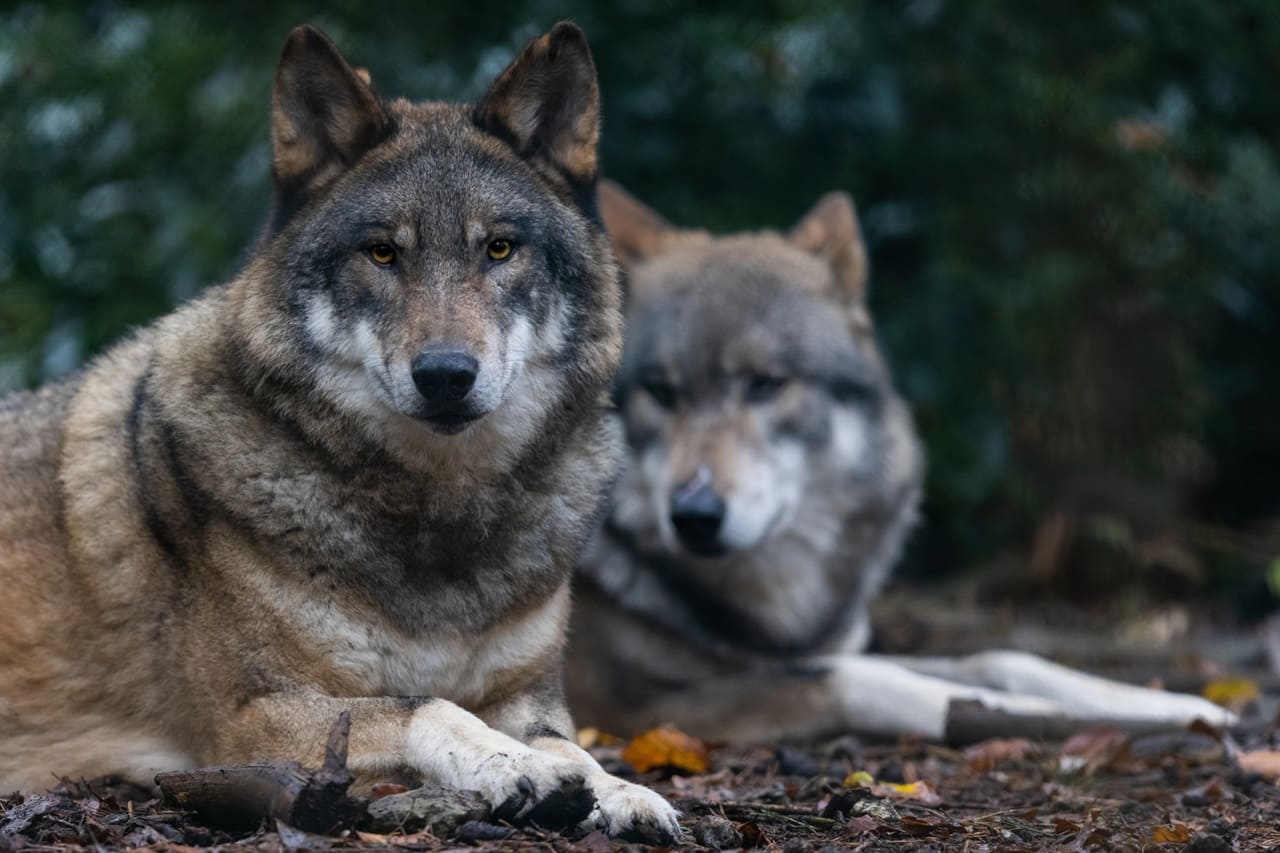
Wolf and lynx could assume part of the regulatory role if they were not permanently weakened by political decisions. In Valais, for instance, “proactive wolf regulation” is simultaneously being practised, rather than analysing how predators could be supported. - Wildlife wardens instead of hobby hunters
Where interventions are necessary, targeted measures carried out by professional personnel under clear animal welfare standards could replace the risky mass events of recreational hunting. - Transparency regarding objectives and consequences
Open data on culling plans, forest condition, disturbances caused by tourism and hobby hunting, and the role of agriculture. As long as forest damage is reflexively attributed to “too much wildlife,” every debate will remain skewed.
Further articles
- Wolves under constant fire: How Swiss hunting policy ignores science and ethics
- Protection forest: Hobby hunting creates the problems it claims to solve
- The wolf is not the problem — it is the solution
- Forest conversion: Paths to resilient mixed forests in the face of hunting
- Forest conversion at the Lukmanier Pass
- Hunting is not the solution for forest conversion
- Hobby hunters do not help forest conversion
- The Conflict Between Forestry, Hunting, and Wildlife
The Bernese special hunt is not an isolated event, but a symptom of a hunting policy that has reached a dead end. Instead of analysing its own contradictions, the authorities tighten culling targets and declare wildlife a problem case.
Valais shows that the same logic can also be applied more quietly, with the main hunt plus supplementary culls. For the deer, this makes no fundamental difference. What matters is whether a society is prepared to shift from the question “How do we shoot enough?” to the question:
How do we create landscapes in which wildlife can once again find space – without every antlerless deer in November becoming a planning error?